


Sterling Silver Desk Clock
A sterling silver desk clock brings refined timekeeping to the bureau, combining precious metalwork with reliable mechanical movements from the late nineteenth century onwards.
Sterling Silver Desk Clock
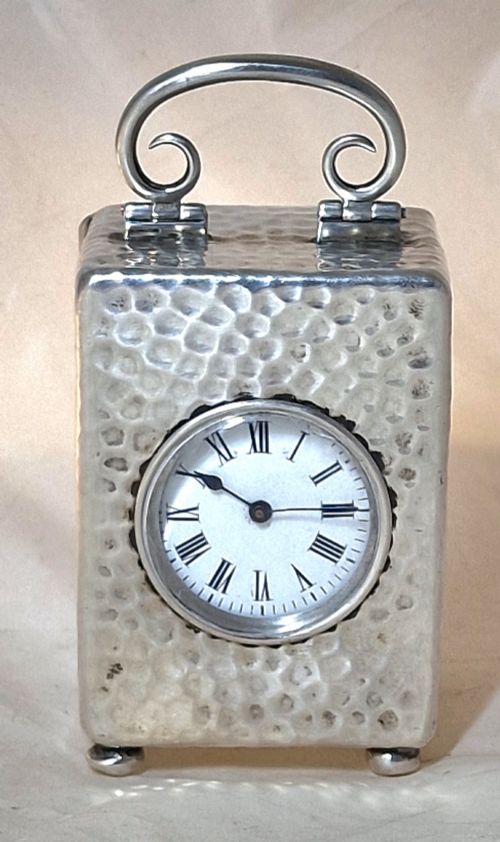
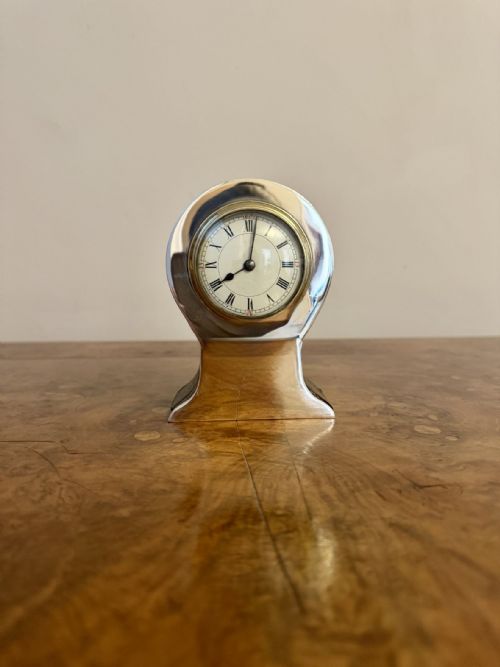
A sterling silver desk clock serves as a functional timepiece and an elegant writing desk accessory, frequently taking the form of a miniature carriage clock, easel timepiece, or capstan combination piece. These items date from the late nineteenth century through the 1930s, spanning Edwardian, Art Nouveau, Arts and Crafts, and Art Deco styles.
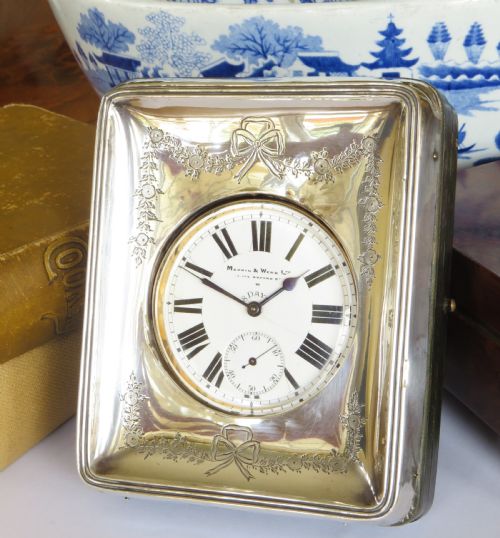
The most common formats met on this page are compact carriage clocks and folding travel timepieces housed in hallmarked silver cases. Such objects were designed for portable utility or static display on library desks and boudoirs.
Examples range from plain architectural silver fronts to elaborate variations featuring blue guilloche enamel, floral enamel work, tortoiseshell, and hammered finishes. They reflect the shifting aesthetic tastes of the Edwardian era and the interwar period.
Assessing Quality and Execution
Quality rests upon the crispness of the silver hallmarking, the weight and gauge of the metal case, and the sophistication of any decorative elements like guilloche enamel or hand-hammered texturing. Superior pieces display harmonious proportions and integration between the silver chassis and the clock movement.
The distinction between standard commercial production and finer work lies in the detail of the casting, the complexity of the dial layout, and the inclusion of specialised materials such as tortoiseshell or specialist enamel work rather than plain silver fronts.
Mappin and Webb·William Comyns·Henry Matthews·Liberty and Co
The Sterling Silver Desk Clock Glossary
- Hallmark
- An official stamp applied by an assay office to indicate the purity of precious metal, the maker, and the year of testing. These marks provide definitive historical dating for antique silver pieces.
- Guilloche enamel
- A decorative technique where translucent enamel is layered over machine-turned metal engraving. This creates intricate geometric patterns that catch the light beneath the coloured glaze.
- Carriage clock
- A small, spring-driven portable timepiece originally designed for travel by horse-drawn carriage. They typically feature rectangular brass or silver frames inset with glass panels.
- Easel clock
- A timepiece supported by a hinged rear strut for desk or tabletop display. The silver casing frames the dial while the backing board holds the clock upright.
- Timepiece
- A clock that indicates the time without possessing a striking mechanism or chiming train. Most small desk clocks and boudoir pieces operate as simple timepieces.
Sterling Silver Desk Clock: Frequently Asked Questions
How do I wind a silver desk clock?
Most antique desk clocks use a small key applied to arbors on the backplate to tension the mainspring. Care must be taken not to over-wind the mechanism.
Eighty-day or standard movements require gentle handling to preserve the vintage brass gear trains.
Were these clocks meant for travel?
Many silver timepieces were specifically manufactured as folding travel clocks with protective leather or silver cases. Others served strictly as static desk ornaments.
Portable versions usually feature sturdy carriage handles or folding easel backs.
How do I identify an Edwardian silver clock?
Edwardian silver clocks typically feature hallmarks dating between nineteen hundred and nineteen ten, alongside stylistic influences from Art Nouveau. The silver work often highlights floral motifs and organic curves.
Examining the assay office letter inside the case reveals the exact year of manufacture.
What maintenance do antique silver clock cases need?
Silver cases require occasional polishing with a soft cloth to prevent tarnishing, avoiding abrasive cleaners that damage hallmarks. Enamel sections need gentle wiping without chemical solvents.
Mechanical movements should be serviced periodically by a professional clockmaker.