



Sterling Silver Cuff
A sterling silver cuff offers a solid wrist presence, spanning heavy Victorian hinged designs and sleek mid-century iterations.
Sterling Silver Cuff
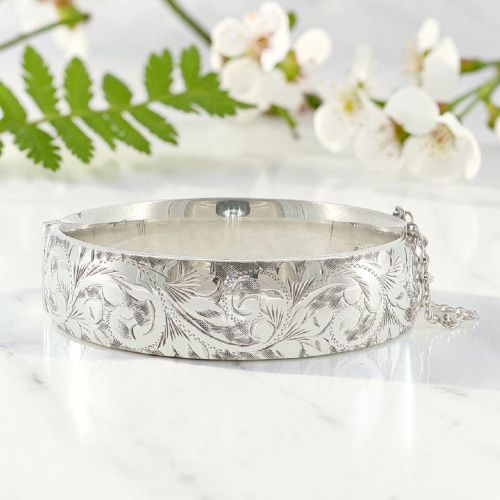
A sterling silver cuff spans rigid hinged bangles, rigid slip-on cuffs, and linked architectural bracelets. When searching for a sterling silver cuff, collectors most frequently encounter nineteenth-century Victorian hinged bangles alongside mid-century Scandinavian and British vintage designs.
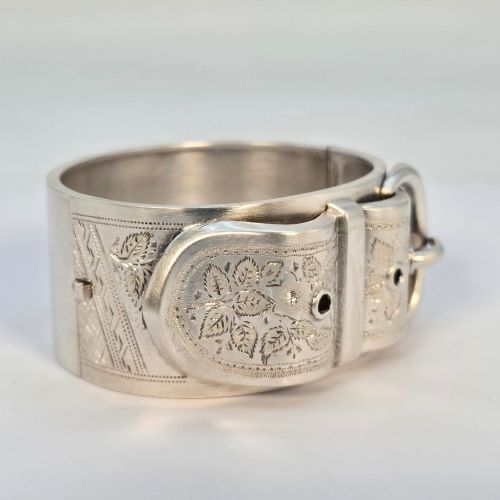
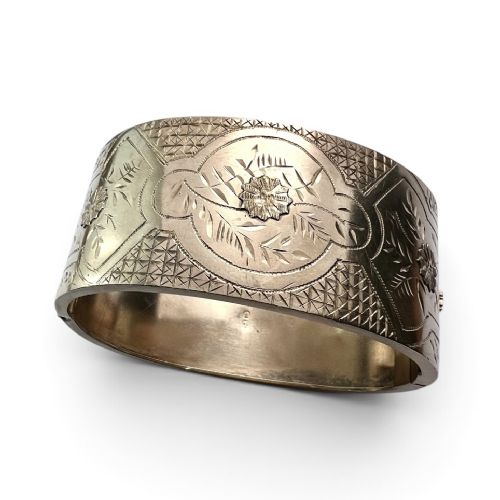
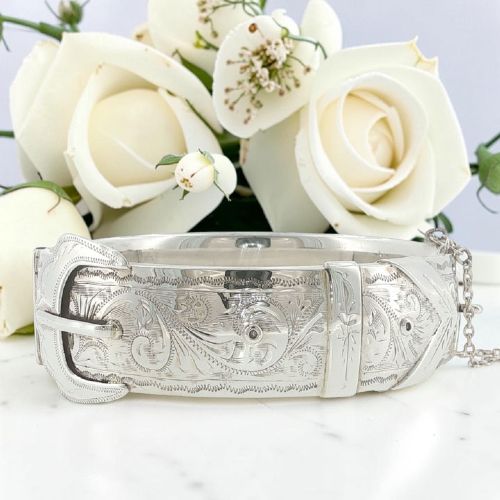
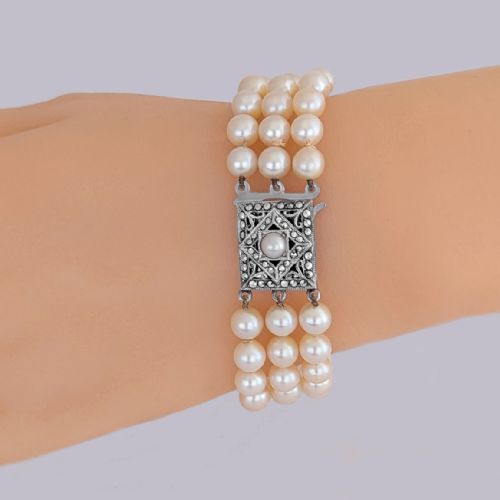
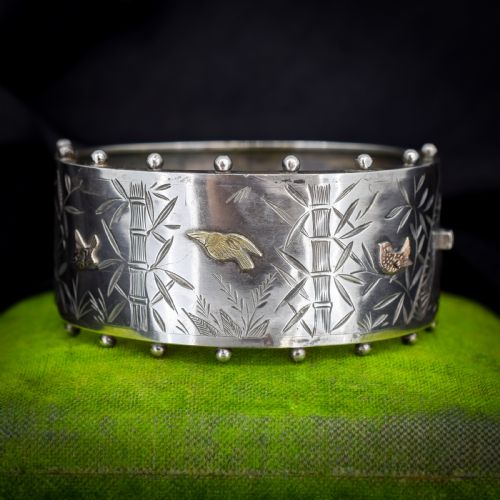
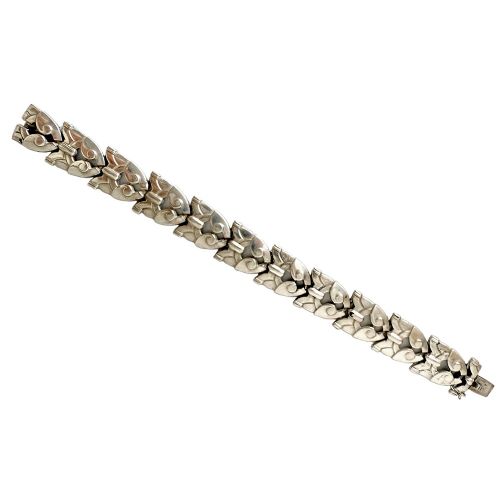
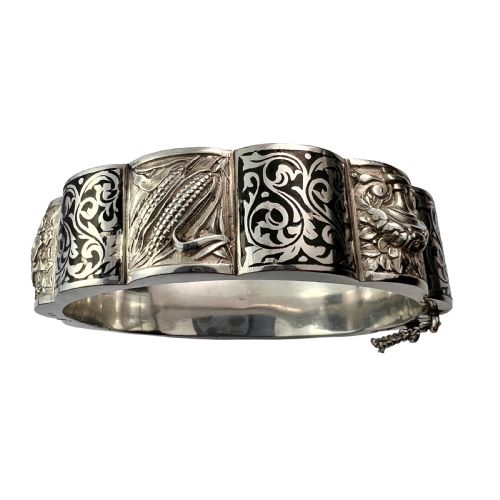
The evidence shows forms ranging from wide engraved bands and buckle motifs to geometric art deco links and intricate filigree settings. Victorian pieces often feature heavy solid metalwork with applied gold details, whilst later decades introduce enamel, cultured pearls, and niello.
Origins stretch from British assay offices in Birmingham and London to workshops in Norway and Portugal. These items serve primarily as statement wrist adornments, though the category also includes related silver accessories such as cufflinks.
Materials and construction methods
Silversmiths constructed these pieces primarily from solid sterling silver, frequently utilising hinged mechanisms for secure wrist placement. Many Victorian examples incorporate overlaid rose and yellow gold accents to create contrasting botanical or avian motifs against the silver ground.
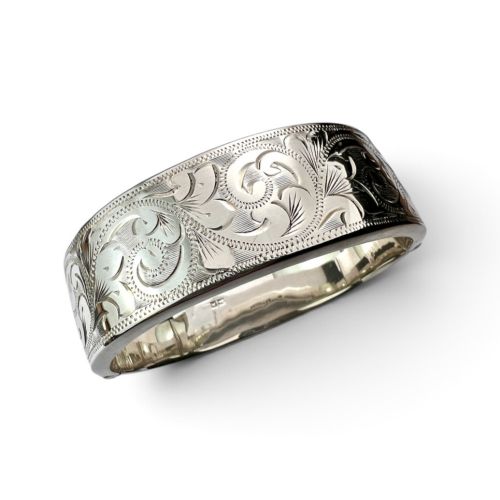
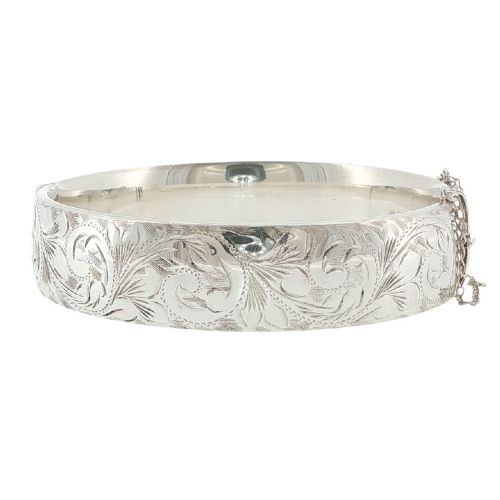
Decorative techniques recorded in the inventory include hand engraving, pierced filigree, and engine-turned guilloche enamel. Makers also integrated accent materials such as marcasite, black onyx, cultured pearls, and amber into bezels and clasps.
Structural variety includes rigid frames secured with box clasps or safety chains, as well as articulated links joined by small jump rings. Hallmarks stamped directly into the metal frequently record the silver standard, assay town, and year of production.
Sterling Silver Cuff Retail Price Guide 2026
Typical asking prices for sterling silver cuff among the pieces listed under this phrase on Sellingantiques today, from the lower quarter to the upper quarter. They describe what is for sale here now, not the wider market.
Materials documented across the inventory include sterling silver, gold, cultured pearls, marcasite, niello, enamel, amber, and black onyx.
Distinguishing quality across periods
The calibre of a sterling silver cuff rests upon the weight of the metal and the crispness of the hand engraving. Heavier gauge silver provides structural integrity to hinged bangles, preventing distortion along the closure.
Top-tier examples display precise chasing, clean piercing, and well-executed mixed-metal overlays rather than superficial surface stamping. The integration of secondary materials, such as enamel or applied gold, demands high technical skill to ensure flush, durable placement.
Assay marks and maker stamps provide verifiable proof of origin and metal purity, elevating pieces produced by established workshops. Preservation of original fitted boxes and crisp hallmarks further distinguishes superior collector pieces.
Georg Jensen·Walker and Hall·Topazio
The Sterling Silver Cuff Glossary
- Sterling silver
- An alloy consisting of ninety-two point five percent silver and seven point five percent other metals, typically copper. This standard ensures structural durability whilst maintaining a bright metallic lustre.
- Hallmark
- A series of official marks stamped onto precious metal items to guarantee the purity of the silver. These symbols typically identify the maker, the assay office, and the year of manufacture.
- Guilloche enamel
- A decorative technique where transparent enamel is layered over engine-turned metalwork. This process creates geometric patterns that reflect light beneath a coloured glass surface.
- Filigree
- An intricate form of jewellers' work consisting of delicate threads of metal soldered together. It creates lace-like openwork patterns frequently utilised in mid-century settings.
- Buckle bangle
- A rigid bracelet designed to resemble a buckled belt, symbolising loyalty and attachment in nineteenth-century jewellery. These pieces frequently incorporate hinged shanks for ease of wear.
Sterling Silver Cuff: Frequently Asked Questions
How do I date a silver cuff?
Dating relies heavily upon the presence of official hallmarks stamped into the metal interior. British pieces typically feature leopard heads, anchor symbols, or other assay office marks alongside date letters.
stylistic clues also guide the collector, moving from heavy Victorian engraved flora to geometric art deco lines and minimalist mid-century Scandinavian forms.
Are hinged cuffs durable for daily wear?
Solid sterling silver hinged bangles from the Victorian and mid-century periods were built with substantial metal gauges for regular use. Their robust box clasps and integrated pins offer secure fastening on the wrist.
Careful handling ensures the hinge mechanism remains aligned and functional over decades of regular ownership.
What does sterling silver purity mean?
Pure silver is too soft for practical jewellery construction, so silversmiths alloy it with copper to increase strength. Sterling silver contains ninety-two point five percent pure silver.
This specific ratio balances structural durability with the characteristic bright white reflection expected of quality silverware.
How should I clean antique silver?
Gentle maintenance preserves the patina and engraved details accumulated over centuries of existence. Warm water, mild soap, and a soft cloth remove surface dirt without stripping the historic finish.
Avoid harsh abrasive dips that can damage delicate elements like enamel, niello, or applied gold highlights.