



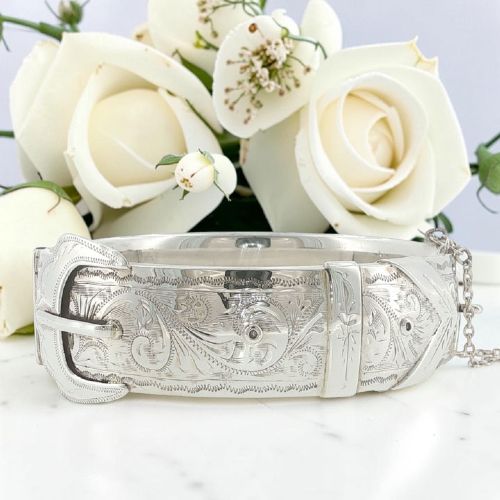
Mid Century Silver Jewellery
Mid century silver jewellery brings together clean modernist lines and vibrant vitreous enamel work from the 1940s, 1950s, and 1960s.
Mid Century Silver Jewellery
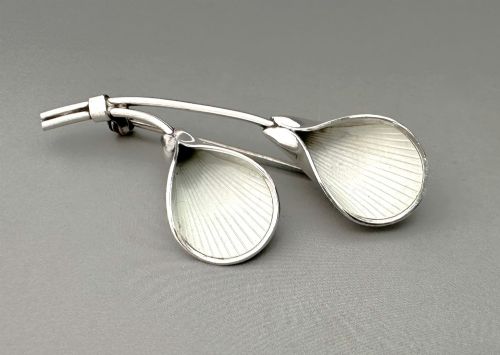
Mid century silver jewellery encompasses brooches, necklaces, earrings, rings, and bangles originating primarily from Scandinavian, British, and European workshops during the 1940s, 1950s, and 1960s. Buyers searching for mid century silver jewellery encounter distinct aesthetic movements ranging from minimalist Scandinavian modernism to intricate floral enamel designs.
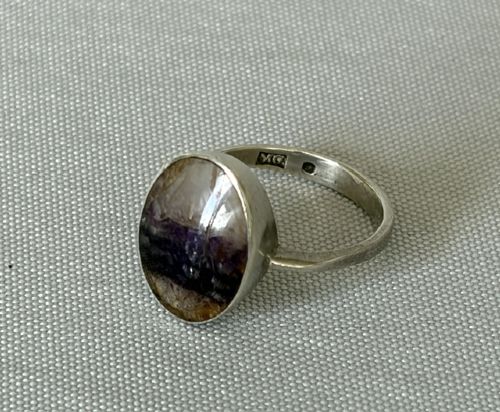
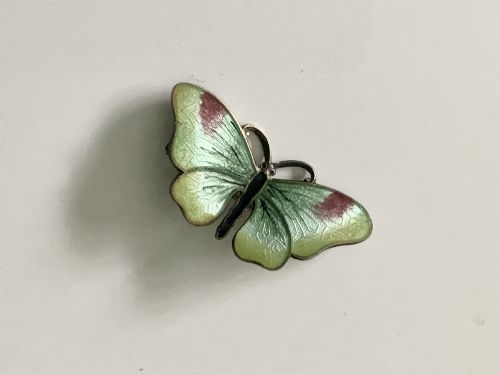
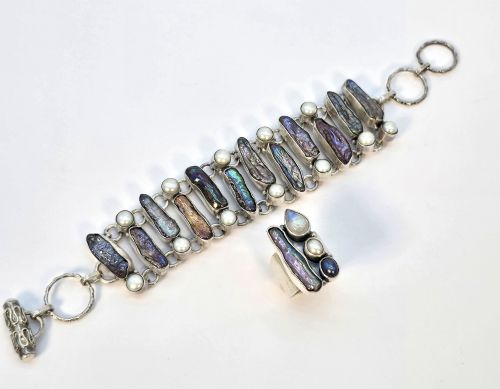
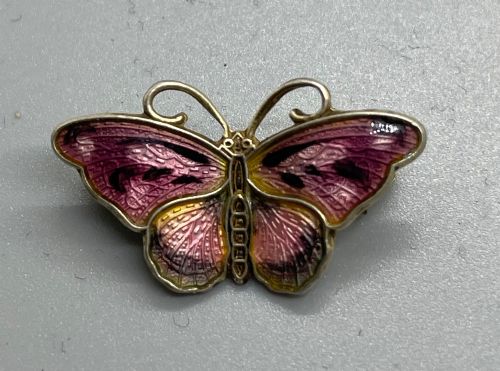
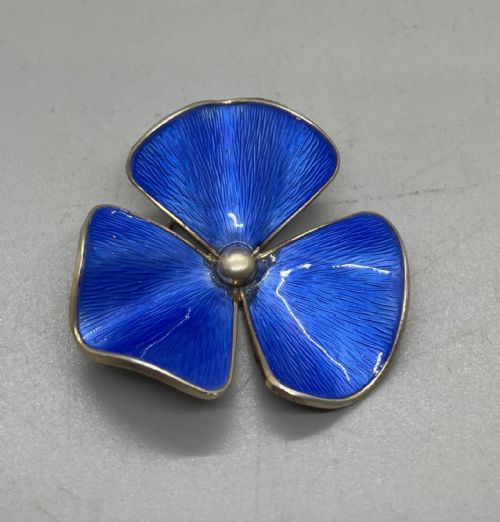
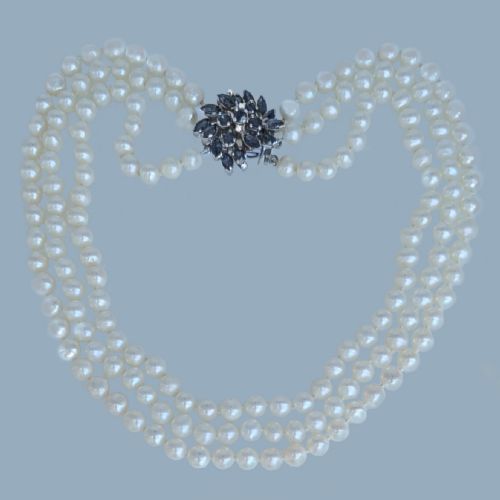
The objects frequently combine sterling silver or silver gilt with natural stones such as Blue John, malachite, lapis lazuli, pearls, and diamonds. Pieces originating from Norway and Denmark dominate the selection, particularly those utilising guilloche enamel techniques on butterfly and floral motifs.
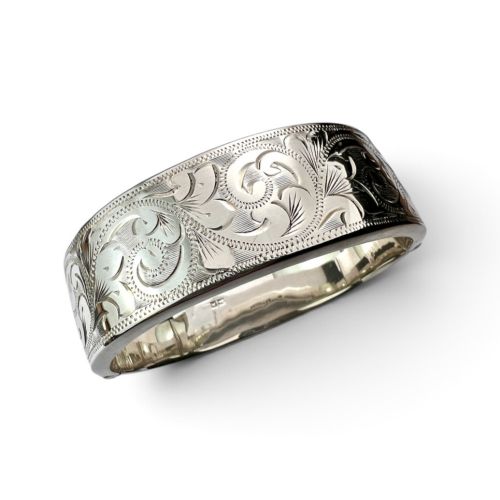
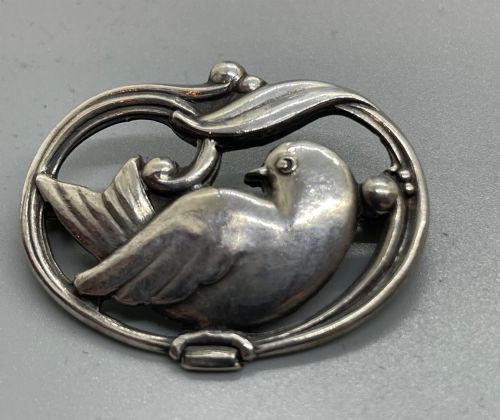
Brooches and hinged bangles form the core of available items, alongside statement necklaces and rings bearing maker marks from notable silversmiths. The designs reflect the broader post-war shift toward sleek, organic shapes and forward-looking modernist abstraction.
Materials and manufacturing methods
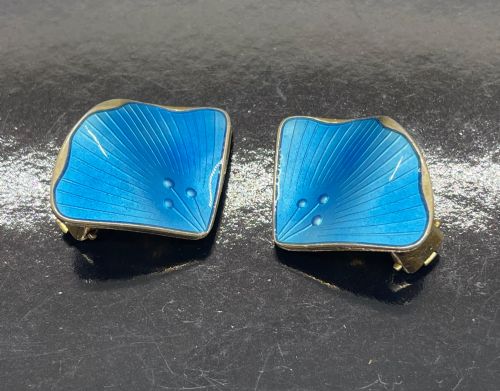
Silversmiths utilised sterling silver and silver gilt as the primary foundation, often pairing the metal with vitreous enamel to achieve translucent coloured surfaces. Guilloche techniques applied geometric engine-turned patterns beneath coloured enamel layers, creating depth and light play on brooches and earrings.
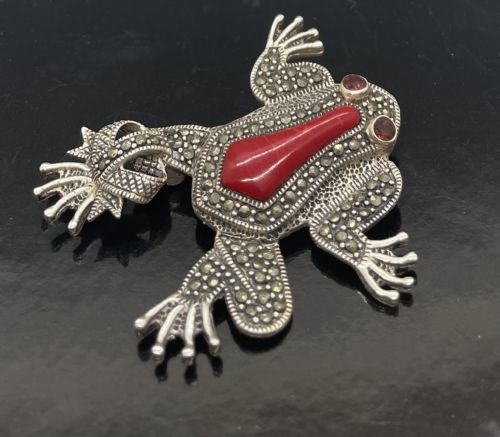
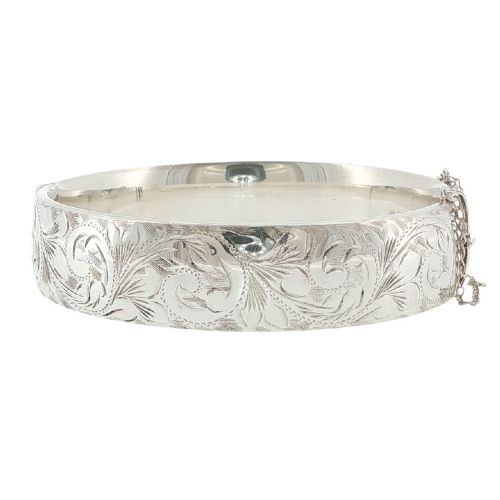
Gemstones including marcasite, biwa pearls, citrine, and diamonds were hand-set into custom bezels or secured with traditional prong settings. Hinged bangles and clasped necklaces incorporated precision mechanical joints alongside hand-engraved surface details.
Object forms range from delicate enamel butterfly brooches to heavy solid silver dressing table boxes and rigid hinged cuffs.
Distinctions in craftsmanship
Quality differences rest upon the crispness of the hand-engraving, the evenness of the vitreous enamel without pitting or hairline fractures, and the structural integrity of pin stems and hinges. Master silversmiths executed cleaner bezel settings and sharper geometric terminals on bangles compared to standard commercial output.
The weight of the sterling silver and the clarity of maker marks or assay stamps indicate higher production standards. Pieces bearing attribution to established Danish or Norwegian designers demonstrate superior finishing and more deliberate compositional balance.
Aksel Holmsen·A H Darby & Son·Hroar Prydz·G. Hoppe·Georg Jensen·Walker & Hall·Harold Arthur Lazarus·Randers Silver·Alton·TOPAZIO·Mikimoto·Beto
The Mid Century Silver Jewellery Glossary
- Guilloche enamel
- A decorative technique where a mechanical pattern is engraved into the silver beneath a translucent layer of coloured enamel. This method creates repeating geometric light reflections across the surface of brooches and earrings.
- Silver gilt
- Sterling silver that has been coated with a thin layer of fine gold. This treatment provides a warm yellow tone while maintaining the structural strength of silver beneath.
- Marcasite
- Small faceted pieces of iron pyrite polished and set closely together in silver mounts. It provides a dark metallic sparkle reminiscent of rose-cut diamonds.
- Parure
- A matched set of jewellery designed to be worn together, typically including a necklace, earrings, and a brooch or bracelet.
Mid Century Silver Jewellery: Frequently Asked Questions
How do I identify Scandinavian pieces?
Scandinavian items from this era usually feature minimalist modernist aesthetics or precise guilloche enamel work on silver or silver gilt. Look for specific maker marks and country stamps on the reverse of the metal.
Many Norwegian and Danish designs favour organic motifs such as butterflies, leaves, and abstract geometric shapes.
What is silver gilt jewellery?
Silver gilt is sterling silver that has undergone a gold plating process to give the metal a rich golden appearance. This technique was frequently utilised on Norwegian enamel brooches and earrings to contrast with brightly coloured enamel.
The underlying metal remains solid silver, offering durability with the visual warmth of gold.
How should I care for enamel items?
Vitreous enamel requires gentle handling to prevent chipping or scratching against hard surfaces. Clean the pieces using a soft cloth and mild soapy water, avoiding harsh chemical dips or ultrasonic cleaners that can damage the enamel bond.
Store enamel brooches and earrings separately in soft pouches to protect the glass surface from abrasion.
Are maker marks common?
Many pieces carry stamps indicating the silversmith, the workshop, or the standard of the silver. These hallmarks help determine the geographic origin and production decade.
Not all items bear full signatures, as smaller workshops sometimes used simple initials or standard export marks.