




Sterling Silver Wristlet
These sterling silver wristlet designs span Victorian cuffs to mid-century Scandinavian pieces, offering wearable silver and enamel work for daily use.
Sterling Silver Wristlet
A sterling silver wristlet brings together various historical forms, ranging from hinged bangles to multi-strand pearl bracelets and rigid cuffs. When exploring a sterling silver wristlet selection, buyers encounter pieces dated from the Victorian era through the mid-century, including specific items from 1900, 1930, 1950, 1960, and later decades.
The objects take several distinct structural forms, encompassing traditional bangles, articulated link bracelets, and pierced filigree settings. Common regional influences visible in the current selection include English, Scandinavian, and Portuguese origins, showing how different silversmithing traditions approached wrist ornamentation.
Art Deco and Arts and Crafts examples sit alongside Victorian Aesthetic Movement and Scandinavian Modern designs. Buyers will find that the term covers both flexible link bracelets with decorative clasps and solid hinged cuffs secured with integrated clasps.
Materials and construction methods
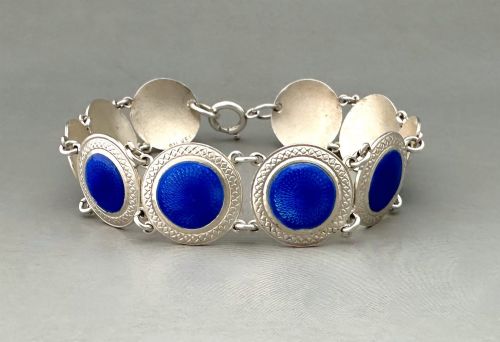
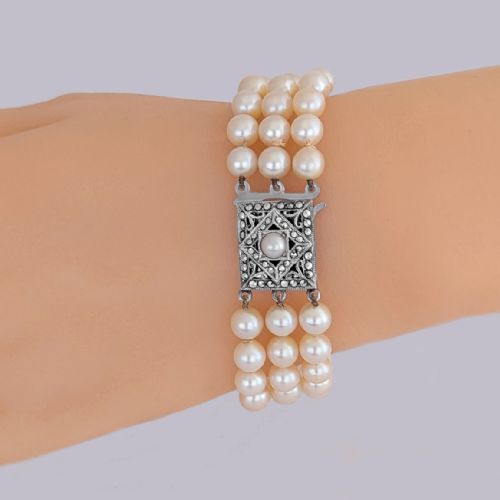
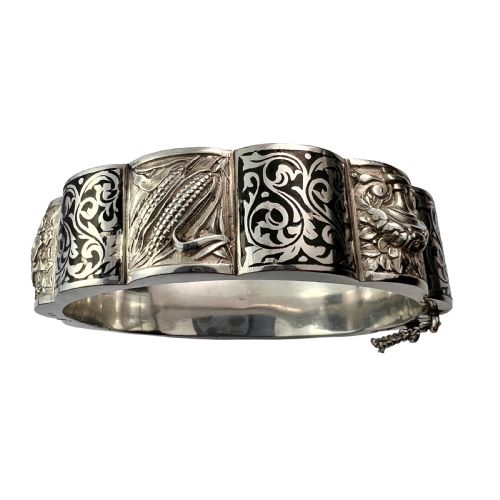
The foundational material across these items is silver and sterling silver, often combined with vitreous enamel, blue enamel, or niello work to add colour and contrast. Artisans incorporated secondary materials such as cultured pearls, marcasite, gold accents, onyx, amber, and small diamonds into specific designs.
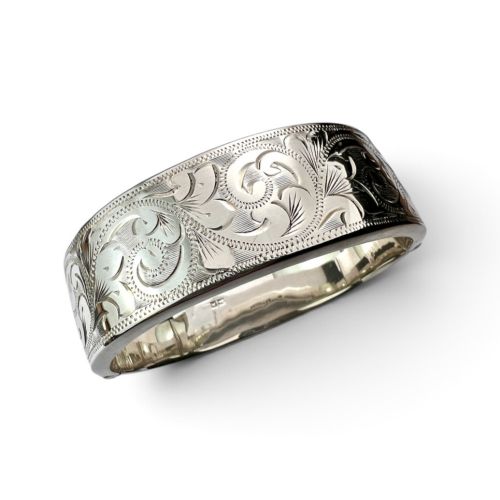
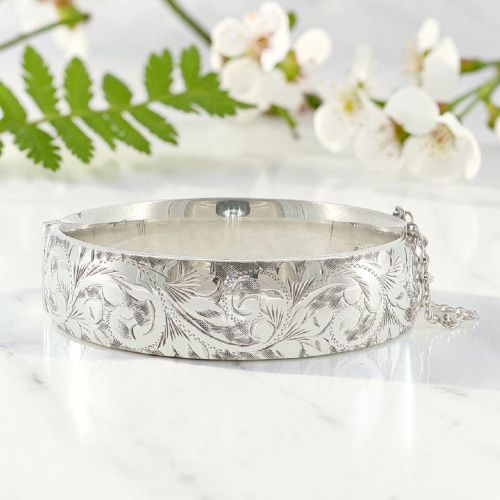
Techniques recorded in the construction include hand engraving, pierced filigree settings, and structural hinging for rigid cuffs. Enamelling requires fusing glass powder to the silver surface at high temperatures, while filigree involves twisting fine silver wires into intricate openwork patterns.
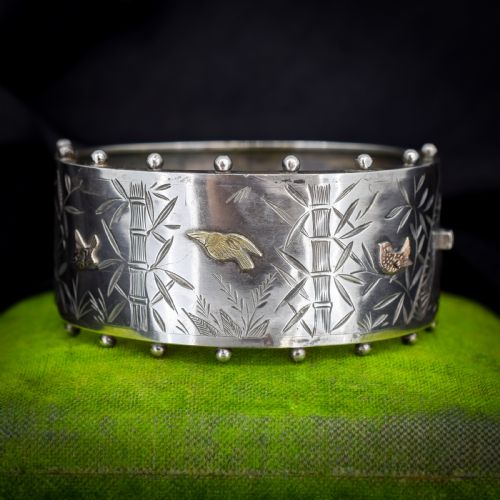
One Victorian cuff cleverly adopts the form of a bird perched among bamboo stalks, blending naturalism with structural metalwork.
Factors of distinction
Quality in these pieces rests on the crispness of hand engraving and the structural integrity of hinged mechanisms or clasp closures. Pieces featuring vitreous enamel depend on the evenness of the fused glass surface and the absence of chipping within the metal cells.
The sophistication of the metalwork, such as detailed filigree wirework or substantial cuff walls, separates standard production from finer examples. Maker attribution, original presentation boxes, and distinct regional design characteristics also influence the standing of an individual piece.
Georg Jensen·TOPAZIO
The Sterling Silver Wristlet Glossary
- Bangle
- A rigid ring or cuff slipped over the hand or secured with a hinge, worn around the wrist. Unlike flexible chain bracelets, a bangle maintains a fixed circular or oval shape.
- Filigree
- Ornamental work consisting of fine wire, usually of silver, twisted and soldered together in delicate openwork patterns. It often appears within pierced metal settings.
- Vitreous Enamel
- A material made by fusing powdered glass to a substrate by firing, producing a smooth and durable coloured coating. It is frequently seen in Art Deco and Arts and Crafts jewellery.
- Marcasite
- Small faceted polished pyrite stones set into silver to resemble diamonds, providing a sparkling dark metallic contrast. These stones are typically secured in clusters around a clasp or border.
- Niello
- A black metallic alloy of sulphur, silver, copper, and lead used as an inlay on engraved silver. The contrasting dark compound highlights the underlying design lines.
Sterling Silver Wristlet: Frequently Asked Questions
How do I care for silver enamel pieces?
Clean silver components gently using a soft cloth, avoiding abrasive dips that can damage enamel or inset stones.
Store pieces individually in soft pouches to prevent scratching between the silver and delicate glass or enamel surfaces.
Are these bangles sized for everyday wear?
Many mid-century and Victorian bangles feature hinged openings or flexible links designed to fit standard adult wrist measurements comfortably.
Rigid cuffs require checking the inner diameter and opening clearance before purchase to ensure a proper fit.
What is the difference between a bangle and a bracelet?
A bangle is a rigid circular or oval ornament that maintains its shape, whereas a bracelet is constructed from flexible links, strands, or chains.
Some designs blur this distinction by incorporating rigid cuff fronts with flexible chain backs or secure hinged locking mechanisms.
How do I identify the period of a piece?
Stylistic markers such as geometric Art Deco enamel work, organic Scandinavian modern lines, or Victorian buckle motifs provide initial chronological clues.
Assay marks, maker stamps, and accompanying original boxes offer definitive evidence regarding the exact manufacturing era.