


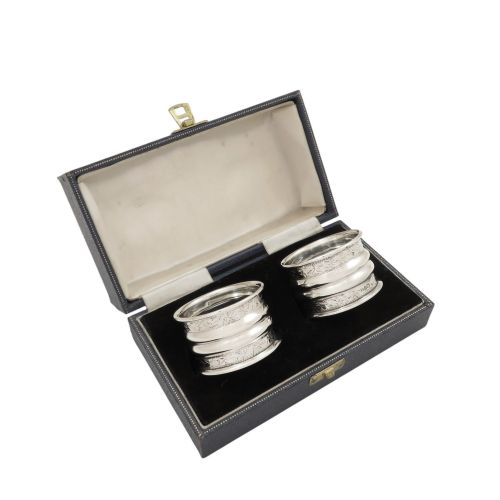


Engraved Silver Band
An engraved silver band brings crisp metalwork and personal detail to the table or finger.
Engraved Silver Band
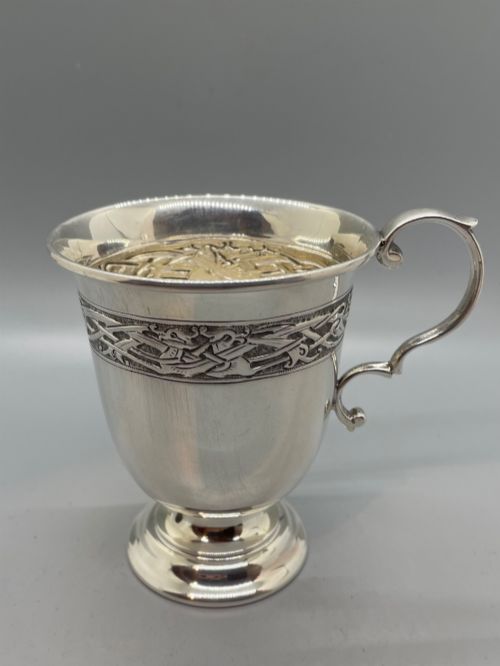
When you search for an engraved silver band, you encounter a focused variety of decorative items spanning the Victorian, Edwardian, Art Deco, and mid-century periods. The selections on this page appear most frequently as table accessories or personal adornments, ranging from napkin rings and christening mugs to wedding bands and bangles.
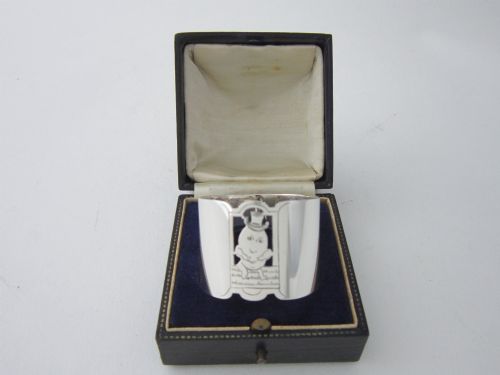
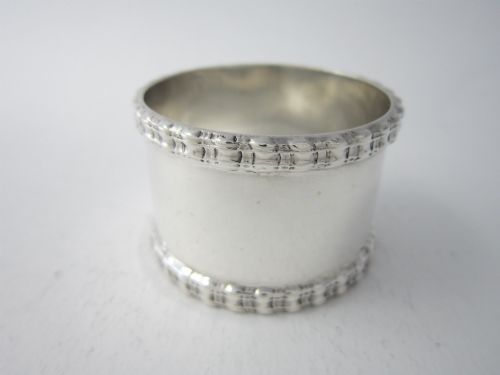
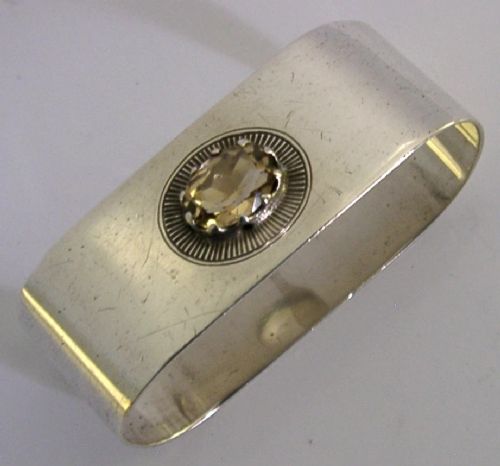
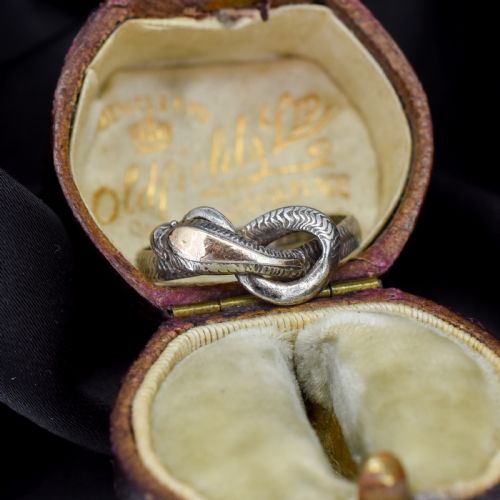
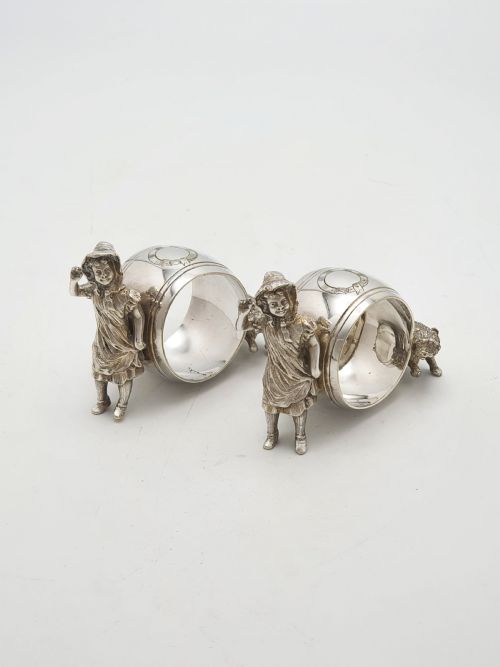
Napkin rings dominate the available forms, often found singly or in matched pairs complete with their original cases of velvet, silk, or leatherette. Other iterations stretch the definition into jewellery, including dress rings, brooches set with Scottish agate, and hinged bangles from the 1960s.
How they were made
Makers utilised sterling silver and silver plate as the primary structural materials, shaping sheet metal into cylindrical bands or rigid hoops. Platinum and gilt elements appear in specific personal jewellery items, while organic accents such as Montrose agate, citrine, and coquilla nut introduce contrasting texture and colour.
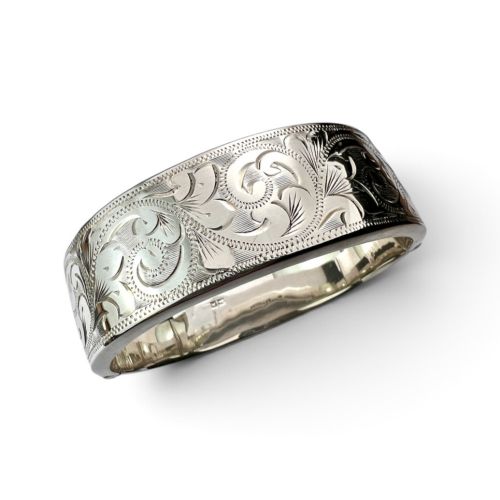
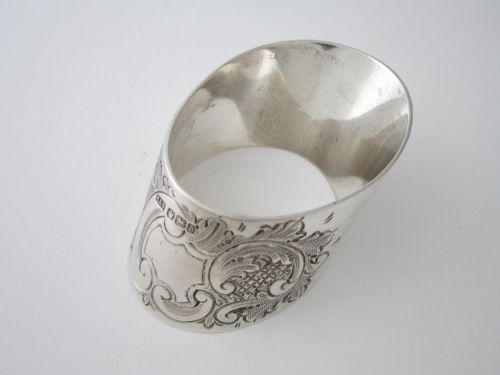
Surface decoration relies heavily on manual incision and chasing, cutting geometric motifs, flora, or serpentine forms directly into the metal surface. Items intended for dining, such as christening mugs and napkin rings, often utilise Birmingham or London assay offices for hallmarks that indicate metal purity and date of production.
Listings feature items spanning the nineteenth century through the 1960s, executed in sterling silver, silver plate, platinum, agate, and coquilla nut.
What varies in quality
The distinction between standard and superior pieces rests upon the crispness of the chased engraving and the weight of the metal utilised. Heavier antique napkin rings and solid silver bands retain their structural integrity and deep relief work far better than thinner plated alternatives.
Provenance and presentation elevate certain examples, particularly where original fitted presentation cases lined with silk or velvet survive alongside the silver piece itself.
The Engraved Silver Band Glossary
- Sterling silver
- An alloy containing 92.5 percent silver by mass, with the remainder composed of copper or other metals to increase durability. This standard is frequently denoted by assay office marks on British items.
- Chasing
- A metalsmithing technique where a design is hammered into the front of the metal using punches to displace rather than remove material. It creates raised relief patterns on bands and rings.
- Agate
- A microcrystalline variety of quartz, often incorporated into Victorian Scottish pebble jewellery and brooches. The stones display natural banded patterns in earthy tones.
- Vinaigrette
- A small ornamental box or pendant containing a perforated grill, designed to hold a sponge soaked in aromatic vinegar. These gilded pieces represent portable luxury from the nineteenth century.
- Hallmark
- An official stamp applied by an assay office indicating the purity of the metal, the maker, and the year of manufacture. It provides a reliable method for dating British silver.
Engraved Silver Band: Frequently Asked Questions
What is an engraved silver band?
An engraved silver band refers to a category of decorative and functional objects fashioned from silver, featuring surface incision or chased patterns. These include tablewares like napkin rings and christening mugs, as well as personal items such as wedding bands and bangles.
The form bridges domestic utility and decorative arts, drawing on design movements from the Victorian era through the mid-twentieth century.
How were antique napkin rings used?
Victorian and Edwardian napkin rings served to identify individual table linen placements during family meals and formal dinners over successive days. Households kept matched pairs or sets of six in fitted cases lined with silk or velvet.
They function today primarily as decorative table accessories or collectible examples of domestic silver smithing.
How do I date a silver band?
Dating relies heavily on official assay office hallmarks stamped into the metal, which record the specific year letter and city of origin. Stylistic markers, such as Art Deco geometry or Victorian foliate chasing, offer further chronological clues.
The presence of original fitted cases can also point to Edwardian or Victorian manufacturing periods.
What materials accompany the silver?
While sterling silver and silver plate form the primary body of these pieces, makers integrated various other materials depending on the object type. Jewellery items incorporate platinum, citrine, and Montrose agate, while older toddy ladles utilise coquilla nut.
Presentation boxes introduce soft textiles like silk, velvet, and leatherette to protect the metal surfaces.