
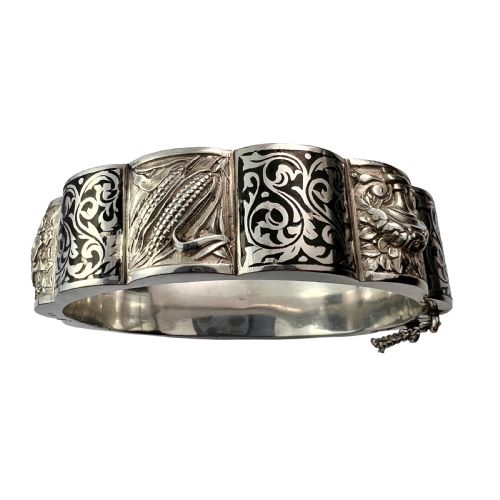


Sterling Silver Cuff Bracelet
A sterling silver cuff bracelet brings solid metal work to the wrist, offering lasting form through hinged bands, buckle designs, and pierced settings.
Sterling Silver Cuff Bracelet
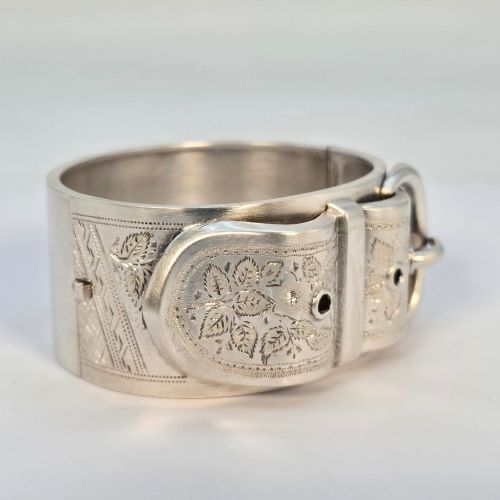
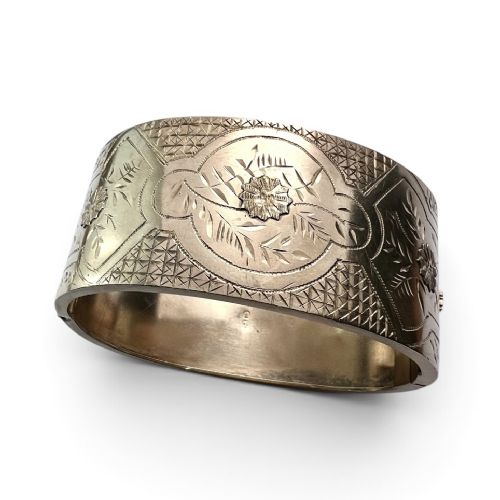
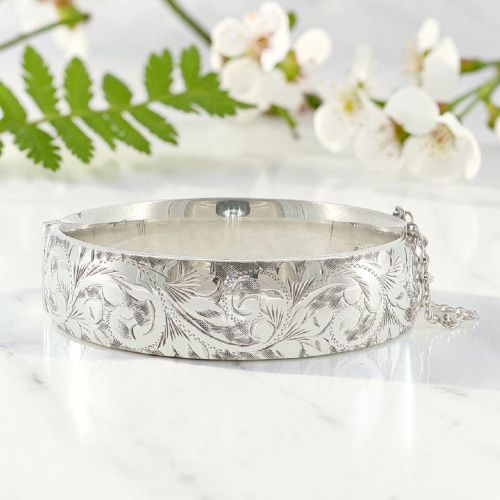
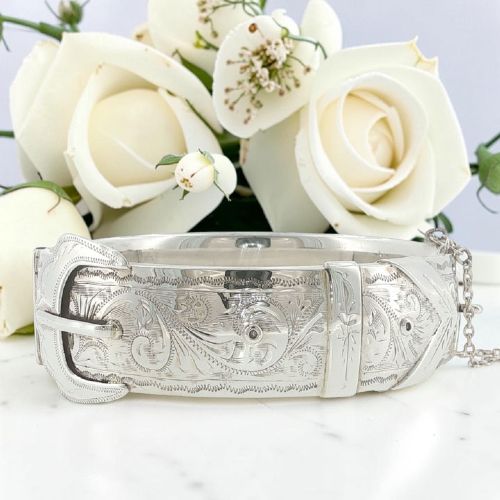
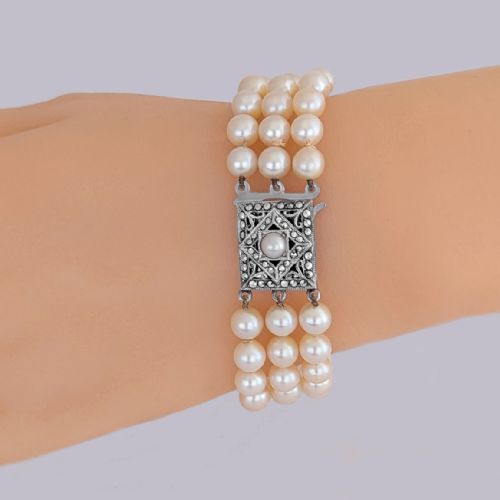
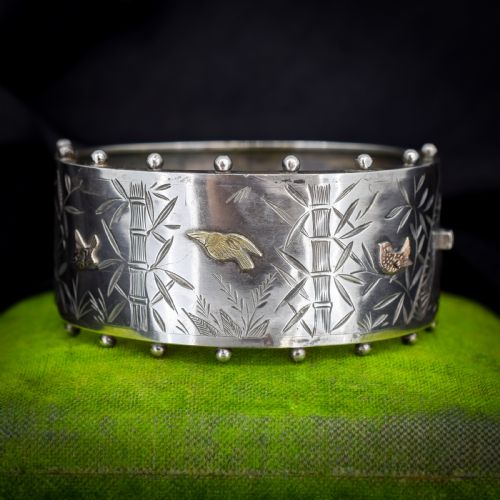
A sterling silver cuff bracelet spans multiple eras, with Victorian hinged bangles, Art Deco geometric links, and mid-century Scandinavian pieces appearing frequently across the selection. Buyers exploring a sterling silver cuff bracelet encounter solid metal bands alongside versions set with cultured pearls, marcasite, enamel, black onyx, and amber. The forms range from wide Victorian aesthetic movement cuffs and buckle bangles to triple strand pearl bracelets with ornate clasps.
Victorian examples often feature hinged constructions, bird and bamboo motifs, or mixed silver and gold details, while twentieth-century pieces lean towards clean mid-century lines and engraved surfaces. Makers such as Georg Jensen, Walker & Hall, and Topazio represent the range of origins found in these collections. Selecting a sterling silver cuff bracelet involves weighing the heavy presence of a solid hinged bangle against the lighter articulation of linked geometric or filigree bracelets.
Materials and construction methods
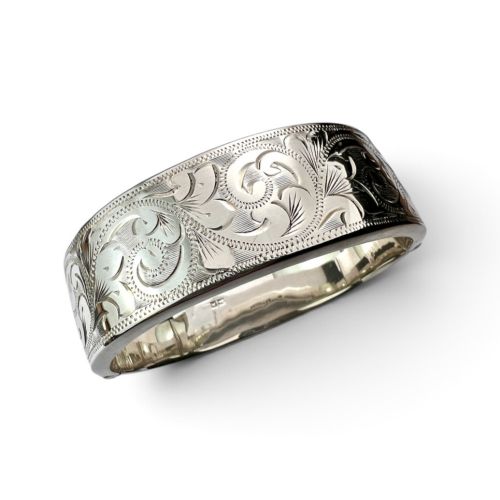
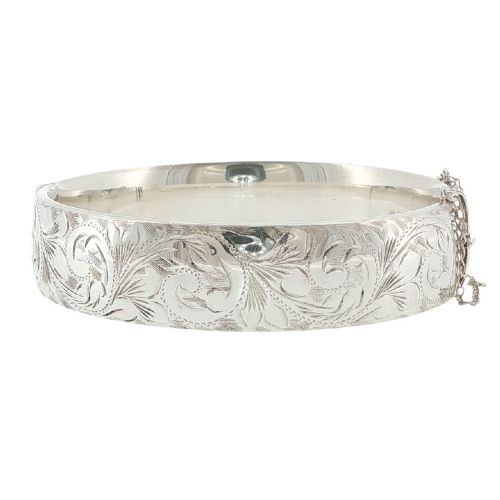
Makers formed these pieces using sterling silver and silver alloys, often incorporating hinges to allow rigid cuffs to open and fit securely around the wrist. Decoration relied on hand engraving, pierced filigree work, and applied details in gold, enamel, niello, or black onyx.
Stones and organic materials like cultured pearls, marcasite, and amber were integrated using bezels, claw settings, or specialised clasps. Hallmarks stamped into the metal recorded assay offices, maker marks, and dates of manufacture.
Listings feature Victorian, Art Deco, and mid-century pieces created from sterling silver, gold, enamel, and cultured pearls.
Evaluating craftsmanship and condition
Quality rests in the crispness of hand engraving, the structural integrity of hinges and clasps, and the secure mounting of set stones such as marcasite, onyx, and amber. Pieces retaining clear hallmarks and original boxes demonstrate higher documentary value.
The weight of the silver and the precision of pierced filigree work distinguish standard production from finer workshop output. Surface wear on engraved patterns or repairs to hinges indicate the extent of previous use.
Georg Jensen·Walker & Hall·TOPAZIO
The Sterling Silver Cuff Bracelet Glossary
- Sterling silver
- An alloy consisting of silver and other metals, usually copper, meeting a specific fineness standard. This metal forms the primary body of the cuffs and bangles.
- Hinged bangle
- A rigid bracelet divided into two semicircles joined by a hinge and secured with a clasp. This design allows the piece to open and close around the wrist.
- Marcasite
- Small faceted polished pyrites set closely together in jewellery to provide sparkle. These stones appear frequently in clasps and decorative surfaces.
- Filigree
- Delicate ornamental work of fine silver wire intertwined into openwork patterns. This technique creates airy, lace-like settings for stones.
- Hallmark
- Official marks stamped on precious metal items to certify purity, maker, and assay office. These stamps help date and attribute the piece.
Sterling Silver Cuff Bracelet: Frequently Asked Questions
How do I wear a hinged cuff?
A hinged cuff opens via a side joint, allowing the wrist to slip through before the clasp secures it in place. This design provides a snug fit without requiring the bracelet to slide over the hand.
The solid structure sits flat against the wrist bone, pairing well with fitted sleeves that do not catch on the clasp or engraved edges.
What periods do these bracelets come from?
The pieces span from the Victorian era through the Art Deco period and into mid-century modern designs. Victorian examples often display deep engraving or aesthetic movement motifs, while later pieces show cleaner geometric lines.
Twentieth-century items frequently reflect Scandinavian minimalism or detailed workshop production from Britain and continental Europe.
How do I care for sterling silver?
Sterling silver benefits from gentle cleaning with a soft cloth to remove tarnishing without wearing away fine engraved details or damaging set stones. Storing pieces away from moisture helps maintain the finish of the metal.
Stones such as amber and pearls require careful handling to avoid chemical contact from soaps and perfumes.
What is an aesthetic period bracelet?
Aesthetic period bracelets date from the late nineteenth century and draw inspiration from the art for art's sake movement. They often feature naturalistic motifs like birds, bamboo, and asymmetric arrangements.
The metalwork on these pieces prioritises visual balance and detailed surface texture over traditional symmetry.