
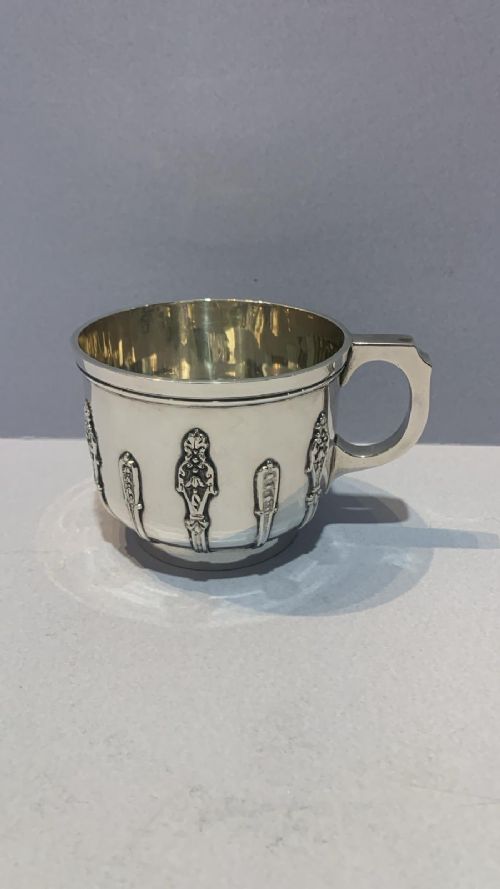


Sterling Silver Christening Tankard
A sterling silver christening tankard marks a birth or childhood milestone, offering enduring metalwork shaped across Georgian, Victorian, and later periods.
Sterling Silver Christening Tankard
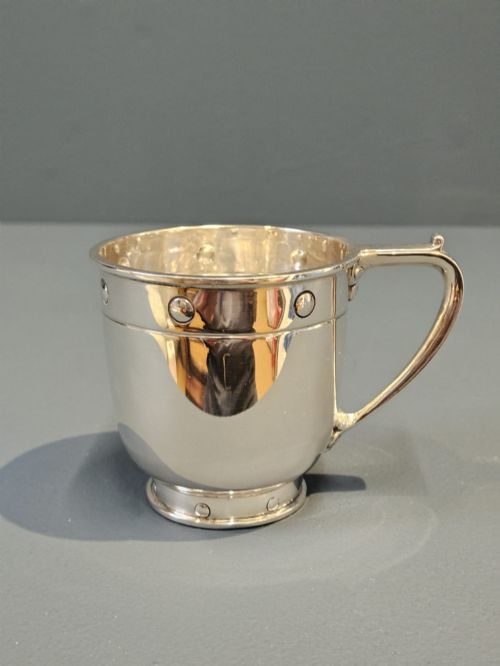
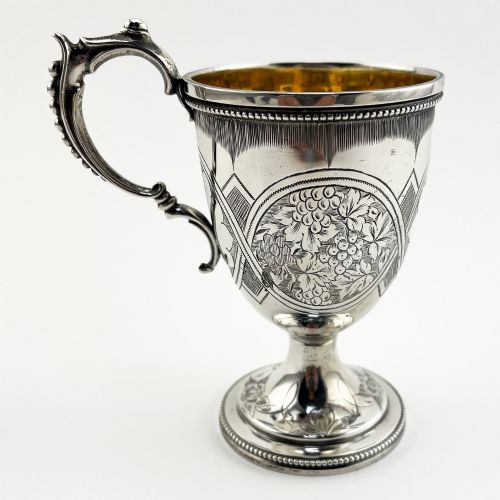
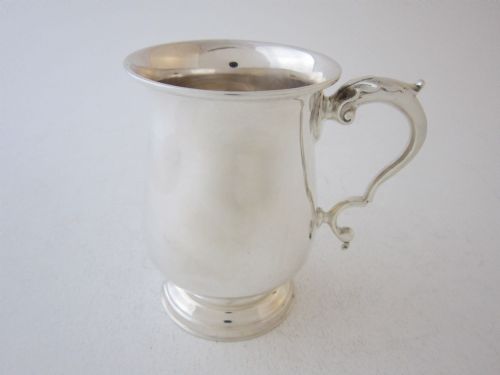
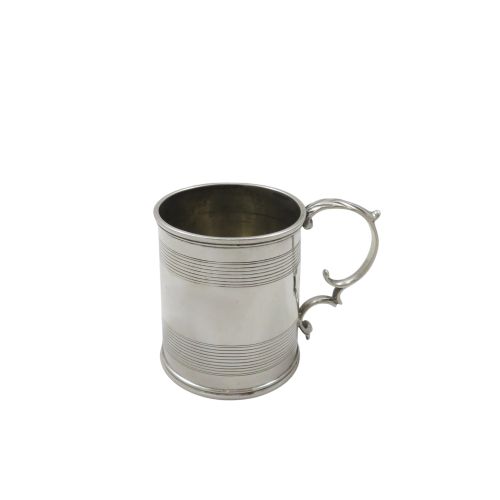
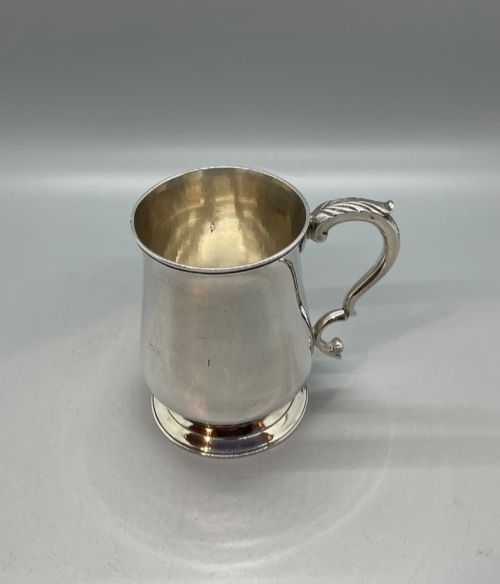
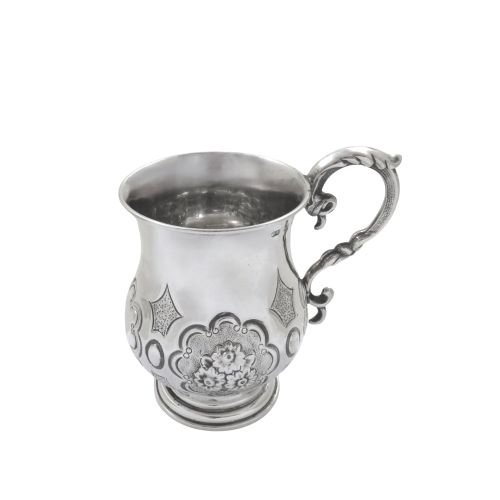
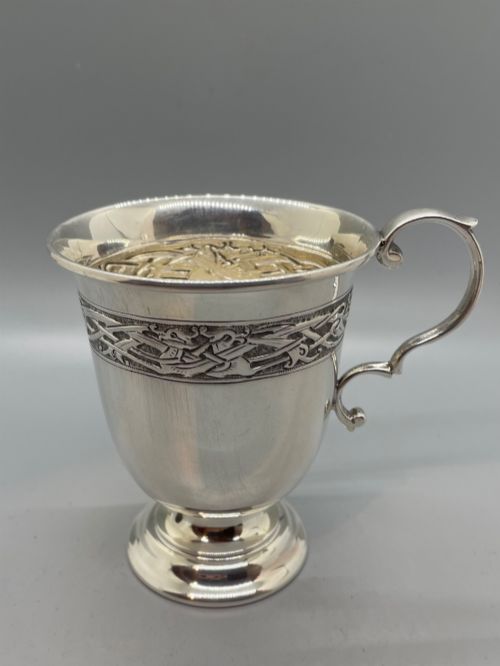
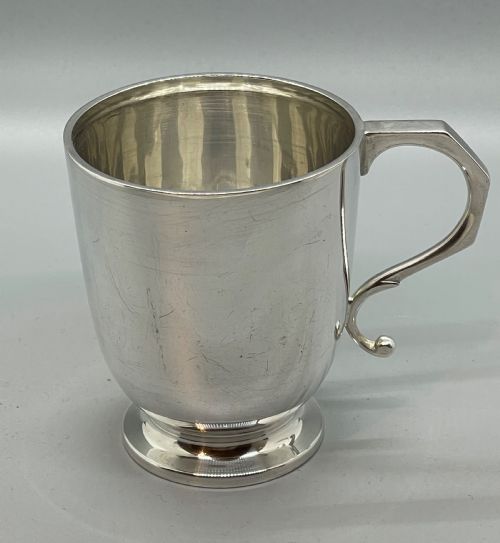
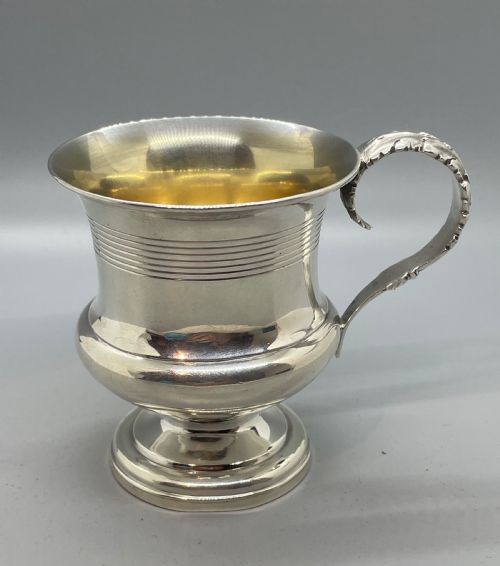
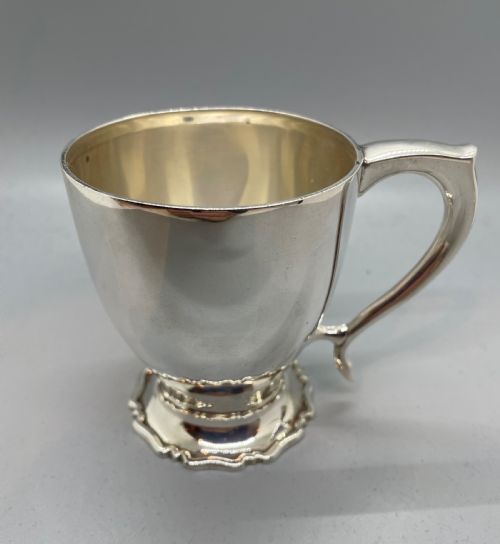
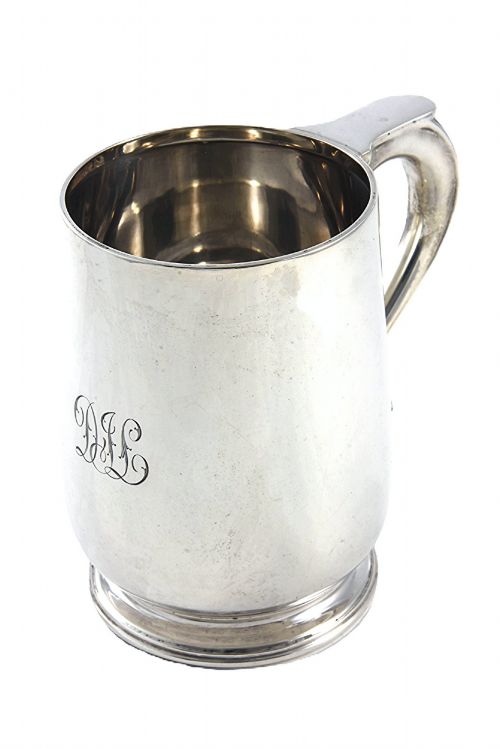
A sterling silver christening tankard typically presents as a small drinking vessel designed for children, appearing in forms ranging from plain cylindrical bodies to baluster shapes with scroll handles. Pieces span several eras, with Victorian and George V examples appearing alongside Georgian and Edwardian items.
Makers shaped these items in various regional assay offices, including London, Birmingham, and Sheffield, sometimes incorporating fitted leather or velvet cases. Styles shift from restrained plain surfaces to floral engraving, embossed motifs, and occasional novelty shapes.
The selection includes specific christening cups and mugs alongside larger pint tankards, reflecting both formal presentation pieces and practical gifts for young recipients.
Materials and construction
Silversmiths constructed these vessels primarily from solid sterling silver, occasionally applying silver gilt or gold gilt coatings to the interior surfaces. Handles were cast separately, often taking the form of scrolls, serpents, or stylized loops before being soldered to the main body.
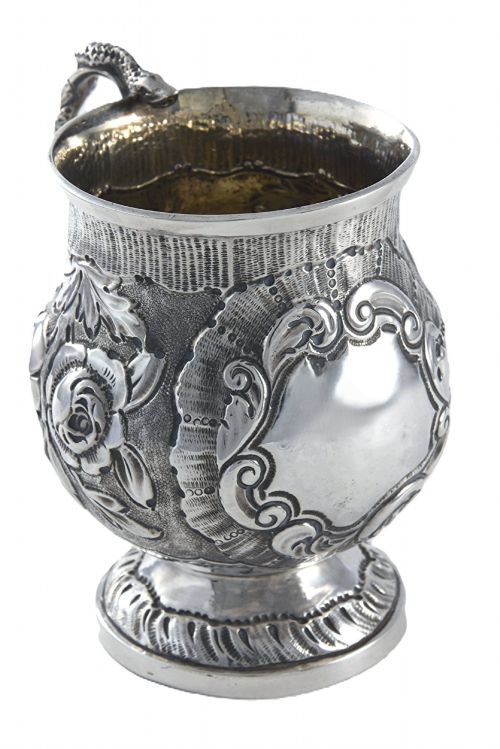
Decoration relied on hand techniques such as floral engraving, embossing, and chasing to create surface patterns on the silver wall. Assay office hallmarks stamped into the metal recorded the metal standard, city of testing, and year of manufacture.
Makers occasionally gave these miniature vessels serpentine tails for handles and bird motifs to delight young recipients.
Distinctions in craftsmanship
Quality rests in the weight of the silver and the precision of the handle attachment, where sturdier walls and seamless joints denote superior execution. Finer examples display crisp, deep chasing and well-defined engraving that remains sharp across the curves of the body.
The presence of an original fitted case lined with velvet or silk adds a layer of completeness, while documented maker marks from notable firms elevate the standing of an individual piece.
Barker Bros·R E Stone·William Bateman·Garrards·Mappin & Webb
The Sterling Silver Christening Tankard Glossary
- Baluster
- A vertical architectural form with a swelling lower portion, frequently seen in the silhouette of traditional tankards.
- Hallmark
- A series of official marks stamped into precious metal to indicate the standard of purity, assay office, and year of making.
- Silver-Gilt
- Sterling silver that has been coated with a thin layer of gold on its surface, often applied to the interior of drinking vessels.
- Chasing
- A metalworking technique where the smith pushes metal from the front using punches to create raised surface designs.
- Scroll Handle
- A curved handle shaped like a continuous scroll, offering a secure grip on small presentation mugs.
Sterling Silver Christening Tankard: Frequently Asked Questions
What defines a sterling silver christening tankard?
These vessels are small-scale drinking mugs fashioned from solid sterling silver for childhood ceremonies and milestones. They frequently feature maker marks and assay stamps indicating their exact origin.
Craftsmen often decorated the exterior with floral engraving, embossed patterns, or plain polished surfaces designed to receive personal inscriptions.
How can I tell the date of a piece?
Dating relies on the set of hallmarks struck directly into the silver, which include a specific letter code for the year of assay. Stylistic details such as rococo scroll handles or plain mid-century silhouettes also point to specific manufacturing decades.
Comparing the shape and engraving style against known Victorian or Georgian examples provides additional confirmation of the period.
Were these items meant for daily use?
Many of these vessels functioned primarily as keepsake presentation gifts rather than everyday tableware for children. Their delicate silver walls and occasional gilt interiors suggest they were kept in protective cases for ceremonial display.
Some examples show signs of handling that indicate they were indeed utilised during family meals or special occasions.
How should I clean antique silver?
Maintenance requires gentle washing with warm water and mild soap, followed by drying with a soft cloth to protect the antique surface. Commercial abrasive dips should be avoided to preserve the original hallmarks and delicate engraved details.
Regular handling naturally maintains a soft shine, reducing the need for aggressive chemical polishing.