



Engraved Silver Drinking Cup
An engraved silver drinking cup carries the weight of centuries, offering a tangible link to Georgian and Victorian tables through hand-etched ornament.
Engraved Silver Drinking Cup
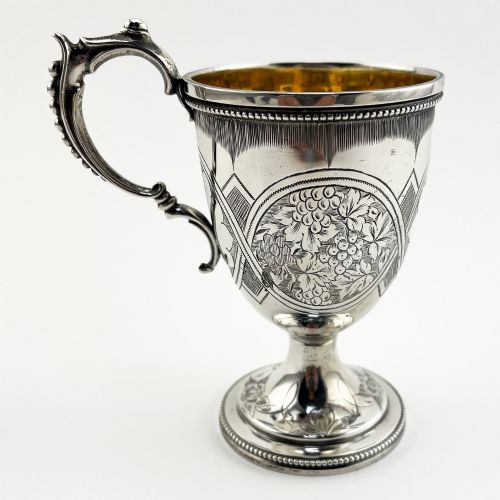
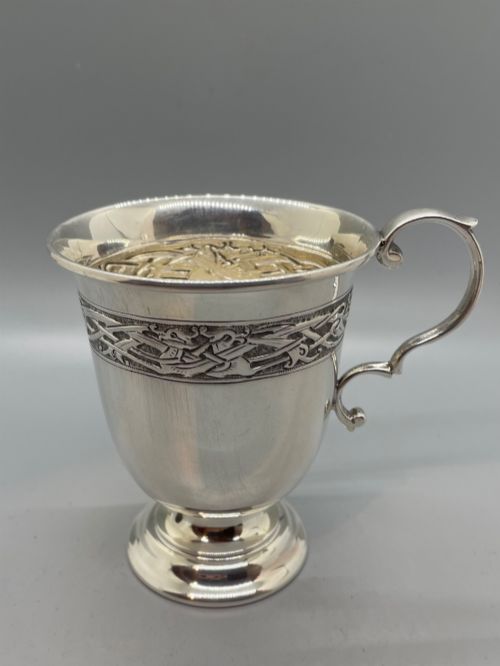
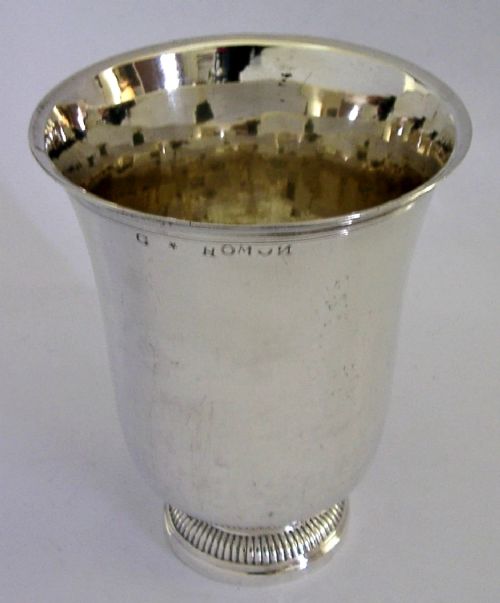
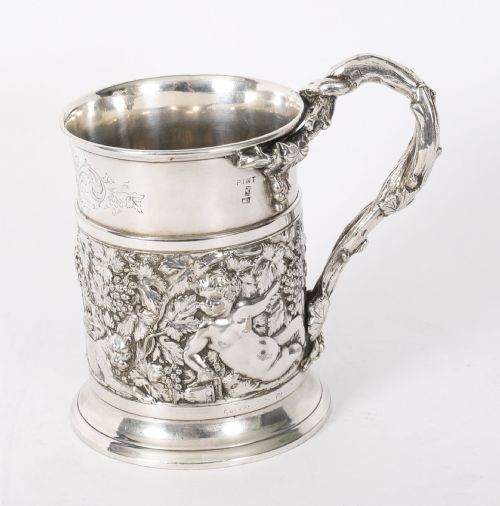
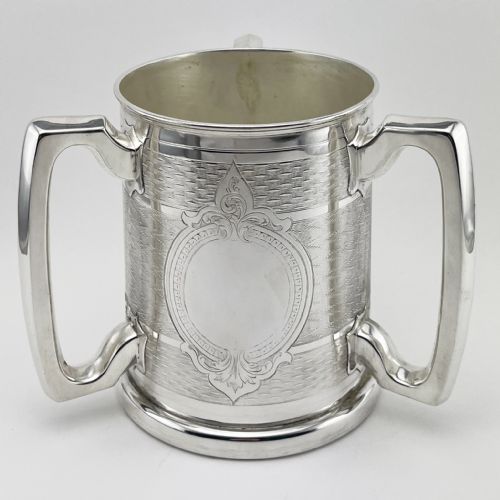
When you search for an engraved silver drinking cup, you encounter a variety of vessels designed for toast, christening, and daily refreshment. The selection ranges from tall Georgian goblets with vase-shaped bodies to sturdy Victorian christening mugs and decorative beakers.
You are most likely to meet Victorian and Georgian examples on this page, often shaped as goblets, tankards, or cylindrical beakers. These forms reflect the social habits of their periods, spanning domestic christenings, formal banquets, and informal tavern use.
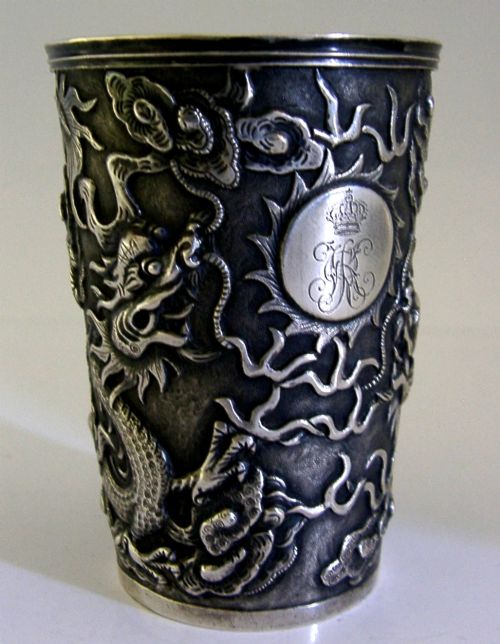
The origins stretch from British workshops to Chinese Export, French, Irish, and Anglo-Indian makers. Each region applied its own decorative vocabulary, resulting in bright cut engraving, embossed motifs, and figural handles.
Materials and methods
Silversmiths constructed these vessels primarily in sterling silver, silver gilt, and silver plate over base metals like nickel silver or white metal. Some utilitarian or folk pieces incorporate horn or leather cases to protect the metal structure.
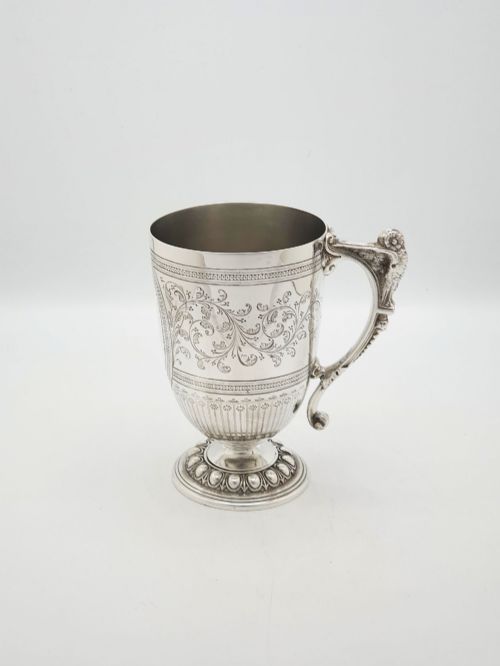
Decoration relied heavily on hand engraving, parcel gilding, and embossing. Craftsmen utilised sharp gravers to cut bright patterns into the metal surface, creating light-reflecting facets across the body of the cup.
Periods represented span from the eighteenth century through the Edwardian era and the art deco movement.
Judging the work
Quality rests on the crispness and depth of the hand engraving and the structural integrity of the metal. Superior pieces display deliberate, clean lines cut directly into substantial metal rather than shallow machine stamping.
The weight of the vessel and the balance of applied elements, such as handles cast as owls or scrollwork, dictate the standing of a piece. Finer examples maintain thick walls that resist denting and retain clear hallmarks or maker marks.
G R Collis·Bernard Muller·John hunt and Robert Roskell
The Engraved Silver Drinking Cup Glossary
- Bright cut
- A style of engraving characterised by faceted cuts made with a V-shaped tool, producing a sparkling, geometric surface pattern. This technique was particularly popular during the Georgian period.
- Parcel gilt
- Silver objects that are partially gilded with a thin layer of gold on the interior or selected exterior details. This method protected the drinker from the metallic taste of silver and created visual contrast.
- Christening mug
- A small handled drinking vessel traditionally given to an infant to mark their baptism. They frequently feature elaborate floral engraving and personal inscriptions.
- Beaker
- A straight-sided or slightly tapered drinking vessel without a handle. Early examples often exhibit hand-hammered surfaces and engraved crests.
- Loving cup
- A large two-handled drinking vessel passed around a gathering during formal toasts. They often feature generous embossed decoration and prominent scroll handles.
Engraved Silver Drinking Cup: Frequently Asked Questions
How do I clean an engraved silver cup?
Use a gentle, non-abrasive silver polish and a soft cloth to remove tarnish without wearing down the delicate engraved lines. Avoid harsh chemical dips that can strip historical patina from the recesses of the pattern.
Store the cup in a dry environment, away from direct sunlight, and handle it by the base or rim to minimise the transfer of natural oils from your hands.
Are these silver cups safe to drink from?
Most solid sterling silver and silver gilt cups remain entirely safe for drinking beverages like wine or water. You should check silver-plated or base metal pieces for wear that exposes underlying metals.
Historic pieces with heavy gilding on the interior generally offer better protection against tarnishing from acidic liquids. Wash them by hand immediately after use rather than placing them in a dishwasher.
How can I tell a Georgian cup from a Victorian one?
Georgian cups often favor neoclassical shapes like vase-like bodies with bright cut floral swags and crisp geometric borders. They frequently display crisp hallmarks stamped directly into the heavy silver.
Victorian pieces tend toward heavier embossing, eclectic revival styles, and specialised forms like christening mugs with elaborate figural handles. Hallmarks from this era include duty marks and specific date letters.
What is a marriage cup?
A marriage cup, also known as a wager cup, is an articulated double-cup designed for wedding ceremonies. The larger cup pivots so two people can drink simultaneously without spilling.
These pieces tested the coordination and cooperative spirit of the newlywed couple during traditional celebrations. They often feature intricate casting and engraved detailing.