

Sterling Silver Candle Holders
These sterling silver candle holders bring a bright focus to a table, spanning periods from Victorian work to mid-century modern designs.
Sterling Silver Candle Holders
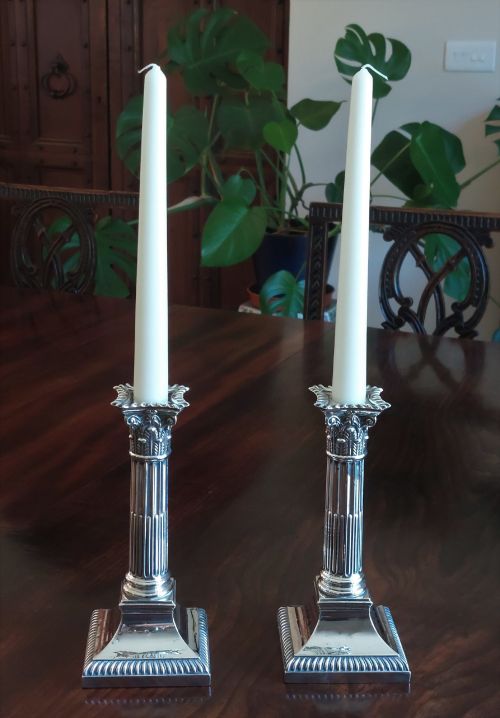
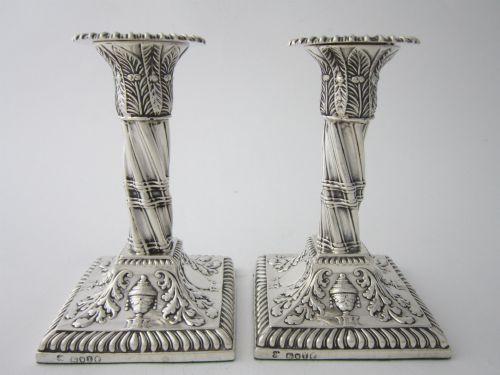
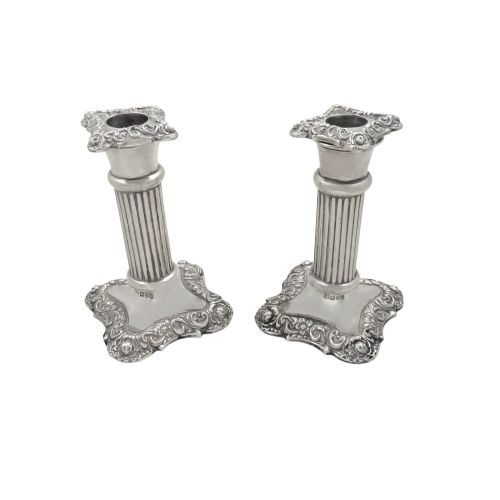
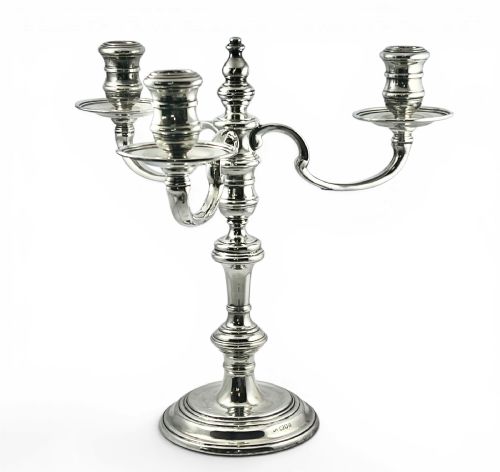
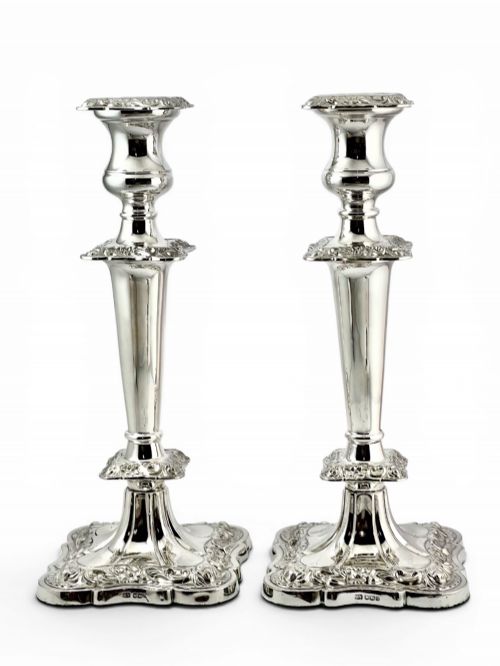
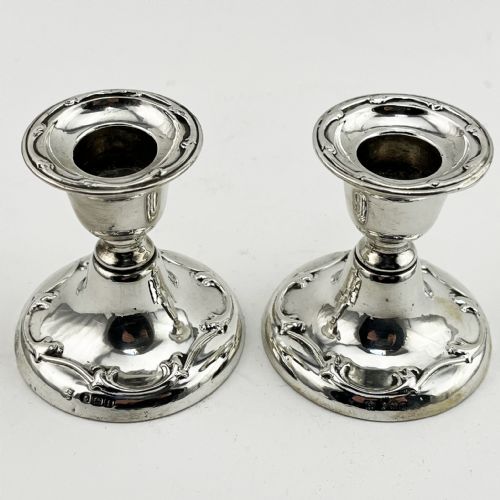
When you search for sterling silver candle holders, you encounter a range of forms designed to hold wax lights securely, from single candlesticks to multi-branch candelabra. The selection most frequently met on this page includes pairs of Edwardian and Victorian candlesticks alongside later George V and mid-century pieces.
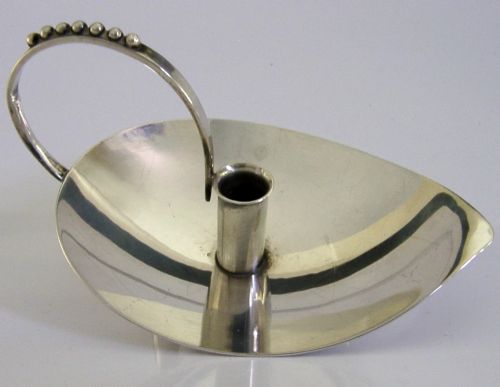
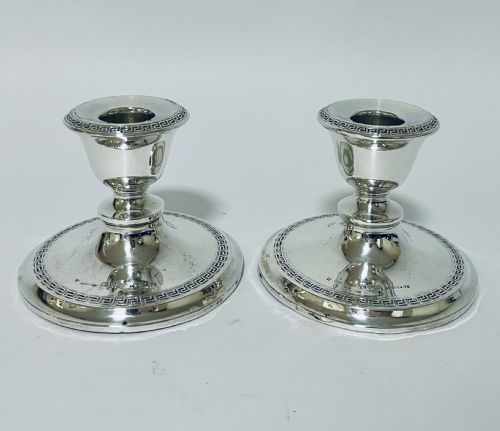
Makers produced these items in various heights, including dwarf versions for desks and tall columns for dining tables. Chambersticks also appear, offering a small pan and handle designed for carrying a flame through a house.
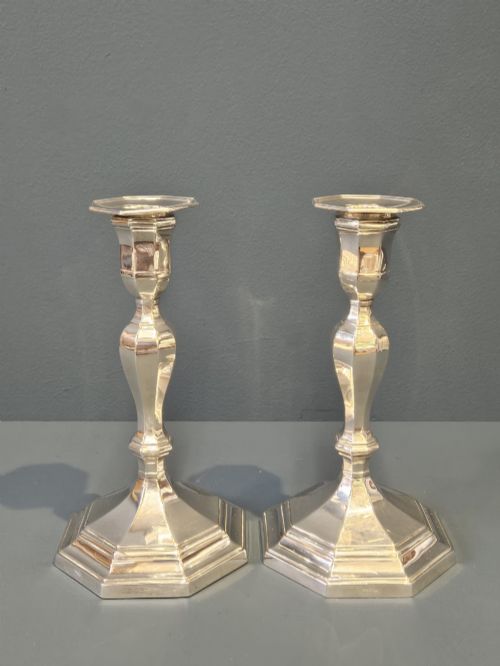
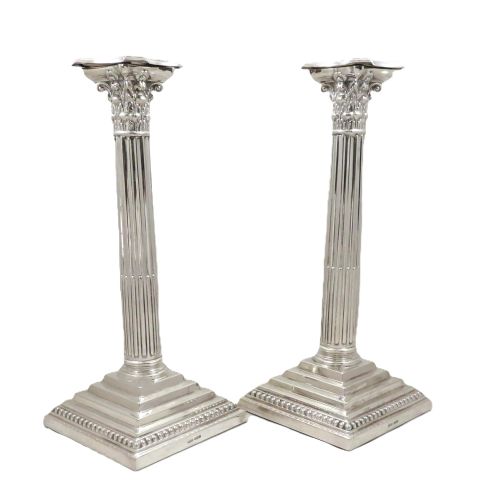
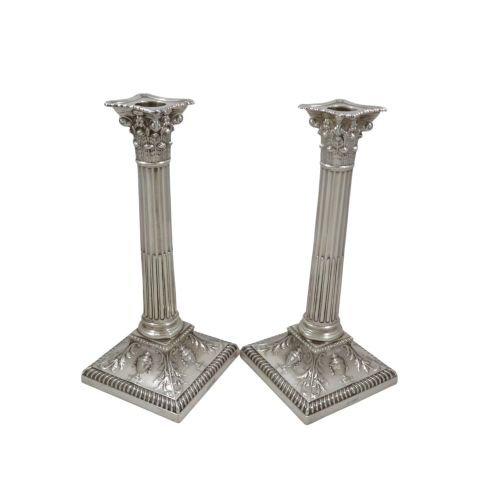
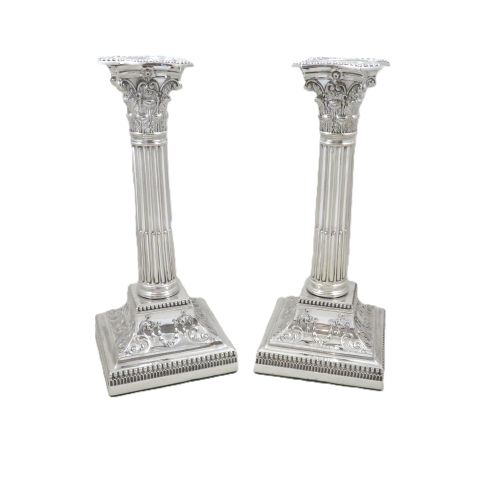
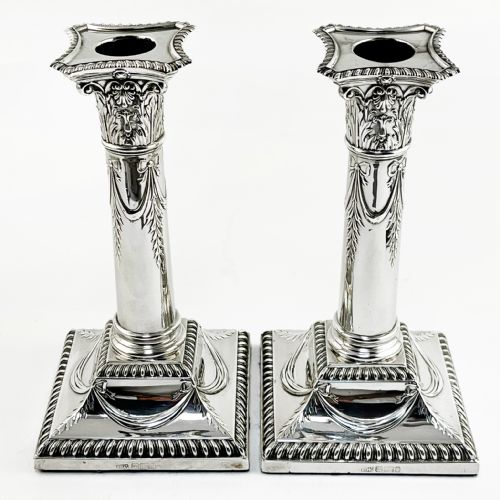
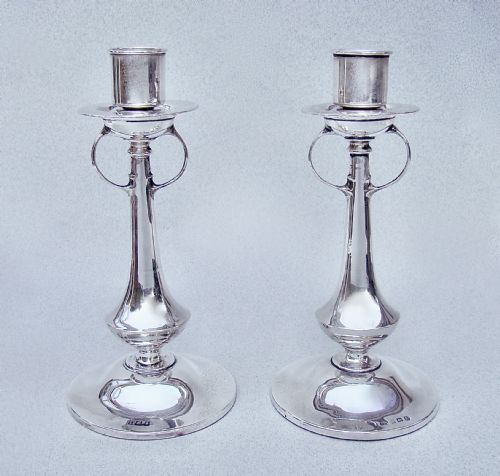
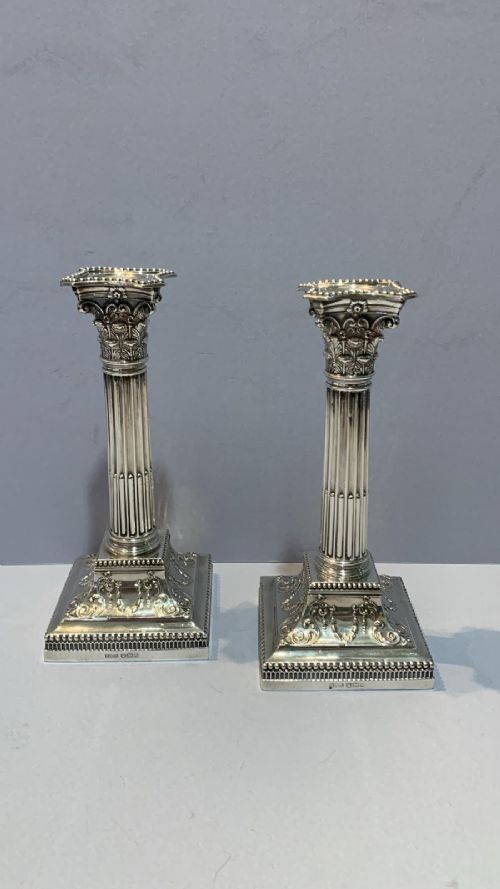
The styles shift from neoclassical Corinthian columns and George I revivals to arts and crafts models and naturalistic Victorian designs. Buyers find that many of these objects are offered in matched pairs, which makes them suited for mantelpieces or dining settings.
Materials and Technique
Silversmiths constructed these pieces primarily using sterling silver and standard silver, occasionally applying silver gilt to the metal surface for a rich golden tone. Enamel also appears as a decorative element on select designs from specific periods.
Makers shaped the metal through techniques like casting, spinning, and hammering, often incorporating weighted bases to ensure stability. Hallmarks stamped into the silver record the assay office, maker and year of production.
Sterling Silver Candle Holders Retail Price Guide 2026
Typical asking prices for sterling silver candle holders among the pieces listed under this phrase on Sellingantiques today, from the lower quarter to the upper quarter. They describe what is for sale here now, not the wider market.
Listings feature sterling silver candle holders spanning the Victorian, Edwardian, George V, and mid-century periods.
Judging Quality
The distinction between ordinary and superior pieces rests on the crispness of the chasing, the weight of the metal, and the integrity of the construction. Finer examples display sharp architectural details on Corinthian capitals or clean lines on mid-century stems.
Makers who paid attention to balance and proportion produced items that feel substantial in the hand and stand level without wobble. The clarity of the hallmarks and the absence of distortion in the drip pans further separate high-grade work from standard production.
Garrard & Co·James Fenton·John Cafe·Thomas Bradbury & Sons Ltd·William Hutton & Sons·Goldsmiths & Silversmiths Co
The Sterling Silver Candle Holders Glossary
- Chamberstick
- A low candle holder fitted with a wide drip pan and a loop handle for carrying. These items were essential for lighting corridors before the arrival of electricity.
- Candelabra
- A branched candle holder designed to support multiple lights from a single base. They often feature removable branches that allow the main shaft to function as a standard candlestick.
- Corinthian Column
- A classical architectural style adapted for candlestick stems, featuring ornate acanthus leaves at the top. This form enjoyed particular popularity during the Victorian and Edwardian eras.
- Silver Gilt
- Silver that has been coated with a thin layer of gold on its surface. This technique provides the warm appearance of solid gold while utilising a silver base.
- Hallmark
- A series of official marks stamped onto precious metal items to guarantee purity and origin. These marks typically indicate the maker, assay office and year of creation.
Sterling Silver Candle Holders: Frequently Asked Questions
How do I clean silver candle holders?
Use a soft cloth and a specialised silver polish to remove tarnish, working gently around engraved details and hallmarks. Avoid harsh abrasives that can wear down the thin silver layer on older items.
Rinse the piece in warm water and dry it thoroughly with a lint-free cloth to restore the shine without leaving water spots.
Are these candle holders weighted?
Many candlesticks and chambersticks contain an internal core of resin, plaster, or wood to provide stability. This weight prevents the tall silver structure from tipping over easily when holding a burning taper.
Because of this internal filling, the total weight listed includes non-silver materials, which is standard practice for this type of antique.
How do I identify the date of a piece?
Look for the hallmarks stamped into the base, rim, or nozzle of the holder. These tiny symbols include a date letter that corresponds to the specific year and assay office of production.
Reference marks against official British assay records to pinpoint the exact year your item was made.