


Sterling Silver Basting Spoon
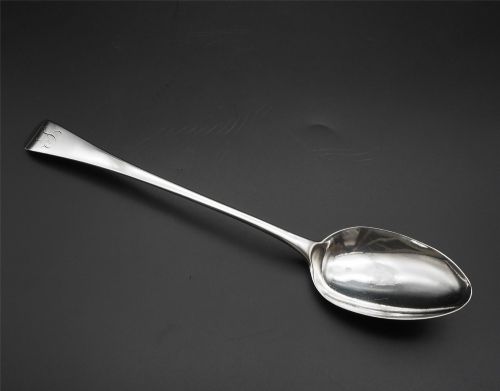
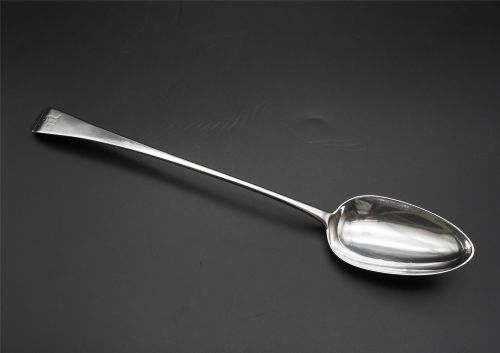
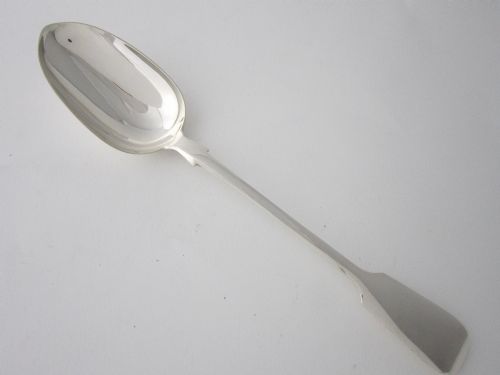
A sterling silver basting spoon brings heavy Georgian and Victorian proportions and solid metal heft to the historic dining table.
Sterling Silver Basting Spoon
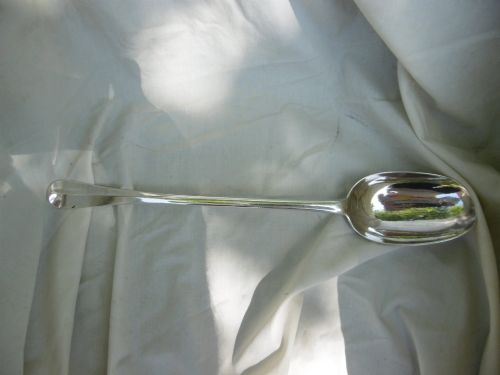
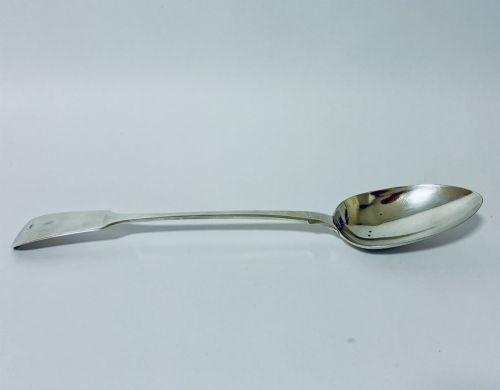
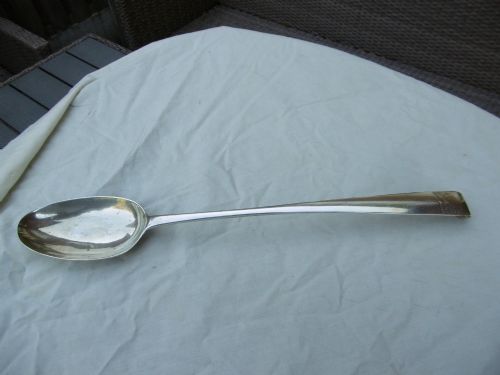
A sterling silver basting spoon is a large, elongated piece of cutlery designed originally for serving meat or ladling juices over roasting joints. These substantial utensils typically measure over thirty centimetres in length and weigh considerably more than standard table spoons.
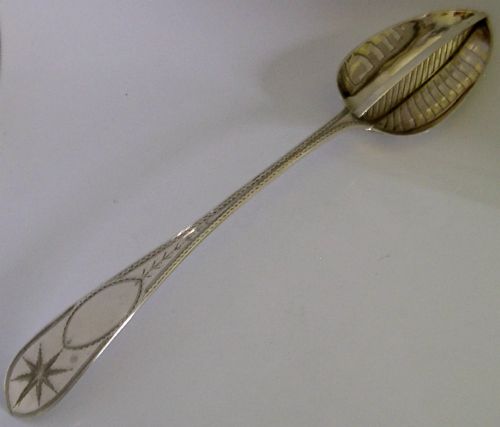
The pieces encountered most frequently span the eighteenth and nineteenth centuries, featuring regional assay marks from London, Dublin, Edinburgh, and various provincial centres. Forms range from plain Old English and Fiddle patterns to specialised strainer spoons equipped with internal pierced dividers.
Materials and construction methods
Silversmiths forged these heavy utensils from solid sterling silver, hammering ingots into substantial blanks before shaping the bowls and stems by hand. Early examples often incorporate a rat tail reinforcement on the reverse of the bowl for structural integrity.
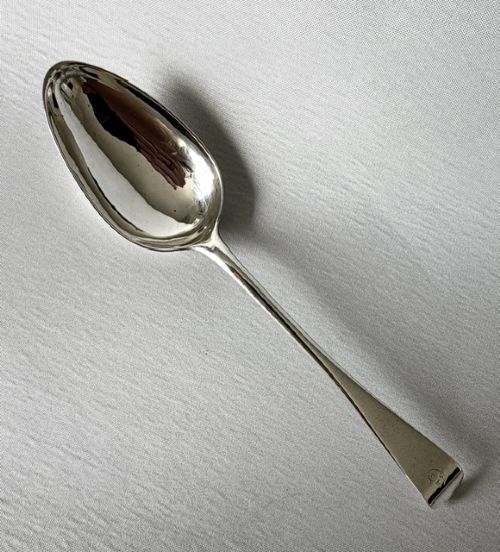
Makers applied hand-engraved armorial crests and family initials to the terminals, whilst provincial silversmiths utilised local punch marks alongside standard assay office stamps to indicate metal purity.
Listings feature regional Scottish and Irish provincial spoons alongside standard London-hallmarked pieces from the eighteenth and nineteenth centuries.
Markers of distinction in large silver spoons
Metal weight and gauge thickness define the primary tier of quality, separating heavy-duty kitchen implements from lighter domestic tableware. A thick stem resists bending across its considerable length during active service.
Crispness of the hallmarks, clarity of engraved family crests, and the survival of original bowl shaping without excessive wear from polishing determine the desirability among collectors.
Andrew Archer·John Craig·John Locker·John Wilks·Robert Gordon·Alexander Henderson·Richard Britton
The Sterling Silver Basting Spoon Glossary
- Hash spoon
- An alternative historical term for an exceptionally large serving or basting spoon used for thick stews and meats.
- Strainer spoon
- A variation featuring a pierced internal partition designed to separate liquids from solid portions during service.
- Rat tail
- A tapering tongue of metal extending from the base of the handle down the back of the bowl for added strength.
- Old English pattern
- A traditional eighteenth-century flatware design characterised by a downward-turned terminal and a central ridge.
- Fiddle pattern
- A nineteenth-century handle style featuring shoulders above a widening stem that resembles the body of a violin.
Sterling Silver Basting Spoon: Frequently Asked Questions
What is a basting spoon used for?
These large utensils served to spoon hot juices over roasting meats in large households before the advent of mechanical aids. They also functioned as general serving implements for large portions at the dining table.
Today, modern collectors utilise them as decorative serving pieces for large gatherings or display them alongside other historic silver flatware collections.
How do I date an antique silver spoon?
Silversmiths stamped their creations with a combination of maker marks, date letters, and town assay office symbols. Consulting official hallmarking records links these specific punches to exact operating years.
Stylistic indicators such as handle patterns and bowl shapes further help narrow down the period of manufacture when marks are rubbed.
What is the difference between a basting and gravy spoon?
Basting spoons generally measure larger and possess deeper bowls intended for heavy kitchen work and large joints of meat. Gravy spoons often present slightly smaller dimensions suited for sauce boats and table service.
Both forms overlap significantly in historical records, with makers applying the terms interchangeably depending on regional preferences.
How should I care for antique sterling silver?
Regular gentle washing in warm soapy water removes oils and prevents tarnish accumulation on the metal surface. Avoid harsh abrasive dips that strip away the subtle patination built up over centuries.
Storing the pieces in tarnish-resistant cloth or dry environments protects the engraved crests and maker marks from unnecessary wear.