

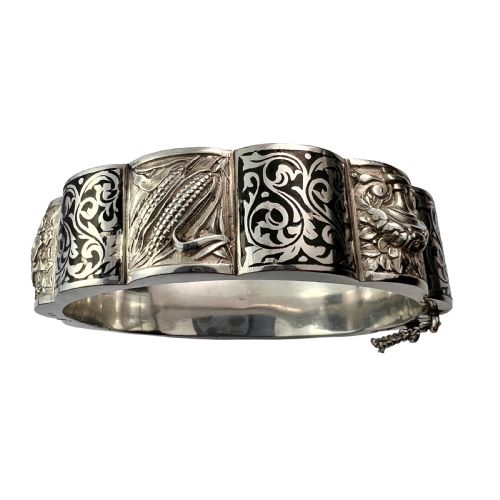


Sterling Silver Bangle
These sterling silver bangle designs span centuries of craftsmanship, offering solid metal forms and gem-set closures that elevate any wrist.

Sterling Silver Bangle
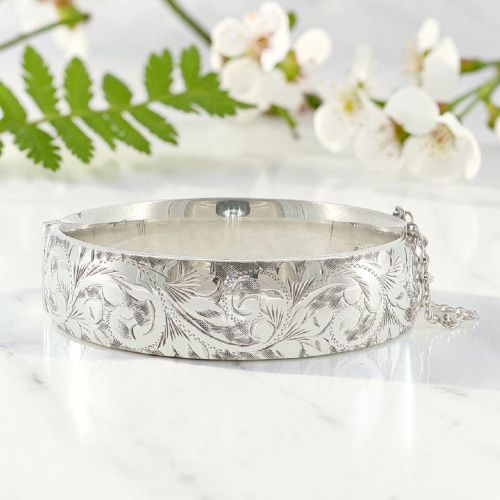
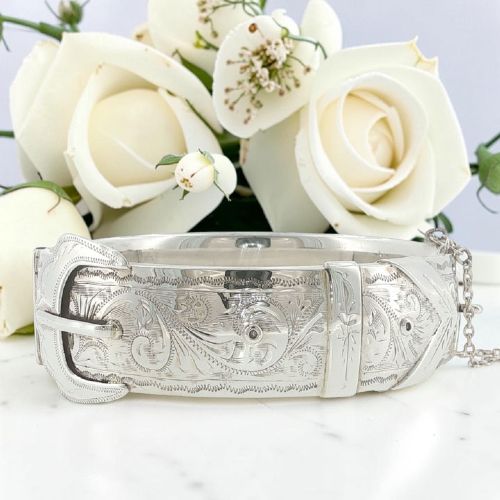
A sterling silver bangle brings together solid metal cuffs, hinged bracelets, and intricate link designs found across this selection. Buyers seeking a sterling silver bangle often meet Victorian hinged cuffs, buckle motifs, and mid-century Scandinavian pieces.
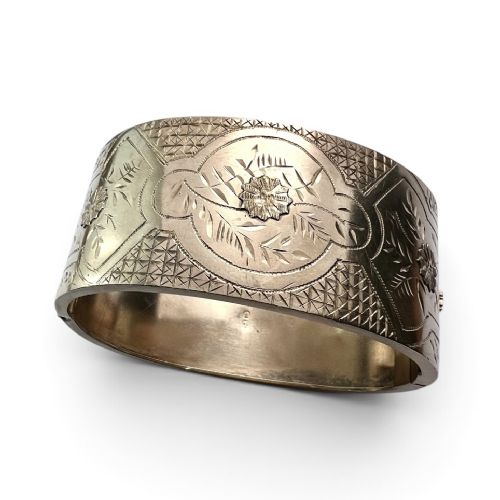
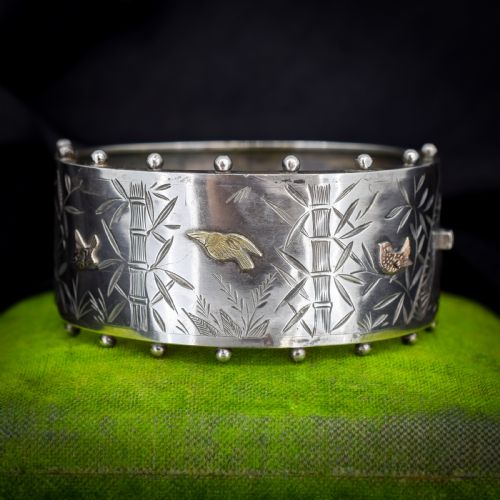
The assortment moves from heavy nineteenth-century Victorian designs to mid-century modern variations from the 1950s and 1960s. Victorian examples frequently display wide cuff profiles, while later decades introduce cleaner Scandinavian lines and intricate filigree work.
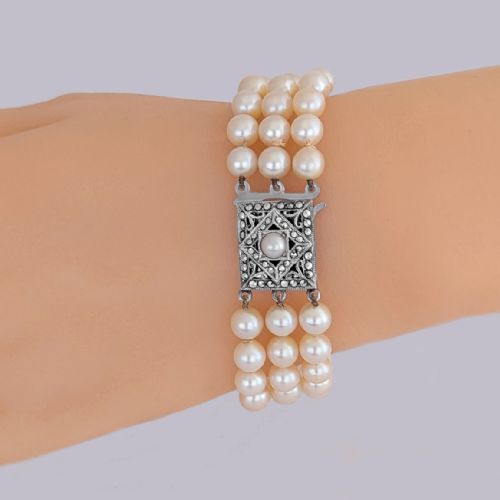
Alongside plain polished silver, pieces incorporate materials such as enamel, marcasite, cultured pearls, and gold highlights. This variety ensures that a sterling silver bangle can range from a stark geometric cuff to an elaborate floral engraved band.
Materials and construction methods
Metals are shaped into rigid bands and hinged cuffs utilising solid sterling silver, often accented with touches of rose and yellow gold or gilt finishes. Artisans construct hinged profiles with secure closures to allow the rigid metal to encircle the wrist comfortably.
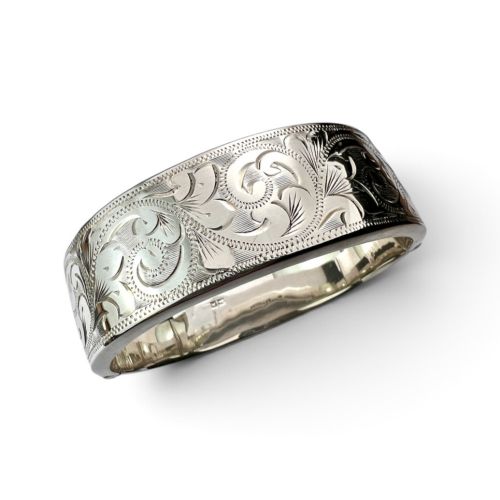
Surface decoration relies on hand engraving, repoussé techniques, and pierced filigree settings to create texture and pattern. Enamel, niello, and gemstones like citrine, onyx, and amber are then integrated directly into the silver framework.
Specialist workshops combine casting, soldering, and hand-chasing to produce the distinct architectural forms seen in buckle bangles and serpent motifs. Hallmarks stamped into the metal record the assay office, maker, and year of production.
Sterling Silver Bangle Retail Price Guide 2026
Typical asking prices for sterling silver bangle among the pieces listed under this phrase on Sellingantiques today, from the lower quarter to the upper quarter. They describe what is for sale here now, not the wider market.
Listings feature periods spanning the Victorian era through the 1950s, 1960s, and later mid-century decades.
Distinctions in construction and design
The standard of a piece rests upon the weight of the metal and the crispness of the hand engraving or chased detail. Heavier Victorian cuffs retain their structural integrity and deep relief work better than thinner stamped alternatives.
Complexity of ornamentation also divides the range, moving from simple polished bands to elaborate combinations of enamel, applied gold studs, and marcasite settings. Maker attribution, particularly pieces bearing marks from established silversmiths, elevates the standing of an item.
The precision of the hinge mechanism and the clarity of the hallmarks contribute significantly to the overall merit of the piece. Well-preserved original boxes and intact enamel or stone settings complete the higher tier of examples.
Georg Jensen·Walker & Hall·TOPAZIO
The Sterling Silver Bangle Glossary
- Sterling silver
- An alloy consisting of pure silver and other metals, typically copper, to increase durability while maintaining a bright lustre. This standard metal forms the foundation of nearly every piece in the collection.
- Hinged cuff
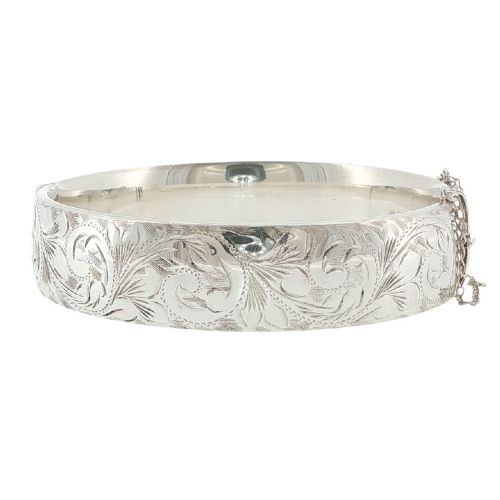
- A rigid bracelet design split into sections connected by a hidden hinge and secured with a clasp. This construction allows a snug fit around the wrist without requiring flexibility in the metal band.
- Buckle bangle
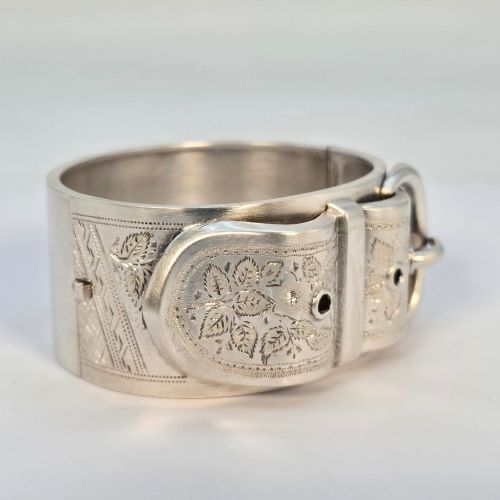
- A bracelet styled to resemble a belt and buckle fastening, symbolising loyalty and attachment in nineteenth-century jewellery. These designs often feature engraved floral motifs along the rigid band.
- Marcasite
- Small, faceted polished pyrite stones set into silver mounts to provide a brilliant, dark metallic sparkle. This material frequently borders enamel work or forms the body of serpent bracelets.
- Filigree
- Delicate openwork created by soldering fine silver wires together into intricate lace-like patterns. This technique appears across various mid-century and antique settings.
- Hallmark
- A series of official marks stamped onto precious metal items to guarantee the purity of the silver, the maker, and the year of assay. These small stamps are crucial for dating and attributing historical pieces.
Sterling Silver Bangle: Frequently Asked Questions
How do I wear a hinged bangle?
A hinged bangle opens via a central pivot and fastens with a secure clasp, making it straightforward to slip onto the wrist. The rigid structure sits firmly without sliding excessively.
Most antique examples feature safety chains for added security during wear. They pair well alone as a statement piece or stacked with narrower bracelets.
What is a Victorian buckle bangle?
A Victorian buckle bangle is a rigid silver bracelet designed to look like a belt wrapping around the wrist. The buckle motif carried sentimental meaning during the nineteenth century, often symbolising enduring attachment.
These pieces typically showcase hand engraving, floral studs, or mixed gold highlights across the surface. They represent some of the most robust and collectible cuff designs available.
How do I date a silver bangle?
Dating relies primarily on official hallmarks stamped into the metal, which indicate the assay office and the specific year of testing. Stylistic clues also help place a piece, such as the heavy engraved flora of Victorian items or the clean geometries of mid-century modern design.
Examining the construction methods, clasp types, and integrated materials like marcasite or enamel provides further context. Maker marks pointing to established workshops narrow the timeline considerably.
Are these bangles solid silver?
The items in this selection consist primarily of sterling silver or standard silver alloys. Victorian cuffs and mid-century designs are typically built from solid metal rather than plated bases.
Some pieces incorporate secondary metals like gold for decorative highlights or gilt washes over the silver surface. Hallmarks stamped onto the metal confirm the silver standard used by the maker.