
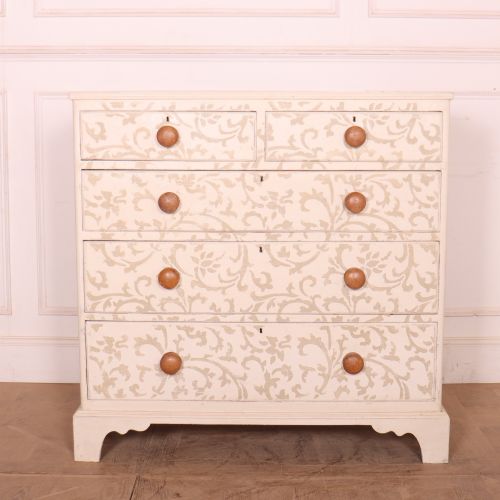


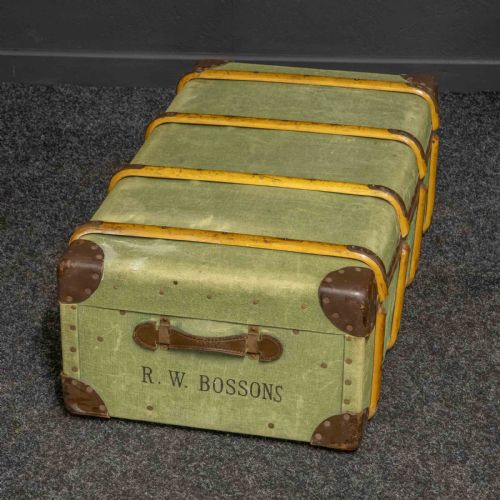

Stencilled Wooden Chest
A stencilled wooden chest offers robust storage and distinct historical character, built in timber and finished with applied lettering or painted motifs.
Stencilled Wooden Chest
A stencilled wooden chest provides practical storage through forms such as trunks, blanket boxes, and campaign chests. These utilitarian pieces frequently emerge from the nineteenth and early twentieth centuries, spanning Victorian, Edwardian, and industrial contexts.
Buyers encounter items constructed in pine, oak, camphorwood, and satin birch, often reinforced with iron or brass hardware. The surface decoration typically comprises painted monograms, regimental markings, or transit destinations applied with stencils.
The selection ranges from military style travel trunks and tool boxes to provincial painted commodes and dressing table chests. Each variant reflects the functional demands of its era, whether for colonial campaigns or domestic storage.
Materials and construction methods
Carpenters utilised durable timbers such as pine, oak, and camphorwood to build the primary carcass of each chest, ensuring structural resilience for travel and daily storage. Iron and brass fitments, including binding straps and corner brackets, reinforce the joints and edges against heavy handling.
Makers applied paint finishes, scumble glaze, and canvas coverings to protect the wood from moisture and wear during transit. Stencils permitted the rapid application of ownership ciphers, regimental numbers, and destination names directly onto the exterior surfaces.
Some chests retain the initials of long-travelled owners, whispering tales of nineteenth-century voyages across distant continents.
Evaluating quality and authenticity
Quality rests upon the integrity of the timber framing and the original condition of the hardware, where substantial brass or iron fitments indicate superior original manufacture. Secondary elements such as campaign handles and locking mechanisms demonstrate the intended utility of the piece.
The clarity and originality of the stencilled markings distinguish standard utility boxes from pieces with documented provenance. Surviving surface treatments, whether scumble paint or monogrammed canvas, retain historical value when preserved without excessive restoration.
Gnome Et Le Rhone Engine Company·Louis Vuitton
The Stencilled Wooden Chest Glossary
- Campaign chest
- A portable storage unit designed to dismantle or travel easily, typically featuring brass corners and recessed handles. These items served officers on military deployment.
- Scumble pine
- Pine timber treated with a translucent glaze manipulated with tools to imitate the grain of richer woods. This decorative finish was common in nineteenth century domestic furniture.
- Camphorwood
- An aromatic hardwood utilised for chests to repel insects and protect stored textiles. Its distinctive scent helps identify the material in period boxes.
- Commode
- A low cabinet or chest of drawers, often fitted with decorative painted finishes. European examples frequently display Gustavian or provincial styling.
Stencilled Wooden Chest: Frequently Asked Questions
How were stencilled wooden chests used originally?
These chests served primarily for transport and storage during travel, military campaigns, and domestic relocation. Stencils identified the owner, regiment, or destination of the contents.
Over time, many transitioned into static household furniture, functioning as blanket boxes, coffee tables, or bedside storage.
What woods should I expect to find?
Pine appears frequently in utilitarian trunks and scumble painted pieces, while hardwood variants utilise camphorwood or oak for added durability and pest resistance.
Some refined examples employ satin birch for drawer fronts and decorative surfaces within domestic settings.
How do I care for a painted wooden chest?
Maintain a stable indoor environment away from direct sunlight and excessive humidity to protect the aged timber and painted stencils. Dust surfaces gently with a dry cloth and avoid harsh chemical cleaners.
Wax can be applied sparingly to unpainted wood sections to nourish the grain without disturbing original finishes.
How can I distinguish a military chest?
Military and campaign chests typically feature recessed brass handles, reinforced metal corners, and split carcasses designed for lifting and stacking during transport. Stencilled names or regimental numbers often appear on the exterior.
Internal compartments and robust locking mechanisms further confirm their utilitarian origin.