



Pine Travel Trunk
A pine travel trunk is a sturdy wooden container built for transit, offering rugged storage with practical historic character for the modern home.
Pine Travel Trunk
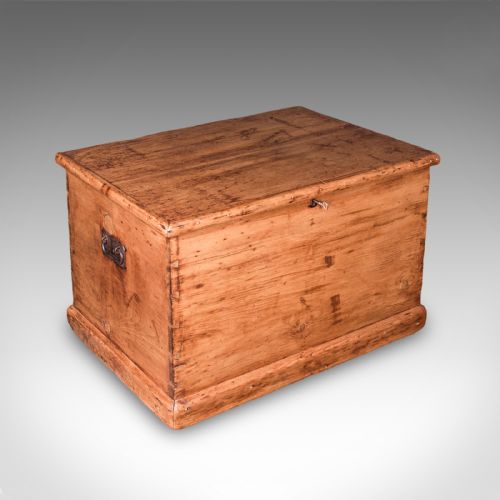
When you search for a pine travel trunk, you encounter robust utility chests originating from the Victorian era and the late nineteenth century. These sturdy wooden boxes were built for the rigours of transport by rail, carriage, and steamship.
The pieces you meet most often on this page span the periods from eighteen seventy to nineteen hundred, including distinct styles such as military campaign, Victorian utility, and rustic country. They function today as practical storage chests and coffee tables.
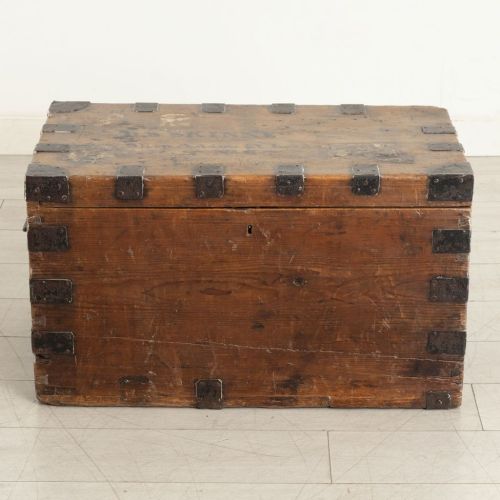
Forms vary from standard rectangular travelling boxes to large domed trunks and metal-bound carriage chests. Many retain their original painted surfaces, iron reinforcements, and historical paper linings or transport labels.
How they were made
Construction relies primarily on solid pine timber, selected for its balance of workability and strength during the nineteenth century. Carpenters joined the structural panels securely to withstand the heavy wear of travel.
Durability was enhanced through the addition of iron and brass fittings, including corner braces, straps, and secure carrying handles. Leather and paper sometimes lined or covered the exterior and interior surfaces.
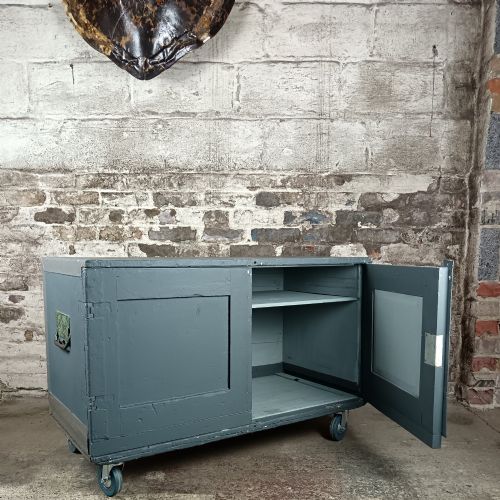
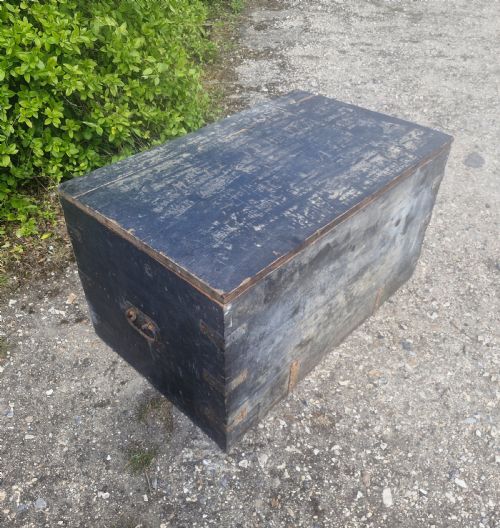
Painted finishes were frequently applied to protect the soft wood from moisture and the bumps of transit. These protective coats now display appealing patination from age and use.
Pine Travel Trunk Retail Price Guide 2026
Typical asking prices for pine travel trunk among the pieces listed under this phrase on Sellingantiques today, from the lower quarter to the upper quarter. They describe what is for sale here now, not the wider market.
What varies in quality
The distinction between standard utility boxes and finer examples rests on the complexity of construction and the presence of specialised hardware. Heavy iron or brass binding elevates a piece from simple storage to robust campaign standard.
Preservation of original surfaces, such as early paint and interior paper linings, significantly impacts the character of a trunk. Intact period labels and maker markings add historical depth that heavily restored examples lack.
The Pine Travel Trunk Glossary
- Campaign trunk
- A portable chest built for military or civilian travel, often featuring recessed handles and protective metal corners. These pieces were designed to withstand frequent relocation.
- Domed trunk
- A chest featuring a rounded top lid, which historically encouraged rainwater to run off during carriage transport. This shape provides additional internal clearance for bulky garments.
- Carriage chest
- A heavy-duty storage box constructed for transit on horse-drawn vehicles or early trains. They frequently display substantial iron banding for reinforcement.
- Steamer trunk
- A lower-profile travel chest designed to fit beneath a cabin berth on a passenger ship. They date predominantly from the late Victorian period onward.
Pine Travel Trunk: Frequently Asked Questions
What is a pine travel trunk?
A pine travel trunk is a nineteenth-century wooden box built to carry belongings during journeys by carriage, train, or ship. These sturdy containers combine practical utility with historic character.
Today, they serve as functional storage furniture in homes, often positioned at the foot of a bed or used as a living room coffee table.
How were these trunks used?
Travellers packed clothing, personal documents, and household goods inside these wooden chests for long journeys. The robust construction protected contents from rough handling during transit.
Later, many trunks remained in attics or country houses, preserving domestic items until finding a second life as interior decor.
How do I date a Victorian trunk?
Dating relies on examining the construction methods, hardware materials, and any remaining paper linings or transport labels. Nineteenth-century pieces often feature hand-forged ironwork and specific Victorian construction traits.
Later examples from around nineteen hundred typically show machine-cut elements and standardised brass or iron bindings.
Can I use them for storage?
These trunks offer deep internal cavities that make them ideal for holding blankets, winter clothing, or household items. Their solid pine construction ensures sturdy longevity.
Ensure the interior is clean and dry before storing delicate fabrics inside historical wooden chests.