





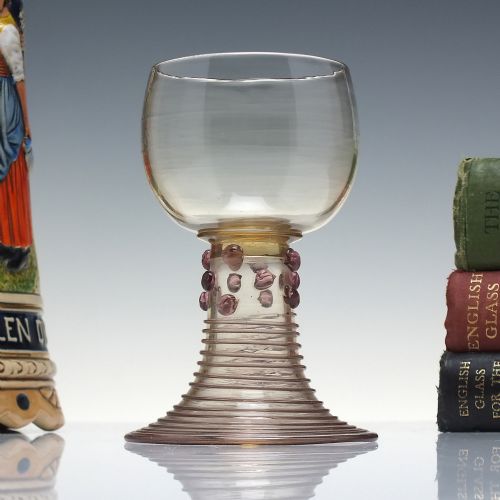


Stemmed Glass Rummers
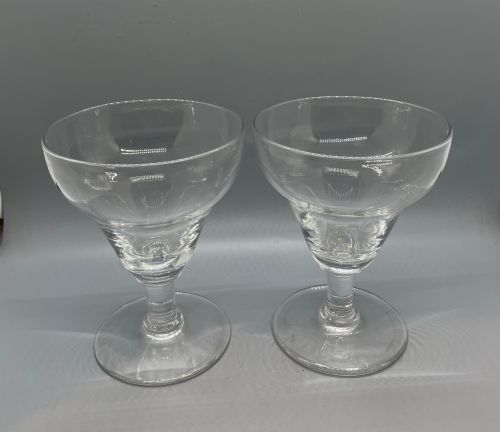
These stemmed glass rummers are heavy, substantial drinking vessels for ale, wine and spirits that bring genuine tactile weight to the table.
Stemmed Glass Rummers
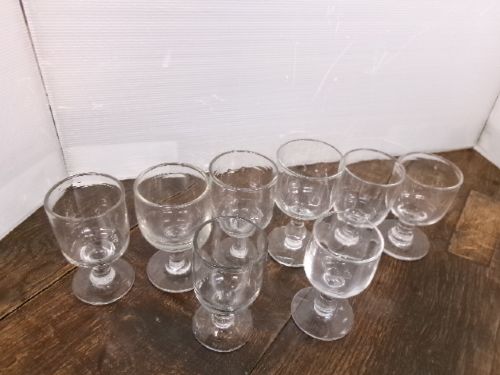
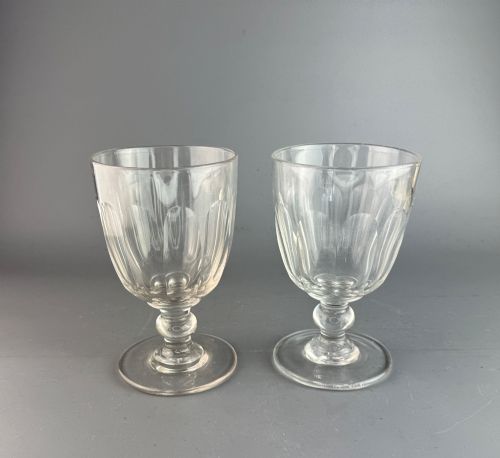
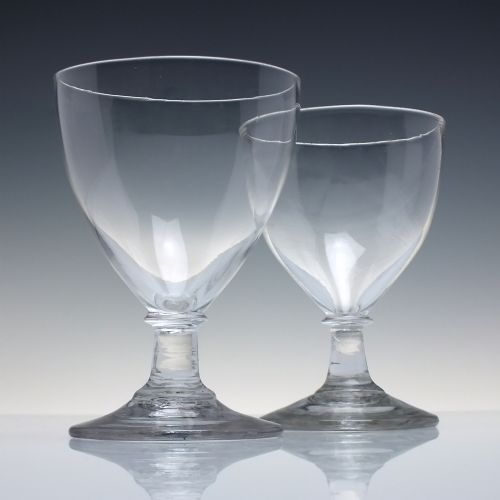
You will encounter matched pairs, sets of six or eight, and individual tavern glasses designed for hearty toasts. Forms vary from ogee and pan top bowls to large ovoid shapes, often resting on sturdy feet.
Continental cousins also appear under related traditions, including green glass and lead crystal roemers from Bohemia and Germany with enamelled or heraldic decoration. These pieces bridge the gap between robust utilitarian drinking glass and decorative display.
Materials and Techniques
The material record relies on lead glass, flint glass, and clear or coloured lead crystal, shaped through hand-blowing techniques. Heavy metal content gives these vessels their characteristic heft and ring when struck.
Decoration is achieved through wheel engraving, cutting, and etching, displaying motifs such as hops and barley, monograms, hunting scenes, and armorial bearings. Enamelling and polychrome decoration appear on continental roemers with hollow stems.
Stemmed Glass Rummers Retail Price Guide 2026
Typical asking prices for stemmed glass rummers among the pieces listed under this phrase on Sellingantiques today, from the lower quarter to the upper quarter. They describe what is for sale here now, not the wider market.
Judging Quality
Quality rests in the balance of the metal and the crispness of the hand-cutting or wheel engraving. A superior rummer displays deep, clean facets that catch the light without blurring, and a stable, well-balanced foot.
The clarity of the glass and the absence of heavy clouding or excessive bubbles distinguish finer cabinet pieces from utilitarian tavern glass. Sets that remain matched in size and form hold greater cohesion than assembled groups.
Frits Hechert
The Stemmed Glass Rummers Glossary
- Rummer
- A large, heavy drinking glass popular in the Georgian and Victorian periods, typically used for ale, wine or punch. Their stout proportions distinguish them from delicate wine stems.
- Roemer
- A continental European drinking vessel, usually of green glass, featuring a large spherical bowl and a hollow cylindrical stem studded with prunts. They have a long history in Germany and Bohemia.
- Ogee
- An S-shaped contour curving concave above and convex below, frequently seen shaping the bowls of Georgian rummers. This profile aids in concentrating aromas.
- Baluster stem
- A thick, turned stem resembling an architectural baluster, often found on heavier 19th-century crystal glass. It provides a secure grip and lowers the centre of gravity.
- Flint glass
- An early term for high-purity glass containing lead oxide, prized for its high refractive index and brilliance. It forms the backbone of quality English drinking vessels.
Stemmed Glass Rummers: Frequently Asked Questions
What were rummers used for?
These vessels served everyday drinking needs for ale, stout, wine and punch during the Georgian and Victorian periods. Their sturdy build suited communal gatherings and tavern use.
Unlike delicate cordial glasses, rummers were meant for hearty toasts and generous pours at the dinner table.
How do I date a glass rummer?
Dating relies on bowl shape, pontil mark characteristics, and decorative styles such as wheel-engraved hops and barley. Georgian examples often show heavier kick-ups and simpler, robust forms.
Victorian and later 19th-century pieces frequently display sharper cut facets and heavier crystal metal.
Can I use antique rummers daily?
These heavy lead glass and flint vessels were built for practical use and handle everyday dining well. Hand washing in warm water keeps the glass safe from thermal shock.
Avoid putting them in modern dishwashers, as harsh detergents and high heat will cloud the antique metal over time.
What is the difference between a rummer and a roemer?
A rummer is typically an English form with a bucket, ogee or pan top bowl on a short stem and foot. A roemer is a continental style, usually green, featuring a spherical bowl on a hollow prunted stem.