





Stemmed Drinking Vessels
These stemmed drinking vessels range from delicate Georgian baluster wine glasses to heavy nineteenth-century rummers, offering centuries of drinking history for the table.
Stemmed Drinking Vessels
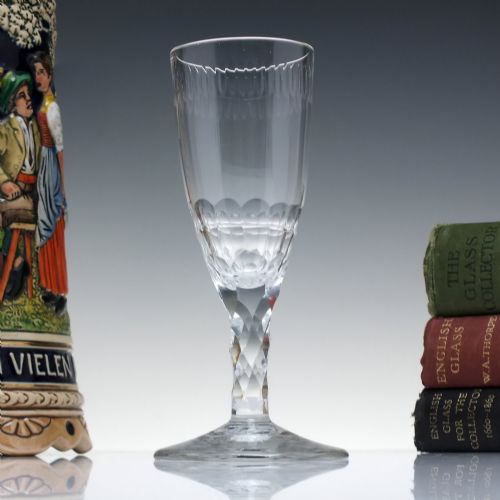
Stemmed drinking vessels encompass a diverse group of historical glassware and drinkware, spanning from the seventeenth century through to the early twentieth century. When searching for stemmed drinking vessels, collectors encounter wine glasses, ale glasses, cordials, dram glasses, and large goblets.
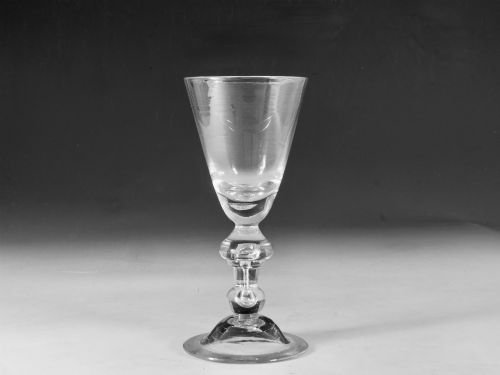
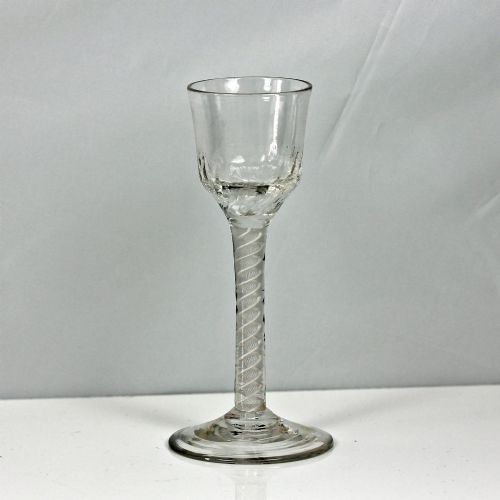
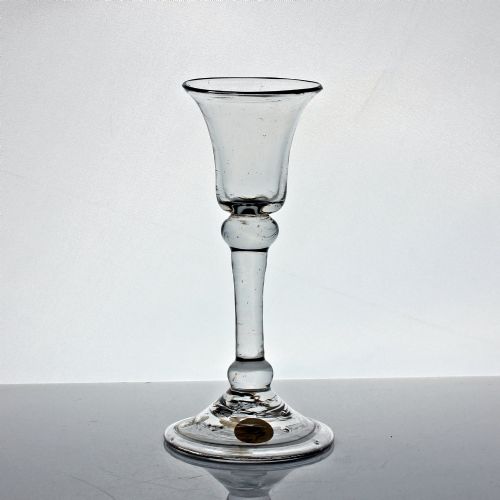
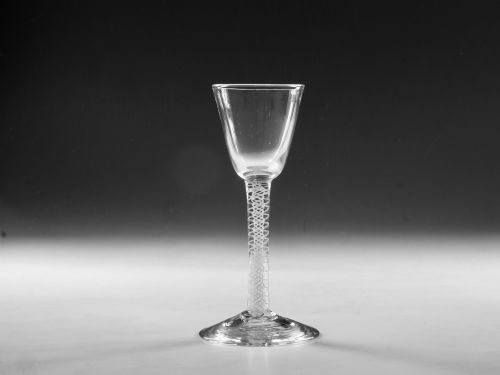
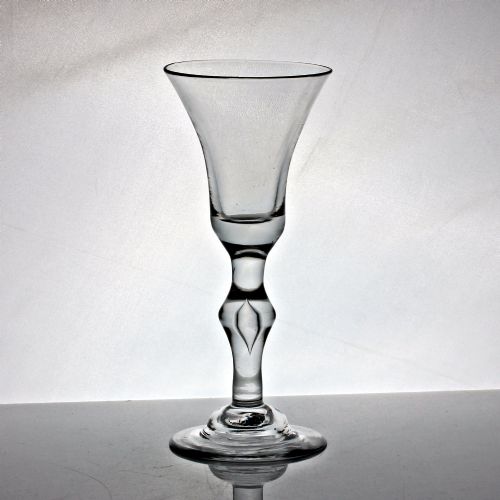
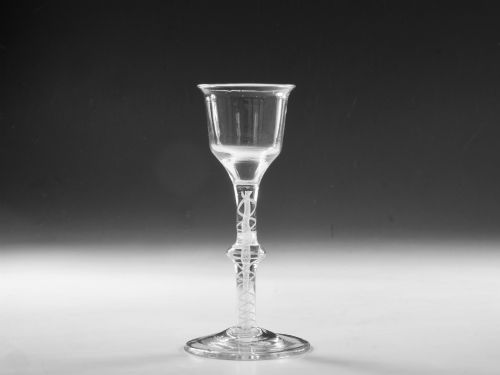
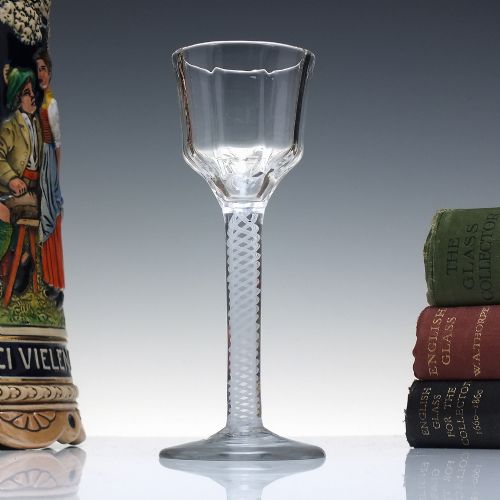
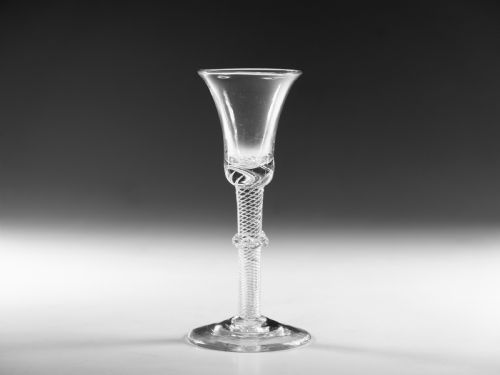
The majority of pieces available originate from the eighteenth century, particularly the Georgian period, dominated by English lead glass forms. These include complex air twists, opaque twists, and plain stems alongside rarer balustroid and composite stem variants.
Beyond standard eighteenth-century drinking glasses, the category extends to nineteenth-century tavern rummers, Edwardian turquoise glass, Chinese export silver, and seventeenth-century Bohemian engraved vessels. Forms range from petite dram glasses to large ovoid bowl rummers and handled drinking cups.
How they were made
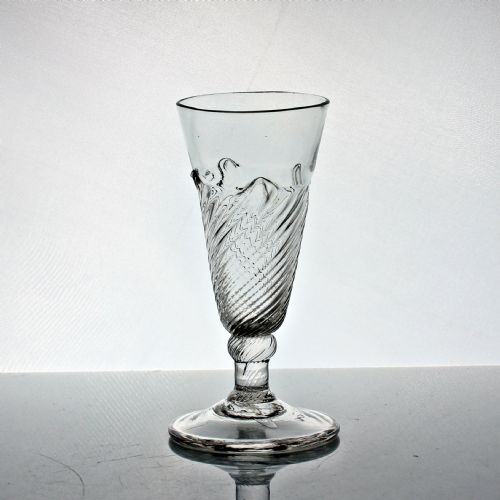
Makers utilised hand-blown glass techniques, working primarily with lead glass, lead crystal, flint glass, and clear glass. Bowls were often moulded, such as wrythen or ribbed designs, or left plain before being attached to drawn or applied stems.
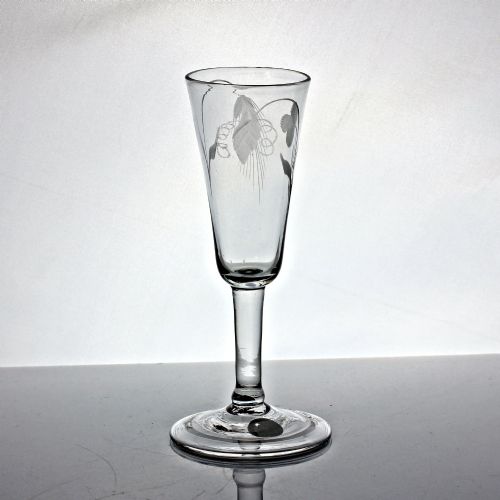
Decoration involved intricate engraving, including hop and barley motifs, intaglio work, and enamel applications, alongside air-teared and twisted optical effects created within the glass stems. Certain pieces feature structural additions like folded feet and domed bases for stability.
Stemmed Drinking Vessels Retail Price Guide 2026
Typical asking prices for stemmed drinking vessels among the pieces listed under this phrase on Sellingantiques today, from the lower quarter to the upper quarter. They describe what is for sale here now, not the wider market.
Listings feature lead glass, clear glass, enamel, opaque enamel, and hand-blown glass across eighteenth and nineteenth-century pieces.
What varies in quality
Quality rests upon the proportion and balance of the vessel, from the thickness of the foot to the clarity of the metal. Early baluster and balustroid forms rely on the confident heft and weight of the glass, whereas twist stems demand precision in the optical threads.
The finesse of the wheel engraving distinguishes superior examples, where hop and barley details or monograms show crispness and depth. Surface wear and manufacturing characteristics such as small air bubbles in hand-blown glass separate period authenticity from later reproduction work.
Wang Hing & Co
The Stemmed Drinking Vessels Glossary
- Baluster
- A heavy, swelling stem form inspired by seventeenth-century architecture, commonly found on early eighteenth-century wine and ale glasses.
- Air twist
- A stem containing elongated internal air bubbles drawn into threads and twisted during the formation of the glass.
- Opaque twist
- A stem incorporating white or coloured enamel rods drawn into spiral threads within clear glass.
- Folded foot
- A base edge turned underneath to form a double layer of glass, adding strength and weight to the foot rim.
- Ratafia glass
- A tall, narrow glass specifically designed for drinking sweet, aromatised ratafia liqueurs.
Stemmed Drinking Vessels: Frequently Asked Questions
How do I identify an air twist stem?
An air twist contains internal spiral threads of trapped air running continuously through the clear glass stem.
Looking closely down the top of the glass reveals the precise optical rotation created by the glassmaker during hand-pulling.
What were rummers used for?
Rummers were heavy, large-bowled drinking glasses utilised primarily for punch, ale, or wine during the late eighteenth and nineteenth centuries.
Their robust construction made them suitable for tavern use and communal toasts.
Why do some glasses have folded feet?
Makers folded the rim of the glass foot underneath during manufacture to provide extra weight and physical durability.
This technique is frequently observed on early eighteenth-century baluster and balustroid drinking vessels.