

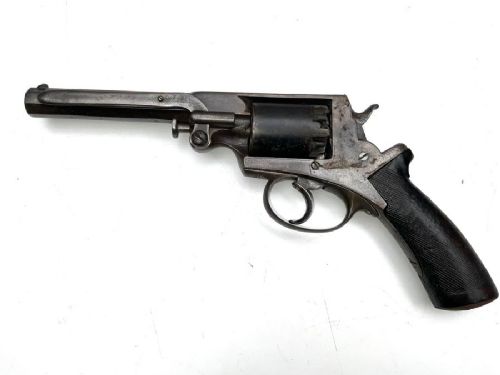
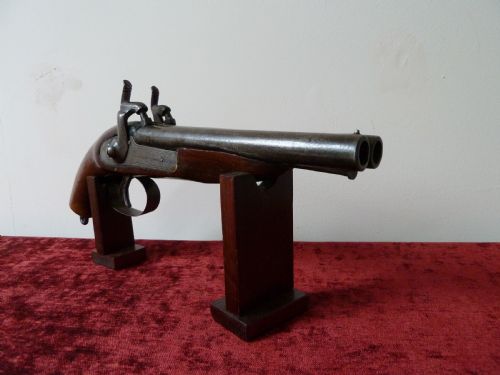


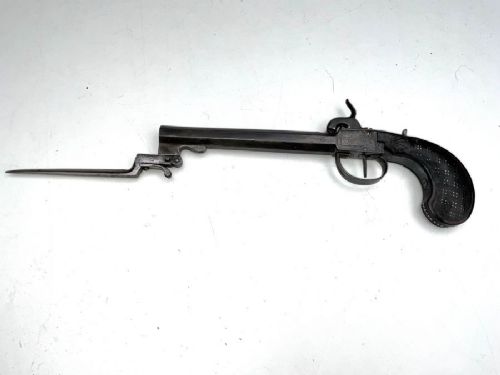


Steel Percussion Pistol
A steel percussion pistol delivers nineteenth-century mechanical ingenuity to the collector who values nineteenth-century firepower.
Steel Percussion Pistol
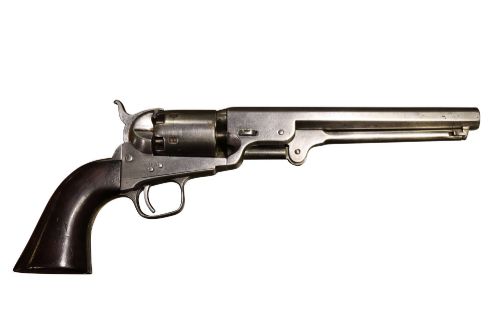
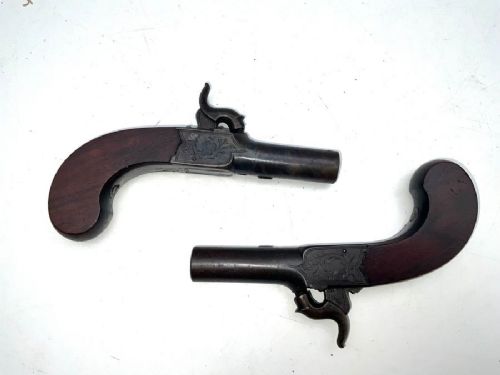
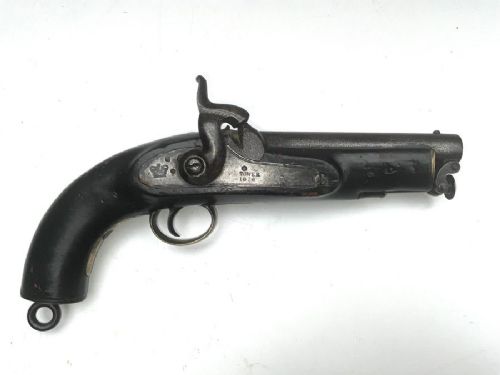
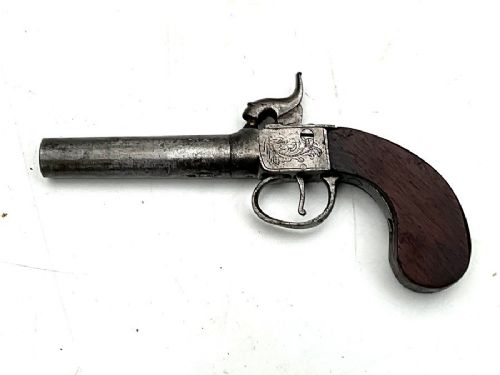
When you search for a steel percussion pistol, you encounter nineteenth-century firearms spanning pocket models, belt pistols, and heavy military revolvers. These pieces represent the shift from flintlock ignition to the percussion cap system during the middle decades of the Victorian era.
The selection on this page demonstrates styles from standard British service arms to American martial issues and Ottoman variations. You will find single-shot pocket variants alongside complex six-shot revolvers and pepperbox designs.
Originating from British, European, and American makers, these firearms served military officers, naval personnel, and civilians requiring dependable personal defence. Their forms range from compact pocket companions to substantial cavalry pieces.
Materials and Construction
Makers constructed these arms using forged steel and iron for barrels, frames, and internal lock mechanisms. Walnut and mahogany provided durable stocks and grips, frequently shaped with checkering for secure handling.
Brass mountings and trigger guards appeared alongside silver accents and velvet-lined cases for luxury target sets. Iron components received smooth blueing or bright polishing, while locks incorporated precision-fitted springs and nipples for percussion caps.
Some pocket protectors spring forward with unexpected flick bayonets when the tension releases.
Determinants of Quality
Quality rests upon the crispness of the lock mechanism, the smoothness of the action, and the legibility of maker signatures or proof marks. Fine London and provincial makers utilised superior metal tolerances and precise checkering that elevated standard military issue into bespoke craftsmanship.
The presence of matching serial numbers, original fitted wooden cases, and integrated accessories such as bullet moulds distinguishes standard utility arms from superior surviving examples. Engraving depth and overall metal preservation determine the standing of each piece within its period.
J.R. Cooper·Joseph Egg·Deane Adams And Deane·Auguste Francotte·John Manton·George Sherwood·A.W Spires
The Steel Percussion Pistol Glossary
- Percussion cap
- A small metal cup containing fulminate of mercury placed on the nipple of a firearm to ignite the powder charge when struck by the hammer. This innovation replaced the earlier flintlock mechanism.
- Pepperbox pistol
- A multi-barrel firearm where the entire cluster of barrels revolves with each pull of the trigger or cocking of the hammer. It provides multiple shots without a separate revolving cylinder.
- Boxlock
- A firearm action where the lock mechanism is enclosed within the frame beneath or behind the breech rather than mounted on a sideplate. This layout offers a compact and sturdy construction.
- Proof mark
- An official stamp applied to a firearm barrel after passing statutory pressure and safety tests at a designated proof house such as Birmingham or London. These marks verify the legal standard of the metal.
Steel Percussion Pistol: Frequently Asked Questions
How do I identify a percussion pistol?
Look for a small nipple or cone on the breech where a percussion cap sits, struck directly by the hammer.
These pieces lack the flintlock frizzen and pan, utilising instead an enclosed or semi-exposed cap system developed in the nineteenth century.
Were these pistols used in the military?
Many specimens saw active service with British and American land and naval forces during the nineteenth century.
Officers purchased private-purchase belt pistols, while government contracts supplied standard-issue arms for troops.
What is a pepperbox revolver?
A multi-barrel handgun where the entire barrel block rotates around a central axis to fire successive rounds.
This design preceded the widespread adoption of single-barrel revolvers with rotating cylinders during the mid-nineteenth century.
How should I store a steel pistol?
Keep the metal lightly oiled in a stable environment away from excess humidity to prevent active corrosion.
Fitted wooden cases lined with velvet provide traditional protection and maintain the integrity of the original components.