
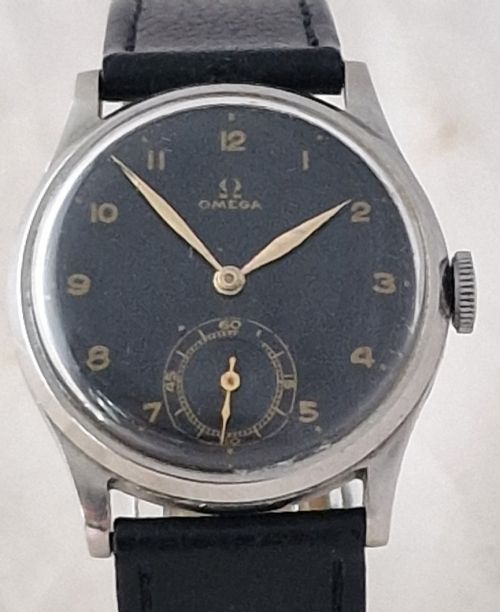
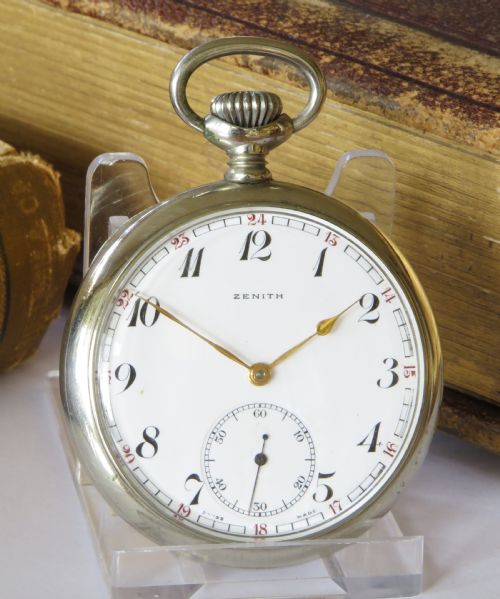
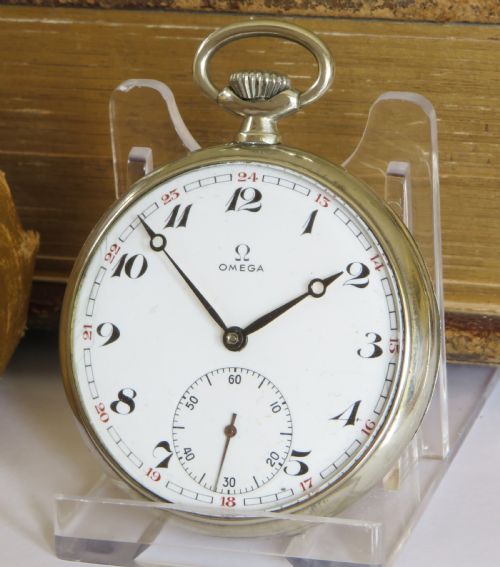


Steel Military Watch
These steel military watch pieces are robust instruments built for active service, prized by collectors for their utilitarian design and history.
Steel Military Watch
When you search for a steel military watch, you encounter wristwatches, pocket watches, and deck watches spanning the 1930s, 1940s, 1950s, and 1960s. The selection includes specific service issues from the British military, Royal Air Force, Swedish army, German Kriegsmarine, and French Air Force, alongside aviator chronographs.
The version you are most likely to meet on this page is the 1940s wristwatch or pocket watch in stainless steel, reflecting the heavy production demands of the Second World War. These range from standard infantry issue to specialised pilot and navigator instruments with black dials and twenty-four-hour markings.
Materials and construction
Casings utilise stainless steel, chrome, and nickel to withstand moisture and physical shock during field operations. Dials feature enamel finish or plain metal with contrasting markings for legibility under poor lighting conditions.
Protection for the face relies on glass or acrylic crystals fitted securely into the metal bezel. Leather straps complete the assembly on wristwatches, designed for field replacement and secure wear.
Wristwatches, pocket watches, and deck watches represent the primary object types recorded in the inventory.
Defining characteristics of quality
Quality in these instruments depends upon the integrity of the original issue markings, dial legibility, and the preservation of the metal case. Government broad arrow stamps, department codes, and unit numbers verify official military provenance.
The sophistication of the internal movement separates standard issue pieces from specialised chronographs like aviator and split-second pocket watches. Original dials without later repainting retain higher fidelity to the period of manufacture.
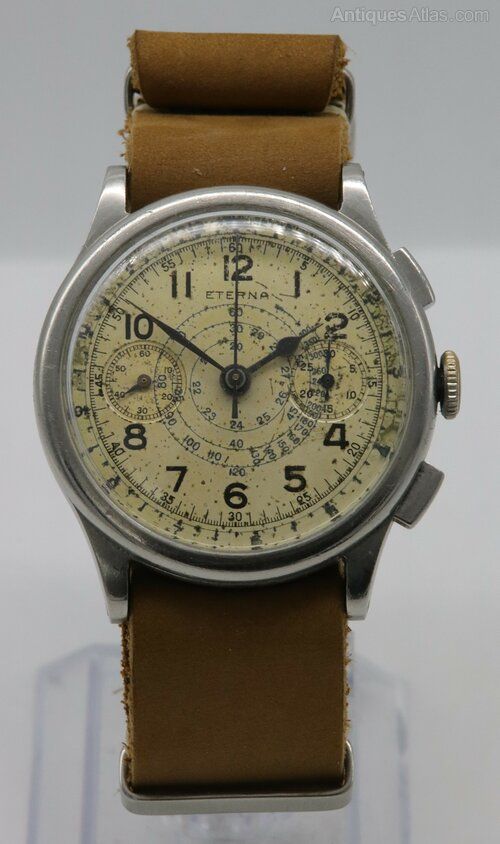
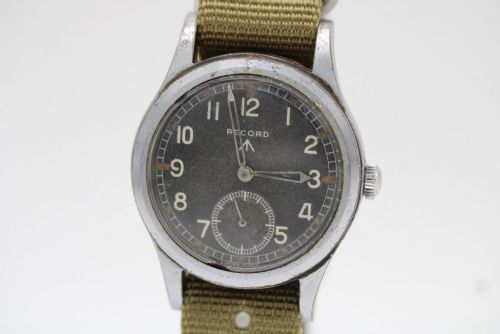
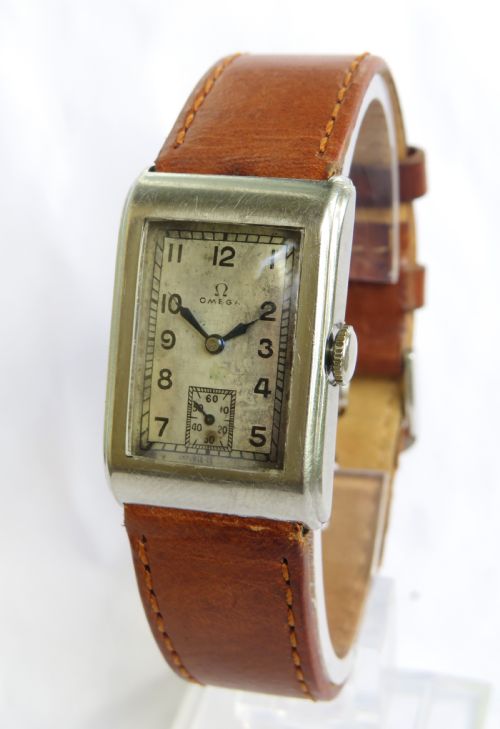
Eterna Chronograph·Record Dirty Dozen·Omega·Hahn Landeron·Zenith·Belair·Ebel·Revue Vertex·Benrus·Tissot·Timex·Vixa
The Steel Military Watch Glossary
- Chronograph
- A watch with a function for measuring elapsed time alongside its standard timekeeping display. These often include auxiliary sub-dials for timing seconds and minutes.
- Calibre
- The specific internal movement designation used by the manufacturer. This number identifies the exact mechanical design powering the watch.
- Broad Arrow
- A British government ownership mark stamped onto military equipment including watches. Its presence confirms official service issue.
- Deck Watch
- A precision portable timepiece used for navigation on marine vessels. These larger watches were kept in protective wooden or metal deck boxes.
- A.T.P
- An acronym designating general service military watches issued to the British Army. These pieces date predominantly to the Second World War.
Steel Military Watch: Frequently Asked Questions
What is a Dirty Dozen watch?
A Dirty Dozen watch refers to a group of twelve specific timepiece manufacturers contracted by the British Ministry of Defence during the Second World War. These watches share standardised military specifications including a black dial, Arabic numerals, and a stainless steel or nickel-chromium case.
Such pieces bear specific government markings on the case back, including the broad arrow and a WWW designation. They remain among the most recognizable military wristwatches collected today.
How do I identify RAF issue watches?
Royal Air Force issue watches are identified by specific stock codes and stores reference numbers engraved on the case back. Markings such as 6B/159 indicate equipment issued to pilots and navigators during the mid-century period.
The dials on these aviation pieces were designed for maximum legibility in low light, frequently utilising contrasting hands and clear chapter rings.
Are pocket watches common in military service?
Pocket watches remained in active military use alongside wristwatches well into the mid-twentieth century, particularly for artillery and deck navigation duties. Units such as the German Kriegsmarine and British forces utilised pocket chronographs for precise timing tasks.
These larger timepieces were often housed in robust steel cases designed to protect the movement from dust and shock in the field.
What does a 24-hour dial indicate?
A twenty-four-hour dial displays the full day in a single rotation, a layout favoured in military and aviation contexts to prevent confusion between AM and PM hours. Such dials appear on specialised pilot watches and later mid-century field pieces.
This configuration allowed personnel operating in varied time zones or continuous light conditions to read Zulu time immediately.