
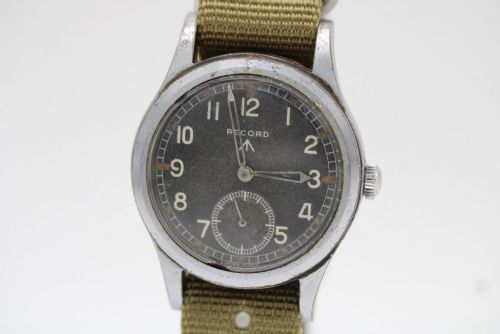
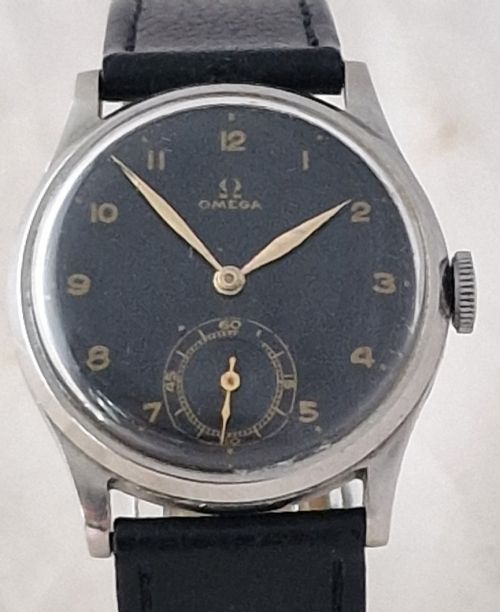
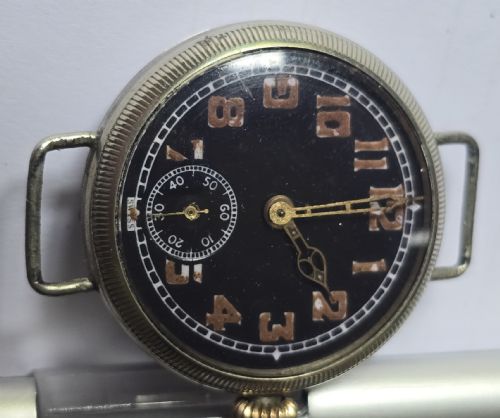


Swiss Military Wristwatch
A swiss military wristwatch carries decades of rugged history on the wrist, combining dependable utility with precise horological heritage.
Swiss Military Wristwatch
A swiss military wristwatch represents the durable timepieces issued to armed forces or produced by Swiss makers during periods of conflict and peacetime service. These watches span several decades, featuring early twentieth century trench watches alongside robust models from the nineteen-forties.
The versions most commonly met on this page include military issue pieces from the nineteen-forties, such as Army Trade Pattern designations and Omega Suverän models. Alongside these, buyers find earlier trench watches and chronographs originating from Switzerland.
Forms range from large gents wristwatches to specialised tactical designs with distinctive black dials and original military markings. They serve both historical collectors and those seeking a resilient daily timepiece with genuine provenance.
How a swiss military wristwatch was made
Construction relies heavily on robust metals such as stainless steel, chrome plate, and silver to protect the delicate movements from field conditions. Cases are paired with practical components like acrylic or glass crystals.
Straps utilise durable materials including leather and webbing to secure the timepiece during active service. Internal mechanics depend on specialised calibres designed for accuracy under demanding circumstances.
A good trench watch lets you time your tea while dodging the mud.
What varies in quality
Distinctions in quality arise from the preservation of original dial markings, case integrity, and the pedigree of the movement inside. Pieces retaining clear military issue numbers and authentic dial configurations command greater interest.
The choice of materials, from solid stainless steel to chrome plate, influences the longevity and resilience of the watch case. Calibre refinement and historical association with specific military branches further differentiate the pieces.
Eterna·Record·Omega·Roamer·West End Watch Co·Revue Vertex·Timor
The Swiss Military Wristwatch Glossary
- Calibre
- The specific internal movement designation of a watch. This number identifies the exact mechanical design produced by the manufacturer.
- Trench watch
- An early form of wristwatch adapted from pocket watches for use in the First World War. These feature wire lugs and protective case guards.
- Army Trade Pattern
- A standardised specification for watches supplied to the British army during the nineteen-forties. These are often stamped with ATP on the case back.
- Chronograph
- A watch equipped with a stopwatch function alongside standard timekeeping. Such complications require intricate gear systems within the movement.
- Acrylic
- A lightweight synthetic material utilised for watch crystals prior to the widespread adoption of synthetic sapphire. It offers flexibility and resistance to shattering.
Swiss Military Wristwatch: Frequently Asked Questions
How do I date a swiss military wristwatch?
Dating relies on movement serial numbers, case back markings, and stylistic cues specific to decades like the nineteen-forties or the First World War.
Matching these details against known production records provides a reliable timeframe for when the watch was issued or manufactured.
Were all swiss military wristwatches issued in combat?
Not every watch saw active combat, as many served in transport, administrative, or general military support roles during various conflicts.
Service records vary, but military issue stamps often indicate the specific branch or procurement contract the watch fulfilled.
Can I wear a vintage swiss military wristwatch daily?
These watches were built for rigorous daily service, yet older components require careful handling and regular maintenance by a skilled watchmaker.
Exposing vintage pieces to moisture should be avoided unless the case has been professionally tested and sealed.
What do the broad arrow marks mean?
The broad arrow symbol denotes British government property, appearing on military issue equipment including watches from the mid-twentieth century.
Its presence signifies that the timepiece was officially commissioned for crown service.