


Steel Fire Tools
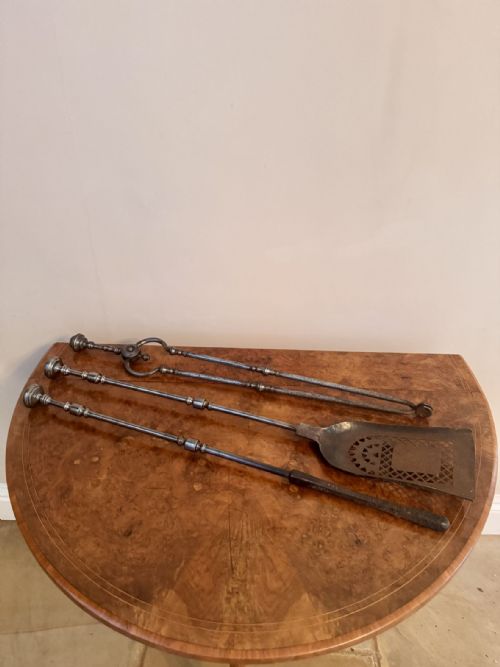
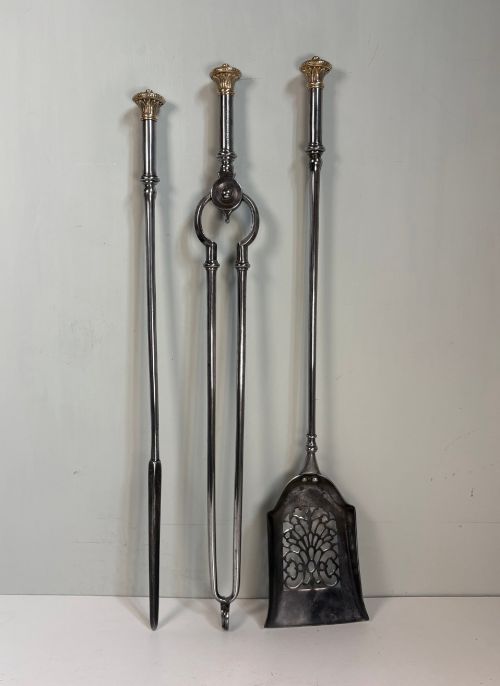
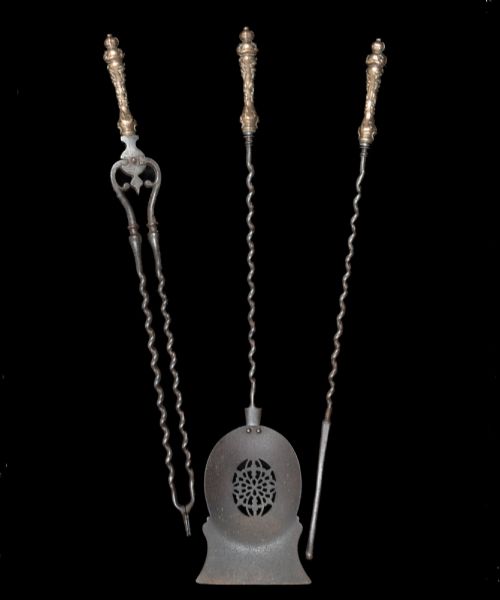
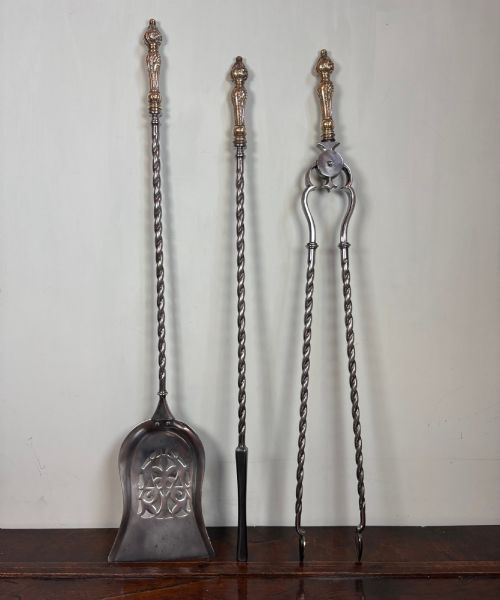
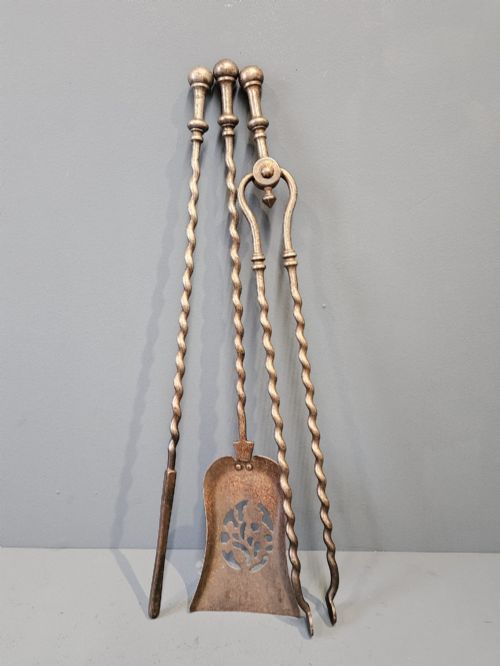
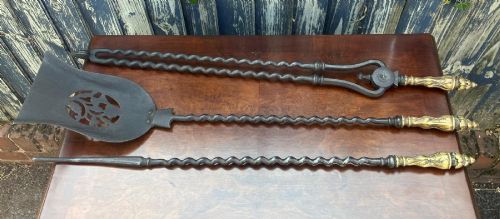
Steel fire tools are hearth implements designed to manage coal and wood fires, combining utility with period decoration.
Steel Fire Tools
Steel fire tools comprise sets of implements used around the hearth, appearing across periods from the eighteenth century to the twentieth century. When searching for steel fire tools, a buyer encounters complete companion sets, fire irons, and individual pieces intended for daily use or display by the fireplace.
The most common examples on this page date from the Georgian, Regency, and Victorian eras, often incorporating brass or bronze alongside the primary metal. These groupings frequently include pokers, tongs, and shovels, sometimes accompanied by fire dogs or fenders.
Originating in English homes, these fireplace accessories reflect the shifting domestic tastes across nineteenth century revivals and Arts and Crafts movements. The selection ranges from burnished steel formats to heavier Victorian companion sets.
Assessing the grade
Quality in these hearth implements is evident in the weight of the metal and the precision of the assembly. Substantial gauge steel and securely fitted brass elements indicate superior production.
The refinement of the surface finish also distinguishes the grade, from simple wrought iron to carefully burnished steel surfaces and engraved detailing. Proportional balance across a set of three irons points to skilled workshop execution.
Materials recorded across the inventory include polished steel, wrought iron, brass, gunmetal, bronze, and sterling silver.
James Cartland and Sons
The Steel Fire Tools Glossary
- Steel fire tools
- Implements for tending a hearth, including pokers, tongs, and shovels made primarily of steel. These are designed to withstand high temperatures while managing coal or wood.
- Companion set
- A coordinated collection of fireside implements held together on a stand or fender. Sets typically include three or more tools.
- Fire dogs
- Support irons placed inside the hearth to hold logs above the floor for better airflow. They frequently match the design of the accompanying fire tools.
- Burnished steel
- Metal polished to a high, reflective shine using abrasive compounds. This treatment was particularly popular during the Georgian and Regency periods.
- Tinder tube
- A small cylindrical container used to store sparks or dry material for lighting fires. Examples occasionally incorporate silver or steel.
Steel Fire Tools: Frequently Asked Questions
What tools are in a standard set?
A standard set generally includes a poker for adjusting fuel, tongs for moving logs or coals, and a shovel for ash cleanup. These three pieces form the core of most historical companion sets.
Additional items like hearth brushes or ember lifters occasionally join the group, depending on the period and the specific requirements of the household.
How do I date a set of fire tools?
Dating relies heavily on the prevailing style of the handles, the shaping of the finials, and the treatment of the metal surfaces. Georgian and Regency pieces often feature bright burnished finishes and neoclassical brass motifs.
Victorian examples tend toward heavier construction, sometimes incorporating mixed metals like gunmetal or featuring revival styles such as Arts and Crafts.
Were brass and steel used together?
Makers frequently combined steel shafts with brass handles, collars, or finials to create visual contrast. This dual-metal approach was popular across the eighteenth and nineteenth centuries.
The bright golden tone of the brass complements the dark grey or polished finish of the steel, suiting formal hearths.
Can antique fire tools still be used?
These implements were originally manufactured for daily practical use in managing coal and wood fires. Solid steel and brass construction allows them to handle active hearth environments.
Care should be taken with burnished or silver-mounted pieces to preserve their historical surface finishes during regular handling.