




Steel Fire Irons
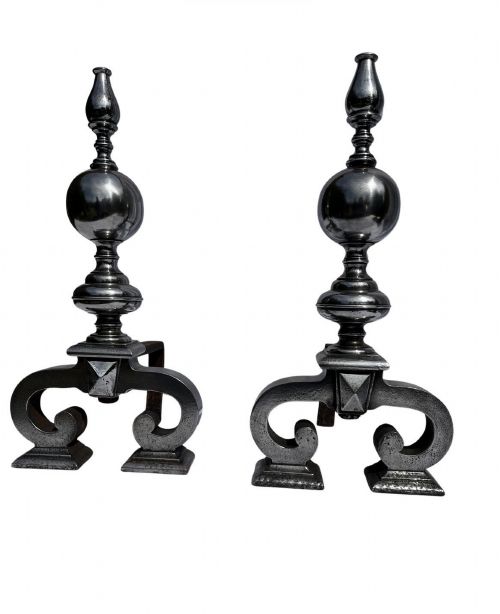
Steel fire irons are the functional hearth accessories that bring polished metal and period character directly to the grate.
Identifying steel fire irons
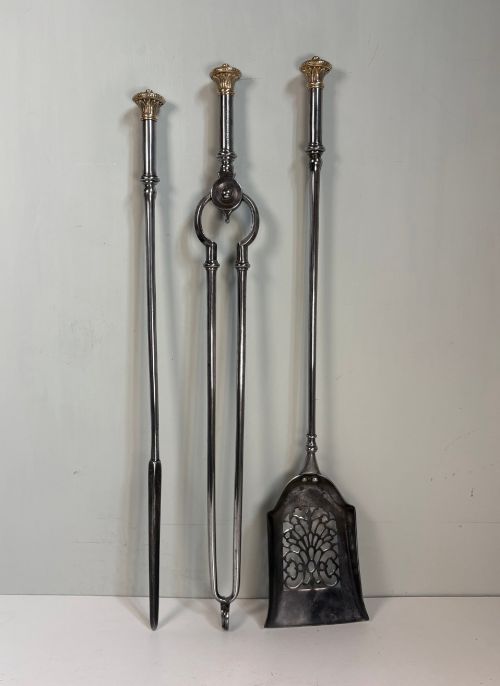
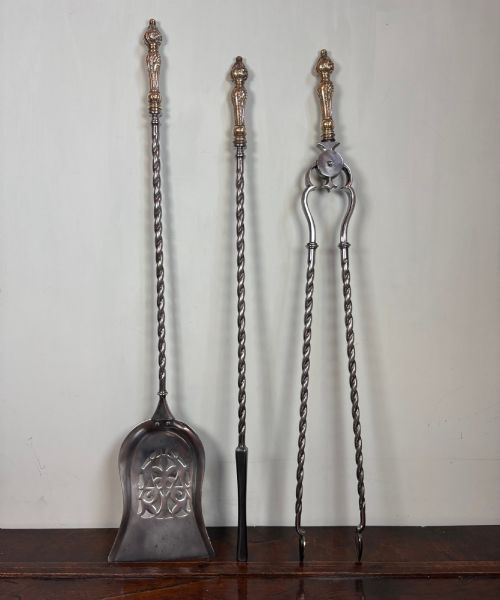
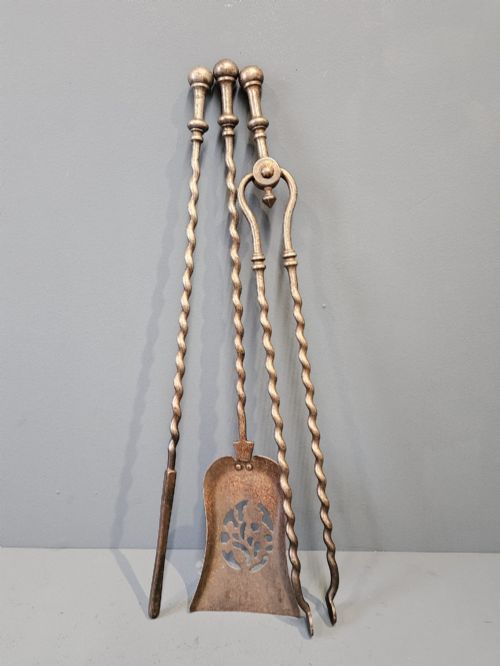
Steel fire irons comprise complete sets and individual fireplace tools designed for managing coal or wood fires in period hearths. When examining these pieces, a buyer will most frequently encounter complete sets featuring essential matching utensils.
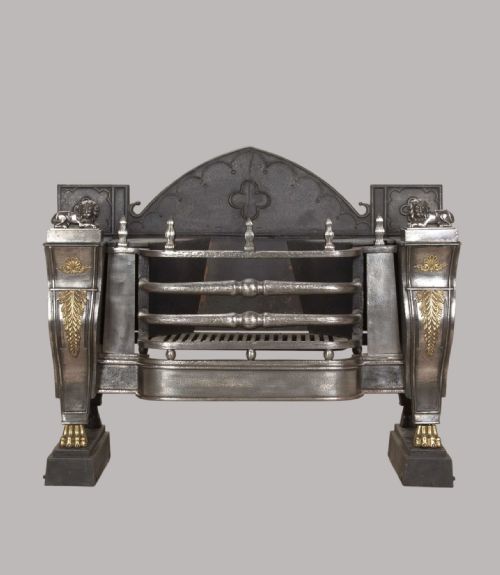
The recorded examples span distinct historical periods from the Georgian and Regency eras through to Victorian, Arts and Crafts, and Edwardian designs. These implements survive from various centuries, reflecting the changing aesthetic demands of domestic heating over generations.
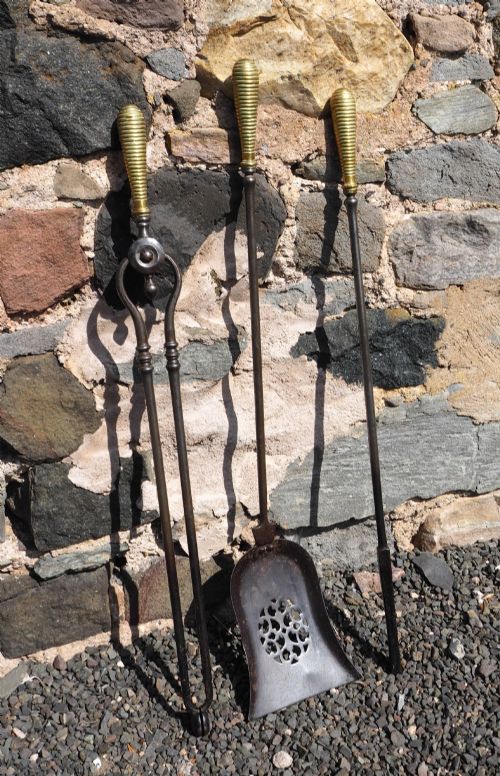
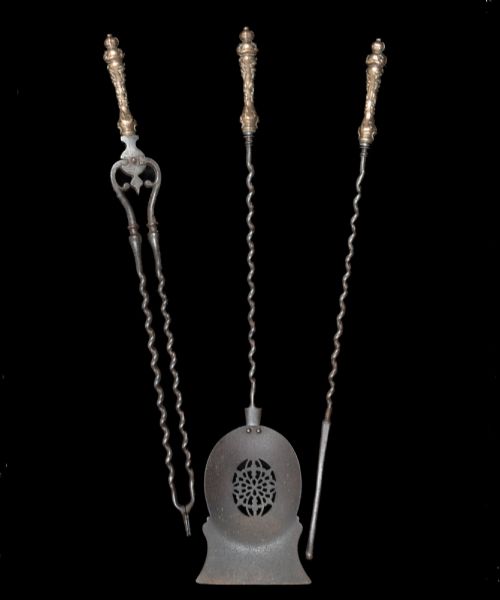
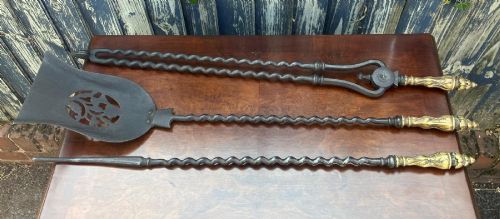
Object variations typically include standard fire irons, fireplace tools, and broader fireplace accessories. Most surviving configurations consist of three-piece sets containing pokers, tongs, and shovels.
Materials and construction
The primary material across these surviving implements is steel, frequently paired with contrasting brass or bronze elements for decorative highlights. Black iron also appears within the broader selection of hearth furnishings.
Maker techniques involve forging and shaping metal rods into functional shapes, followed by surface finishing processes such as burnishing and polishing. Many examples integrate mixed metals, combining bright steel shafts with cast brass handles.
Retail Price Guide 2026
Typical UK retail prices for steel fire irons, calculated from the Sellingantiques database of over a million retail prices indexed since 2003. This retail price guide relies exclusively on Sellingantiques data; no external sources or auction records are used, so the figures do not describe the wider market.
The recorded listings include iron, brass, and steel materials spanning the Georgian, Regency, Victorian, and Arts and Crafts periods.
Assessing quality
Quality in these hearth tools rests upon the refinement of the metal finish, with polished and burnished steel surfaces representing a higher grade of craftsmanship than plain or pitted metal. The precision of turned brass handles and the balance of the individual tools further separate standard items from finer examples.
The integration of decorative detailing, such as faceted finials or coordinated brass mountings across all implements in a set, indicates superior workshop execution. Greater age combined with intact, matching components enhances the coherence of a set.
The Steel Fire Irons Glossary
- Burnished steel
- Metal finished by rubbing to create a smooth, highly reflective surface. This treatment protects the material while offering a bright appearance beside the grate.
- Fire irons
- The collective term for the pokers, shovels, and tongs used to tend a domestic fire. They are often displayed together on a stand or fender.
- Georgian
- A period spanning the eighteenth and early nineteenth centuries, characterised by classical proportions and restrained ornament. Pieces from this era often feature elegant, slender profiles.
- Regency
- An early nineteenth-century style known for classical revival motifs and refined metalwork. Sets from this period frequently incorporate brass accents alongside polished steel.
- Arts and Crafts
- A movement emphasising hand-craftsmanship and honest materials over mass production. Tools from this tradition display simpler, robust forms with visible worker engagement.
Frequently Asked Questions
How many pieces are in a set?
Most traditional groupings consist of three individual tools designed to handle every aspect of tending an open fire. These standard triads typically include a poker, a pair of tongs, and a shovel.
Occasionally, surviving groups may include fewer items or incorporate a matching stand or fender into the ensemble. Reviewing individual descriptions helps confirm the exact configuration of each set.
How do I clean steel tools?
Maintenance requires gentle removal of surface dust and careful handling to preserve any historic polished or burnished finish. Avoid abrasive compounds that might strip the original metal surface.
Keeping the metal in a dry environment prevents active corrosion from forming on the steel shafts. Light application of protective oils can help maintain the brightness of polished surfaces.
Can these be used daily?
Many historical hearth tools remain entirely robust enough for regular practical use in an active fireplace. Solid steel construction ensures they withstand the physical demands of moving fuel and ash.
Buyers intending frequent use often select sturdy nineteenth-century examples. Finer eighteenth-century pieces are sometimes reserved primarily for display alongside period grates.
How are periods identified?
Dating relies on stylistic clues found in the handle design, the shaping of the finials, and the overall proportions of the tools. Georgian and Regency pieces often display slender, elegant lines with classical urn or acorn motifs.
Later Victorian and Arts and Crafts examples introduce heavier forms or simplified, utilitarian structures. Comparing the manufacturing marks and metal finishing techniques further clarifies the era of production.