


Steamship Harbour Art
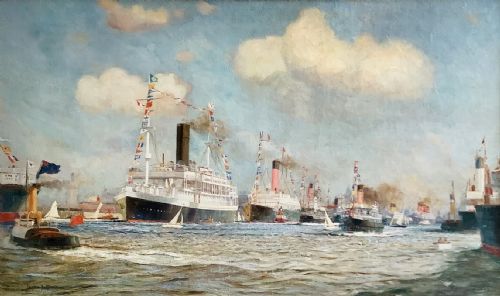
Steamship harbour art captures the industrial hustle of historic ports through maritime paintings.
Steamship Harbour Art
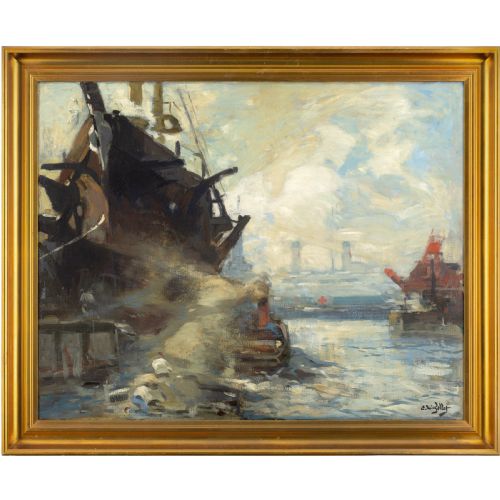
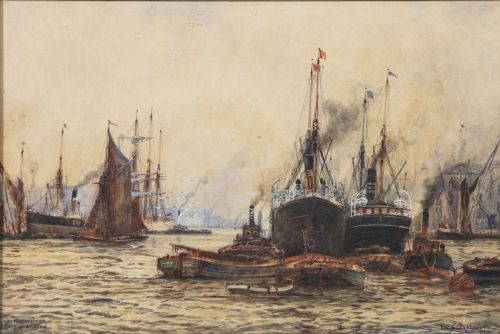
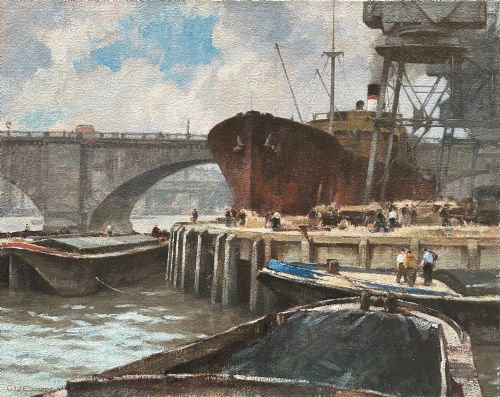
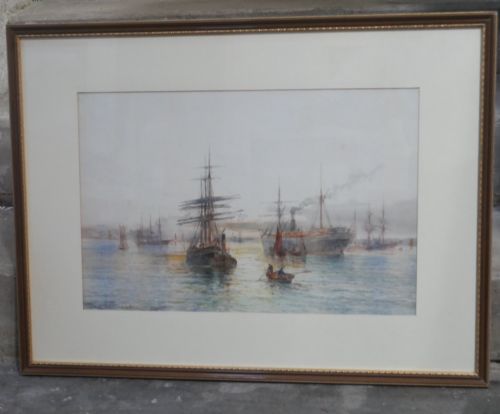
Steamship harbour art brings together maritime paintings from the Victorian and Edwardian eras, documenting the busy waterways of London, Dublin, and Liverpool. These works record the age of steam alongside traditional sailing vessels in bustling ports.
The selections available here rely heavily on oil on canvas and delicate watercolours on paper. Most examples focus on urban waterfronts, capturing landmarks like Tower Bridge and the River Thames alongside commercial shipping docks.
How they were made
Artists captured these harbour scenes using traditional oil and watercolour techniques on canvas or paper. Oil paintings on canvas provide deep texture for churning water and smoke, while watercolours rely on fluid washes to render misty port atmospheres.
Many works retain their period framing, frequently incorporating gilt details that complement the maritime subject matter. The application of paint reflects the dominant styles of the late nineteenth and early twentieth centuries, ranging from marine realism to impressionist touches.
Port scenes span locations from London and Liverpool to Ostend and Copenhagen.
What varies in quality
Quality rests on the precision of the maritime detail and the artist's ability to render the atmospheric conditions of smoky industrial ports. Works by established marine specialists show superior handling of vessel architecture and water movement.
The condition of the paper or canvas also dictates the desirability of a piece, with well-preserved watercolours holding significant appeal. Framed oil paintings that retain their original gilt presentation offer a more complete historic object.
Eugène-Louis Gillot·Frank William Scarbrough·Cyril Walduck Edwards·Charles William Wyllie·Ernest Dade
The Steamship Harbour Art Glossary
- Watercolour
- A painting method where fine pigment is suspended in water-based solution on paper. This medium suits atmospheric haze and coastal weather.
- Oil on canvas
- Pigment bound in oil applied to stretched fabric. This combination allows for rich layering and textured depictions of water and steam.
- Gilt
- A thin layer of gold leaf applied to frame surfaces. It frames the maritime scene with period appropriate embellishment.
- Post-Impressionism
- An art movement extending beyond impressionist limits towards heavier brushwork and symbolic forms. It informs several twentieth-century interpretations here.
Steamship Harbour Art: Frequently Asked Questions
What periods do these paintings cover?
The works span from the late nineteenth century through the Edwardian period up to the nineteen-thirties. Victorian marine realism transitions into early twentieth-century impressions of industrial ports.
This timeframe captures the peak era of steamship travel and the transformation of major European river trade.
How should I display watercolour works?
Watercolours require careful placement away from direct sunlight to prevent the fading of delicate pigments on paper. Proper framing behind protective glass ensures the longevity of these atmospheric harbour scenes.
Keeping them in stable humidity conditions preserves both the paper support and the original frame.
What subjects appear most frequently?
River pools, commercial docks, and busy estuaries dominate the compositions in this selection. Landmarks such as London Bridge and the River Mersey feature prominently alongside tugboats and steamships.
Artists focused heavily on the industrial activity and smoky atmospheres of major European trading ports.
Are these works signed by the artists?
Many pieces carry the signature of the painter within the composition, often near the lower edge. Attributions rely on documented signatures and period records associated with maritime artists of the era.
Documentation frequently links these watercolours and oils to notable painters of the Victorian and Edwardian maritime schools.