
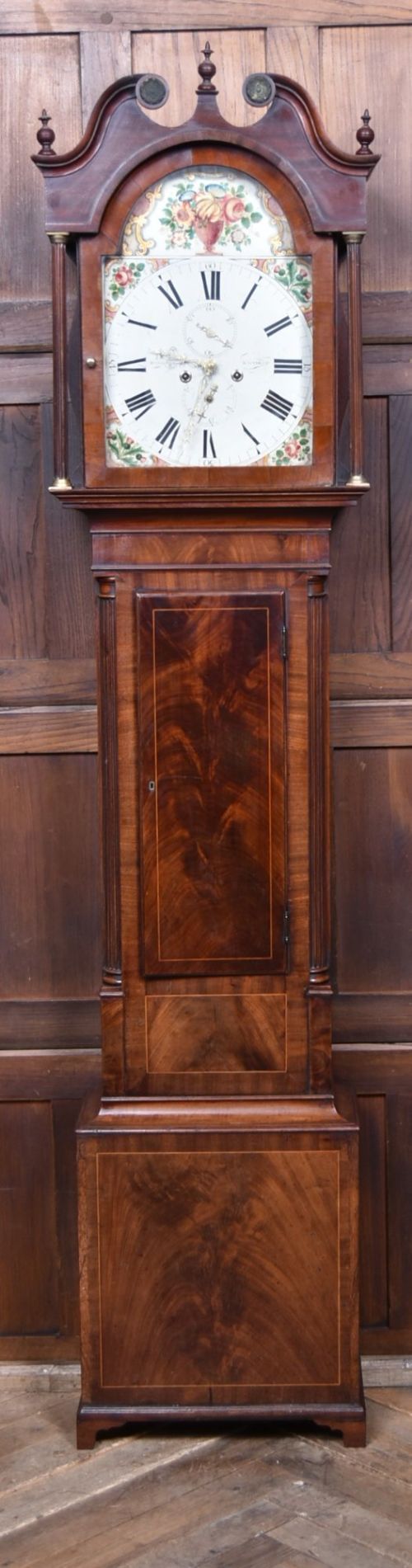
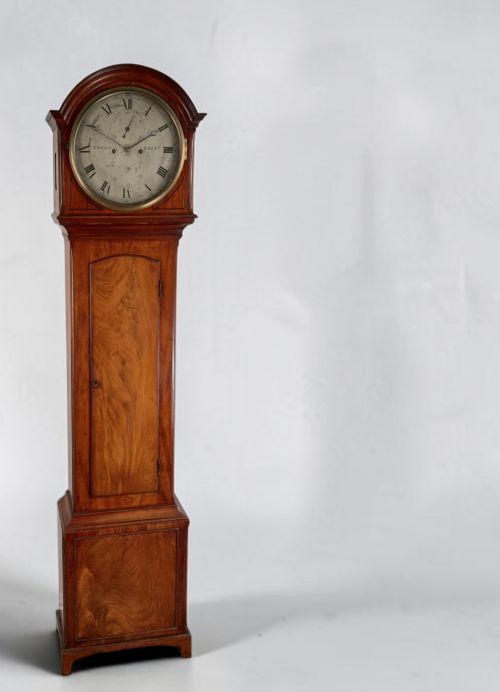
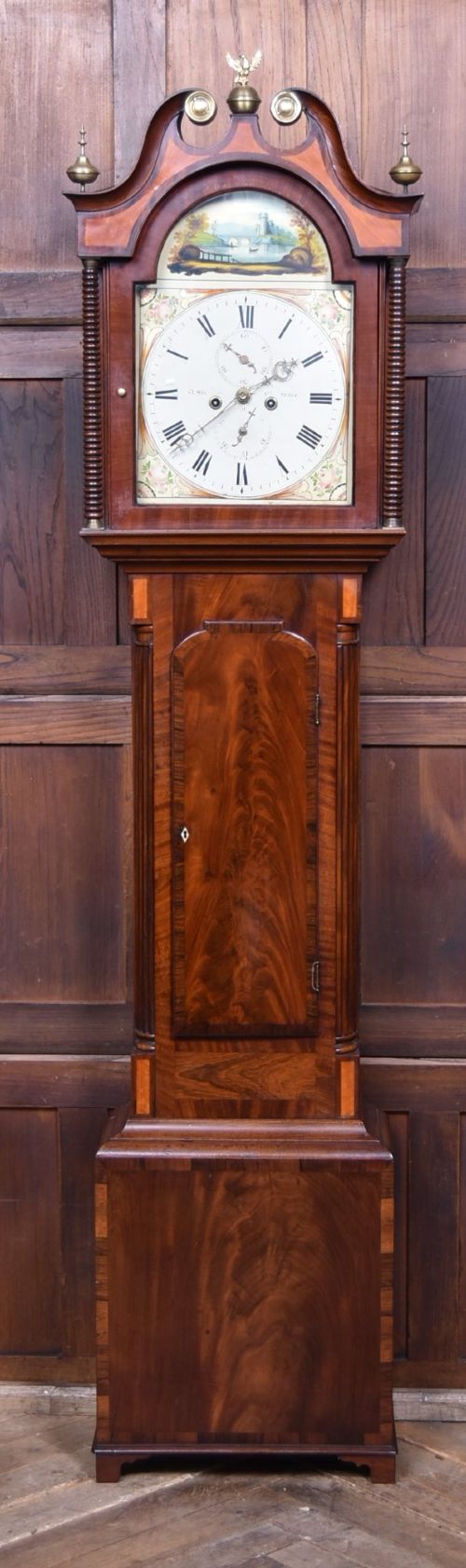
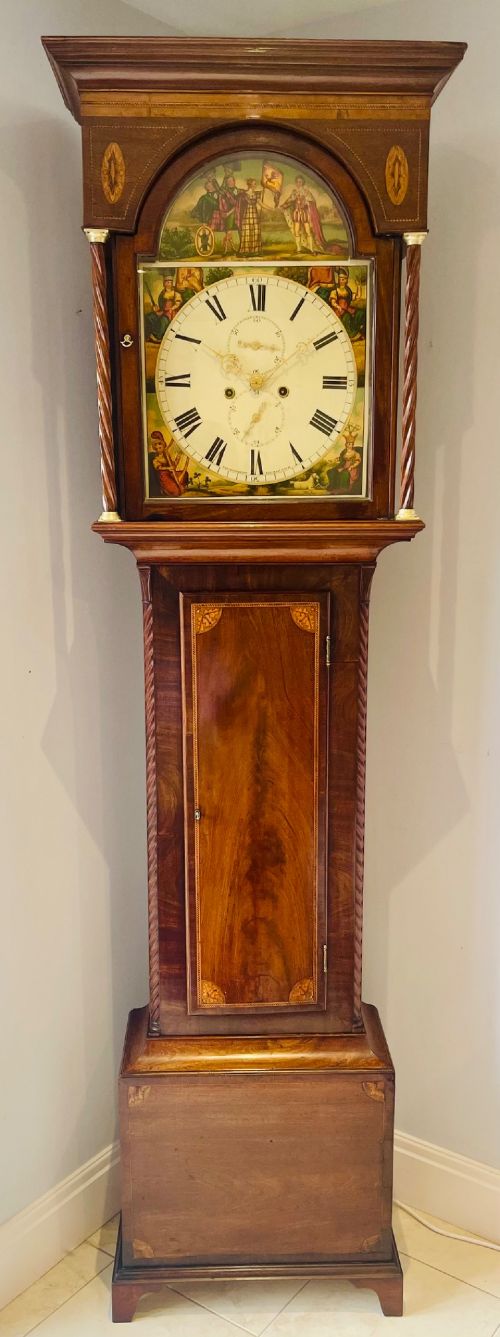
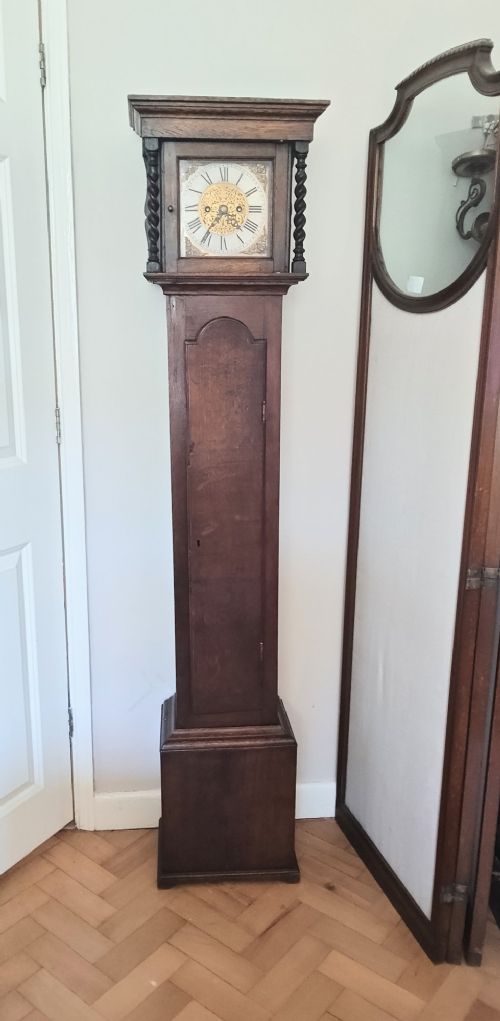
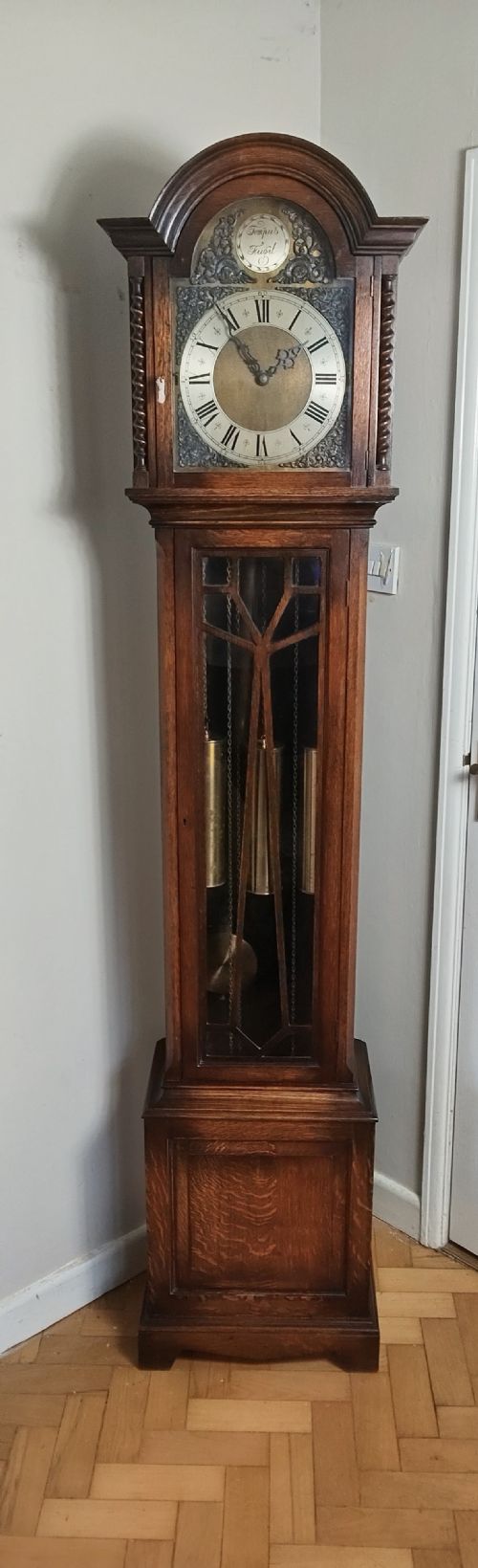
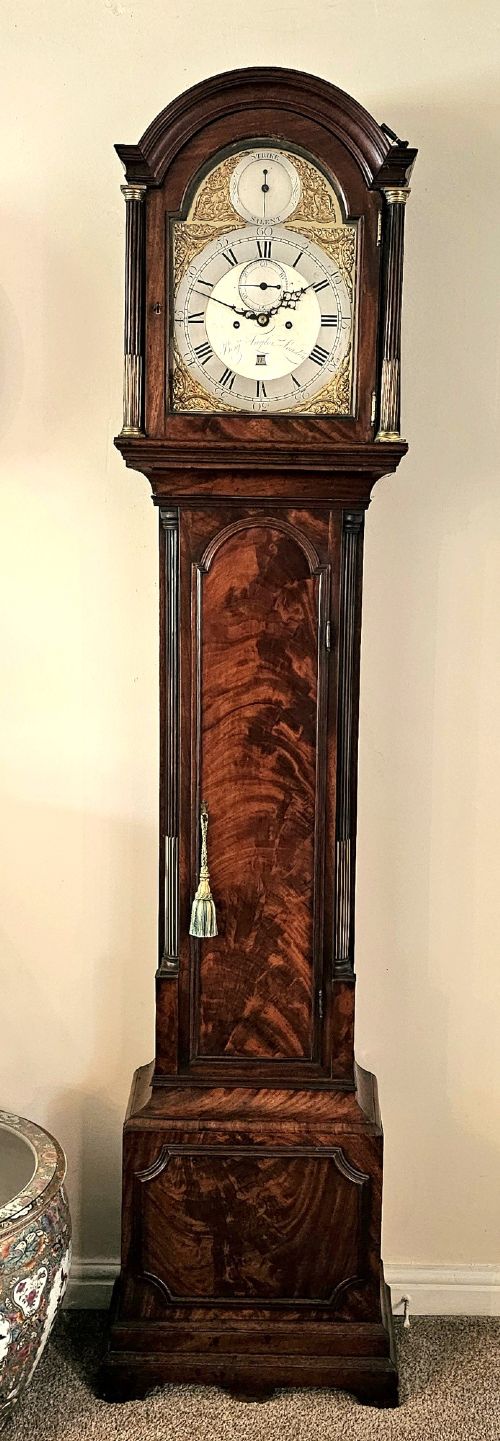
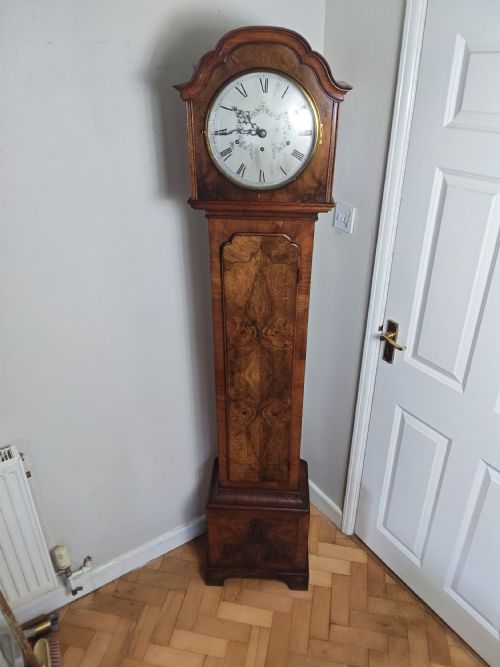
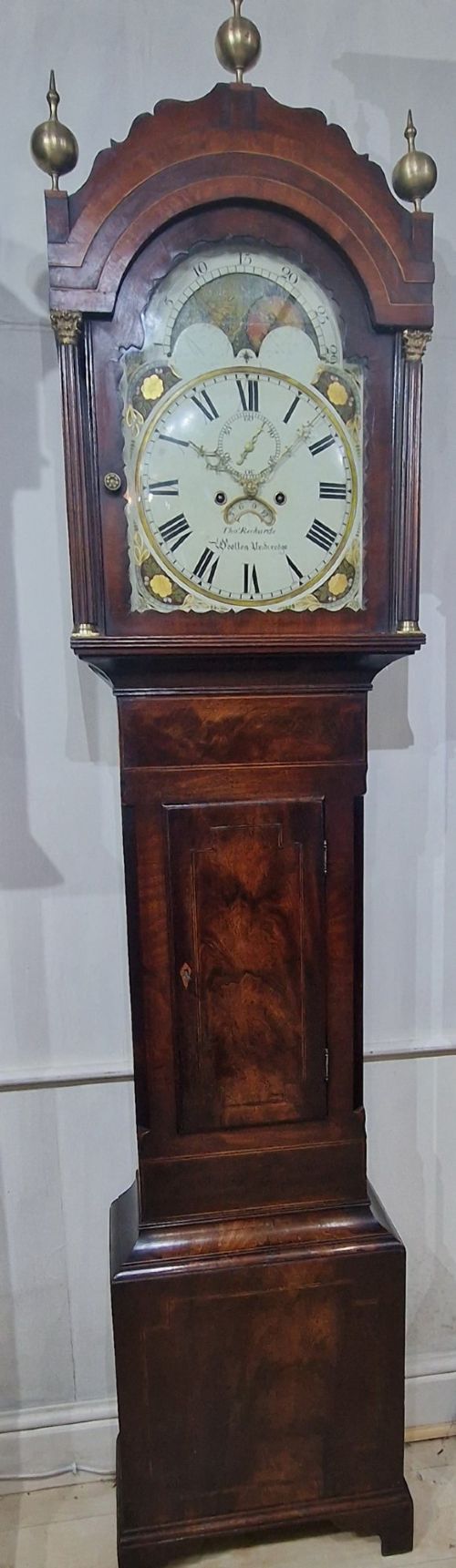
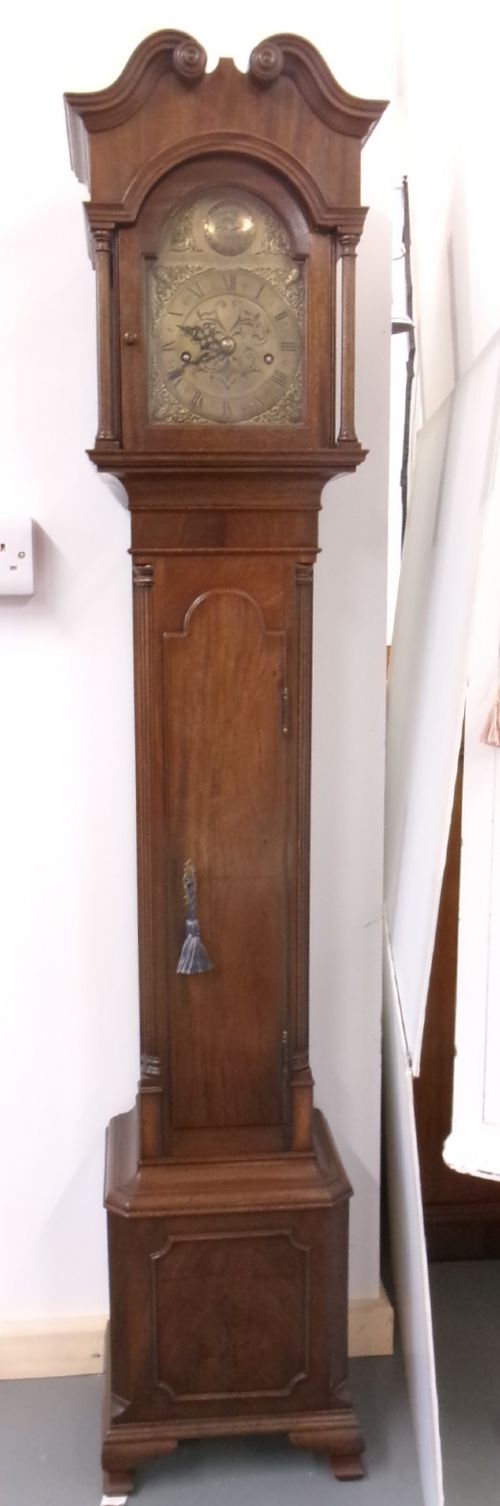


Standing Wooden Clock
A standing wooden clock brings the measured tick of centuries into a room, combining fine cabinetry with precision mechanical movement.
Standing Wooden Clock
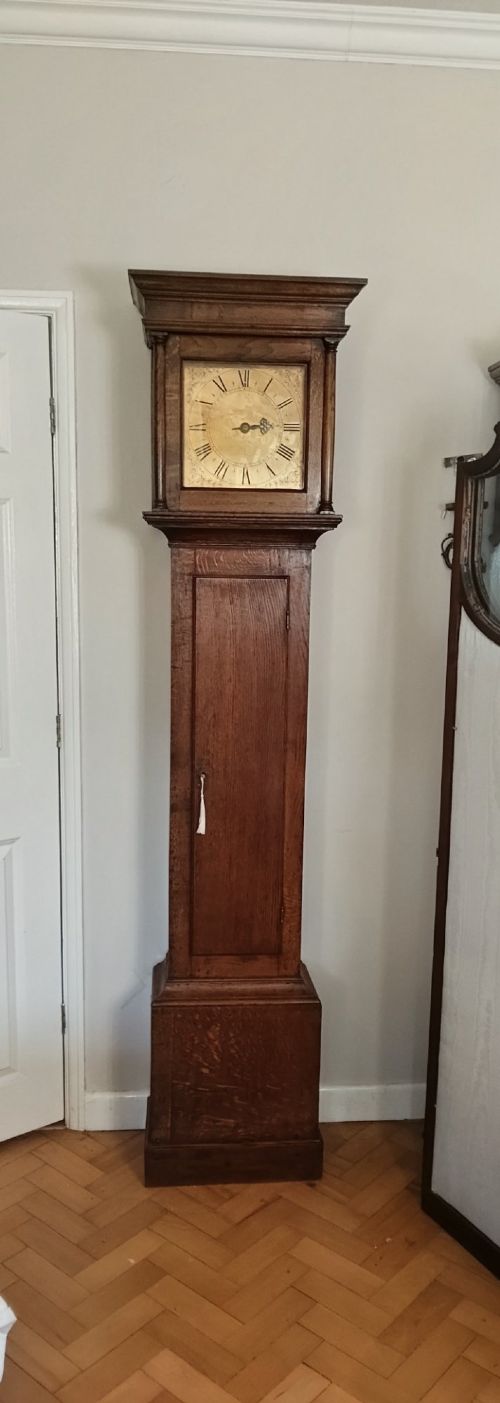
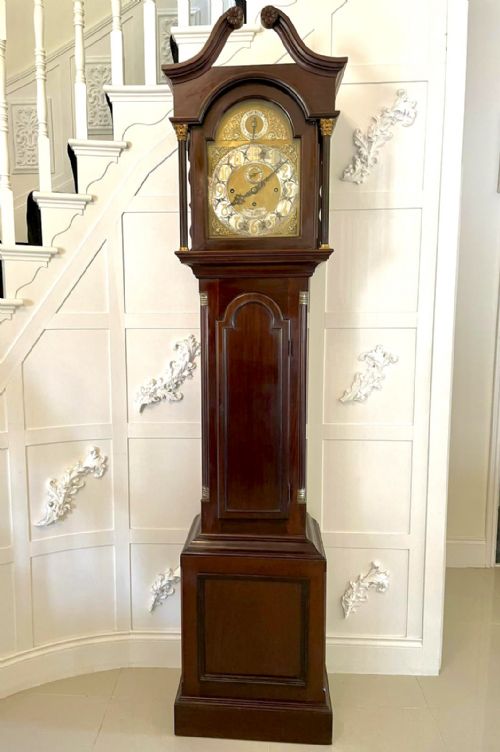
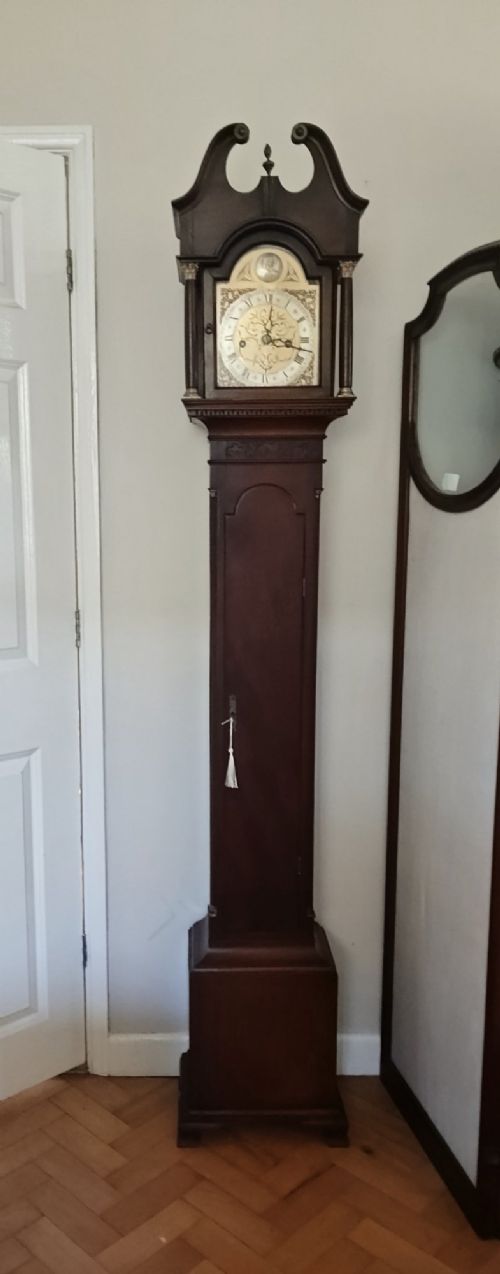
A standing wooden clock, frequently referred to as a longcase or grandfather clock, is a tall floor-standing timepiece housed in a fitted wooden case. When searching for a standing wooden clock, buyers encounter formats ranging from towering Georgian floor pieces to more compact Edwardian and later variations.
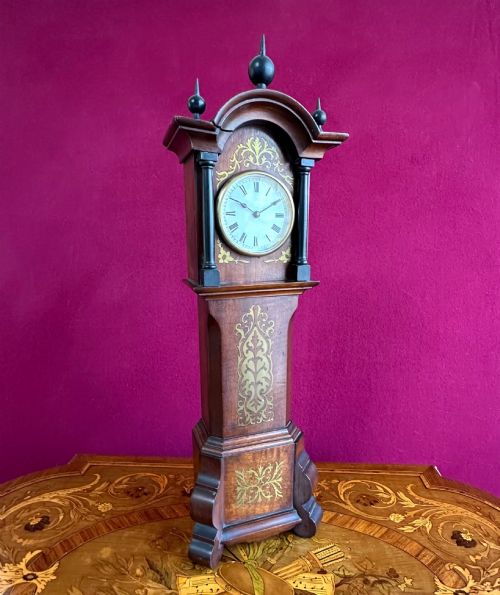
The selection spans substantial eighteenth-century oak and mahogany floor clocks alongside nineteenth-century Scottish examples and smaller twentieth-century formats such as grandmother and granddaughter clocks. These timepieces served as both the primary household chronometer and a commanding piece of interior furniture.
Tall mahogany and oak cases dominate the selection, often featuring brass dials and glazed upper trunk doors designed to protect the pendulum. Regional variations, particularly from Scottish makers, frequently showcase distinct dial arrangements and cabinet proportions.
Materials and construction
Cabinet makers utilised dense native and imported timbers, primarily mahogany, oak, and walnut, frequently selecting figured veneers like flame mahogany or burr walnut for decorative impact. These woods were seasoned and joined with traditional cabinet-making methods to build tall upright trunks capable of housing heavy weights and swinging pendulums.
The internal movements combine brass gears, wheels, and plates with steel arbors and lead or cast iron weights, often regulated by a suspended pendulum. Dials combined engraved brass, painted iron, or silvered brass chapter rings, sometimes protected beneath flat or convex glass panels.
Listings feature oak, mahogany, and walnut woods across Georgian, Victorian, and Edwardian periods.
Distinctions in quality
Quality in a standing wooden clock rests primarily on the integrity of the cabinet work and the sophistication of the movement. Finer pieces display crisp architectural mouldings, well-matched wood grains, and secondary timbers appropriate to the declared period rather than modern replacements.
The mechanical standard is defined by the finishing of the brass movement, the precision of the wheel cut, and the signature of a recognised maker upon the dial. Additional complication such as musical chimes, rolling moon phases, or multiple weight trains elevate the standing of the piece.
Hendrie Ogg Dunfermline·Green of Edinburgh·D Straiton Montrose·Winsor Bishop Norwich·Benjamin Taylor·Edward Upjohn Exon·James Coster of Henley·Edward East·Joseph Knibb·John Banks Oldham
The Standing Wooden Clock Glossary
- Longcase clock
- A tall, weight-driven pendulum clock housed in a protective wooden case standing directly on the floor. These instruments are commonly known by collectors as grandfather clocks.
- Grandmother clock
- A smaller, more slender version of the traditional longcase clock, typically produced during the twentieth century. They occupy less floor space while retaining full mechanical movements.
- Chapter ring
- The circular ring on the clock face that bears the hour numerals. They are frequently fashioned from silvered brass or painted enamel.
- Quarter veneered
- A cabinet-making technique where four matching pieces of veneer sliced from the same log are arranged symmetrically to create a decorative pattern. This finish appears frequently on high-status walnut cases.
- Rolling moon
- A mechanical dial mechanism that tracks the phases of the moon through a rotating painted disk behind the clock face. It added both utility and visual complexity to eighteenth and nineteenth-century dials.
Standing Wooden Clock: Frequently Asked Questions
How do I tell a grandfather clock from a grandmother clock?
Grandfather clocks are the standard full-size tall case clocks, usually measuring six feet or more in height from base to hood. They were built to accommodate long pendulums and heavy driving weights.
Grandmother clocks are significantly shorter and narrower versions, often standing under six feet tall. These smaller formats became popular during the twentieth century for modern domestic spaces.
What is the difference between oak and mahogany cases?
Oak cases typically reflect earlier periods, presenting a heavier grain and robust provincial character that suits country houses and rustic interiors. They represent traditional British cabinet making before exotic timbers became widely available.
Mahogany cases offer a smoother, denser surface that accepted deeper polishing and finer carved details. Cabinet makers utilised mahogany for formal urban pieces, frequently enhancing the exterior with flame veneers or crossbanding.
Where should I place a standing wooden clock in my home?
Position your standing wooden clock against an interior wall away from direct sunlight, heating vents, and exterior doors. Sudden temperature changes and moisture fluctuations can warp timber cases and affect the movement's lubrication.
Ensure the floor beneath the clock is level and solid so the case can be secured plumb against the wall. A stable foundation allows the pendulum to swing evenly and keeps the escapement ticking in correct beat.
How do eight-day movements differ from thirty-hour movements?
An eight-day movement requires winding approximately once a week using a key or crank to draw up the hanging weights. These mechanisms utilise a longer train of gears to sustain operation over the extended period.
Thirty-hour movements must be wound daily or every thirty hours, often utilising a simpler chain or cord drop system. They typically feature fewer internal wheels and were built for more utilitarian domestic use.