

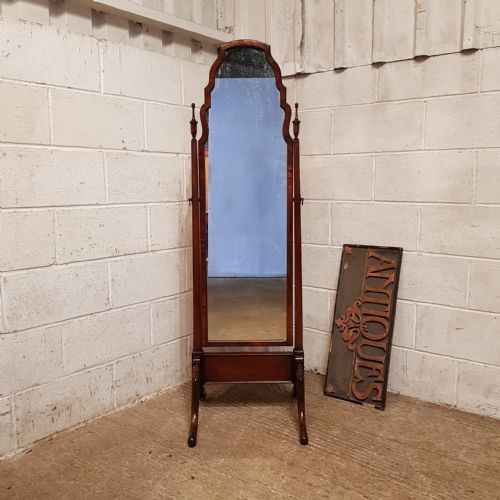


Standing Tilt Dressing Mirror
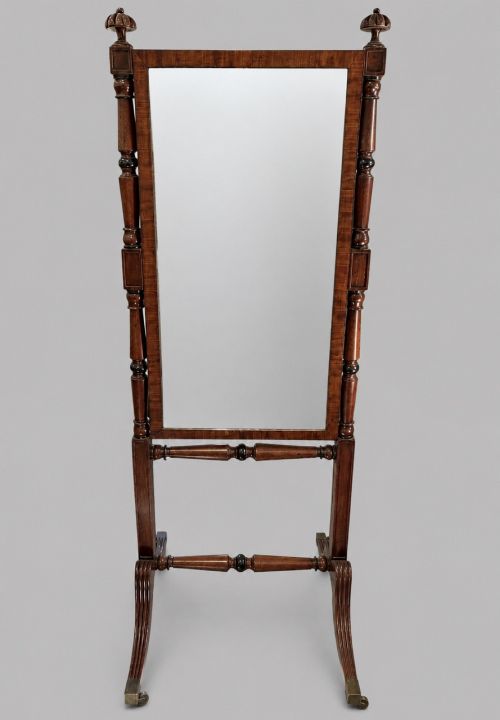
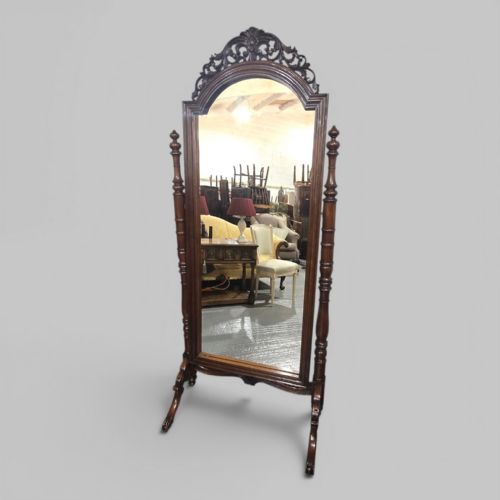
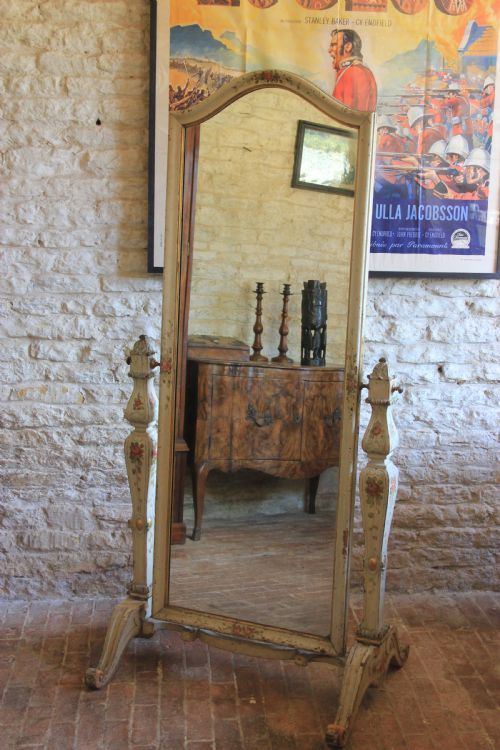
A standing tilt dressing mirror offers a full-length reflection framed by timber and supported on a pivoting frame.
Standing Tilt Dressing Mirror
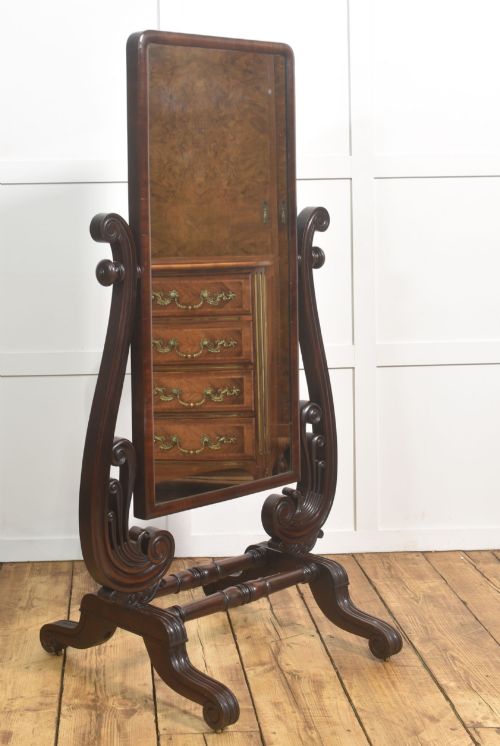
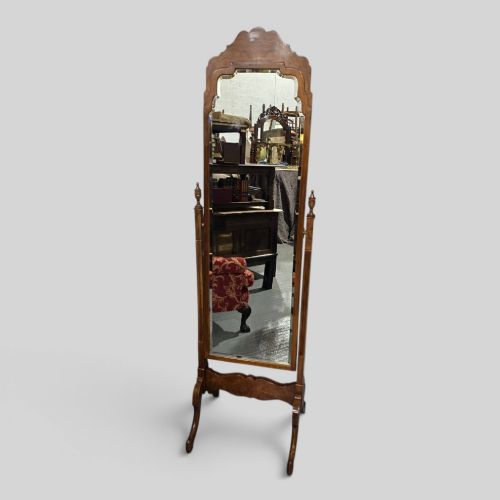
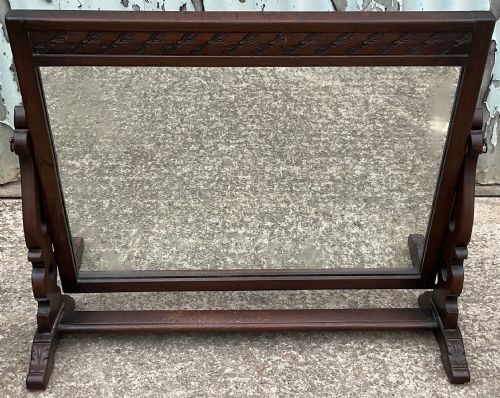
A standing tilt dressing mirror is typically a floor-standing or large table-top glass plate held within a swivelling frame, allowing the user to adjust the angle of reflection. When browsing this selection, you encounter forms ranging from towering full-length cheval designs down to compact dressing table glass plates.
The prevailing examples on this page date from the Georgian, Regency, Victorian, and Edwardian eras, constructed predominantly in timber frames. These pieces function as both practical furniture for dressing and architectural elements that bounce light across a room.
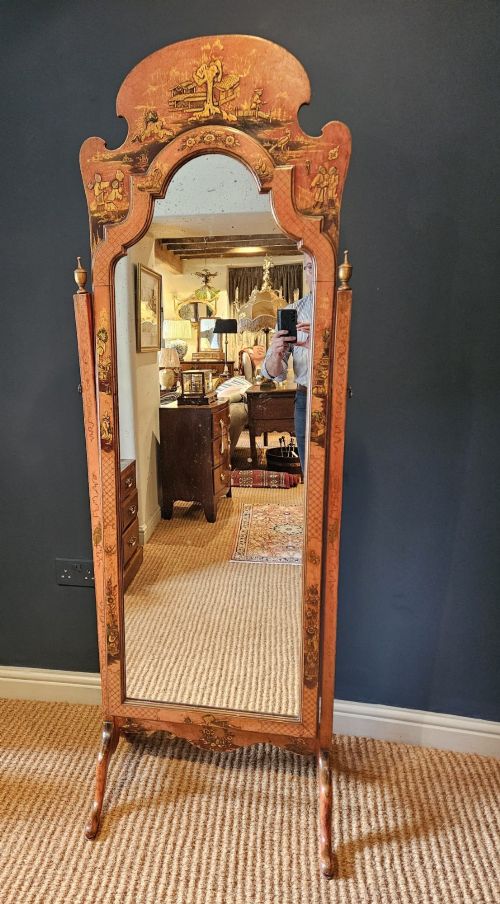
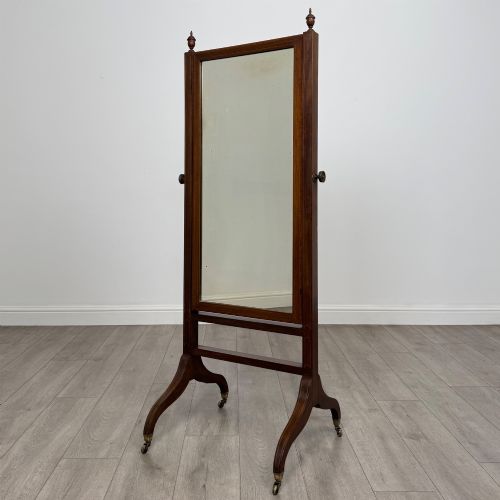
The inventory leans heavily towards mahogany frames, alongside walnut, oak, pitch pine, and lacquered wood. Many rest on supportive legs fitted with brass sabots and castors for ease of movement.
Materials and construction methods
Cabinet makers constructed the primary uprights and floor stands using dense hardwoods such as mahogany, walnut, and oak. These timbers provided the necessary weight at the base to support the pivoting mirror frame safely.
The mirror glass itself sits inside a secondary swing frame connected to the main uprights by pivot pins or screw knobs. Metal components like brass brackets, sabots, and castors appeared frequently to reinforce joints and facilitate tilting.
Materials span mahogany, walnut, oak, pitch pine, brass, and lacquered wood across Victorian, Edwardian, and Regency periods.
Factors determining the tier of a piece
The standard of a standing tilt dressing mirror depends on the selection of timber veneers, such as flame mahogany or burr walnut, and the crispness of any turned details or inlaid decoration. Heavier, more stable base designs indicate a higher grade of manufacture intended to prevent tipping during adjustment.
Refinement in the metal hardware, including cast brass castors and decorative screw caps on the pivot arms, distinguishes standard utilitarian items from bespoke workshop commissions.
Waring and Gillow
The Standing Tilt Dressing Mirror Glossary
- Cheval mirror
- A large floor-standing mirror supported by a frame with four legs. The glass swings freely between two upright pillars.
- Tilt dressing glass
- A smaller mirror plate mounted on a frame designed to sit upon a table or chest of drawers.
- Sabots
- Ornamental metal shoes fitted over the feet of furniture legs, usually cast in brass.
- Flame mahogany
- A decorative timber grain pattern displaying flickering, flame-like figures achieved by cutting across the branch junctions.
- Chinoiserie
- European decorative style employing simulated Chinese motifs, often seen in lacquered wood finishes.
Standing Tilt Dressing Mirror: Frequently Asked Questions
How do I adjust the tilt on these mirrors?
Most standing tilt dressing mirrors rely on side screw knobs or pivot pins tightened by hand. Adjusting these tensioners allows the glass to hold its angle securely.
Over time, timber shrinkage can loosen the pivot mechanism, requiring careful tightening of the internal hardware to restore proper friction.
Where should I place a cheval mirror?
These pieces require adequate floor space to allow the swing frame to rotate fully without hitting nearby walls or furniture. Positioning them near a natural light source maximises their reflective utility.
Floor-standing versions need stable placement on even flooring to ensure the heavy timber frame remains balanced.
Are these mirrors easy to move around?
Many period examples feature original brass castors fitted to the base legs for relocation. This mobility helped users catch optimal daylight in different parts of a bedroom.
Take care when rolling older units across thick carpets to avoid putting undue stress on the lower leg joints.
How do I identify the period of a mirror?
Dating relies on timber choice, leg style, and construction details such as hand-cut screws or dovetailing. Regency and William IV pieces often display sabots and sabre legs, while Edwardian examples show lighter inlay work.
Examining the bevel and silvering of the glass plate also offers clues regarding the age of the mirror.