

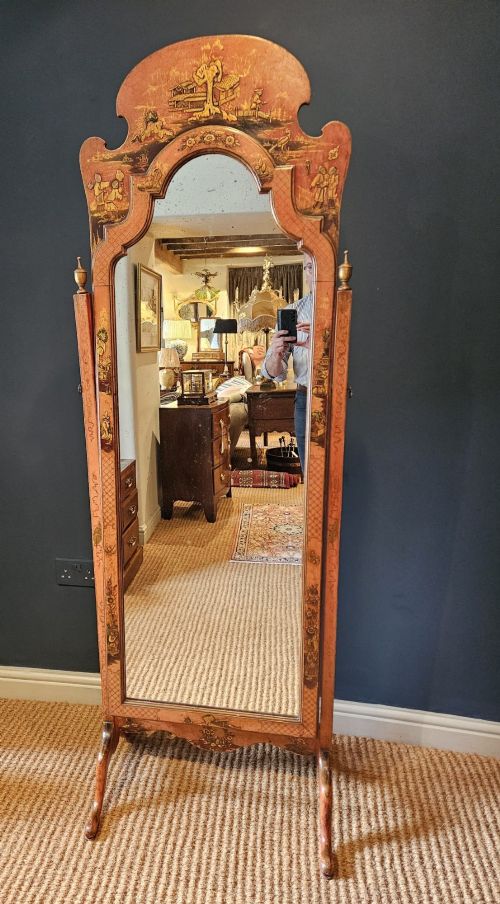
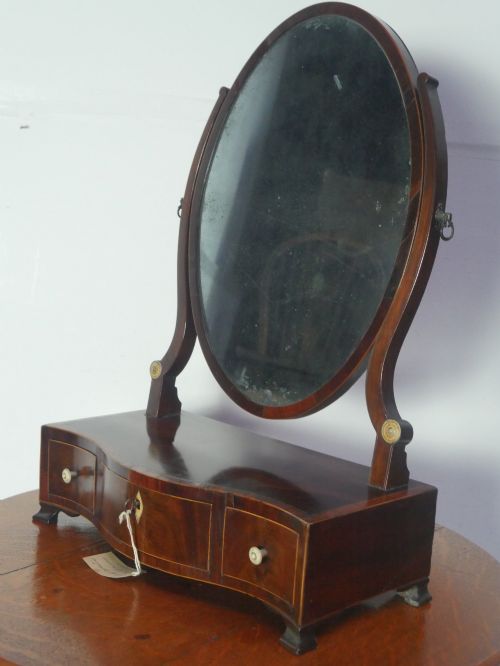
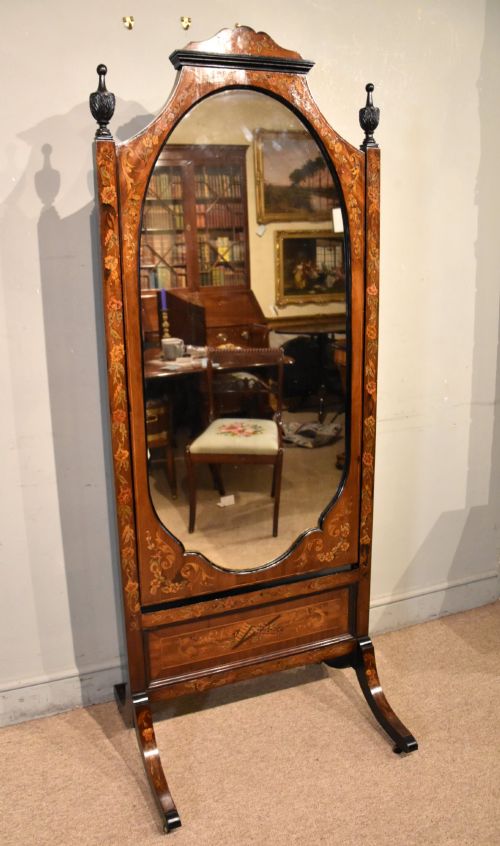
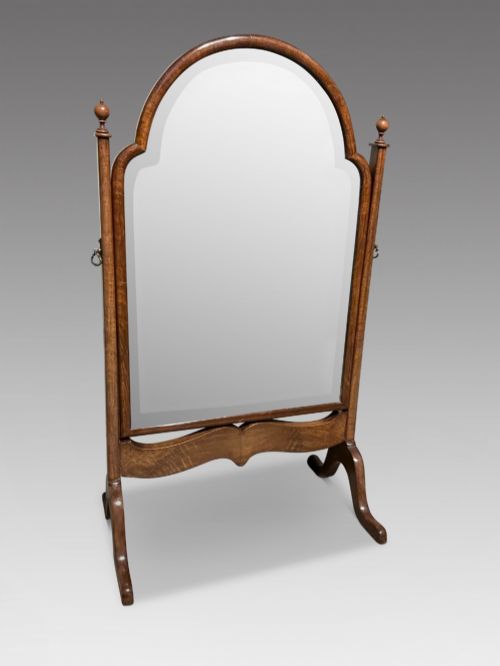
Standing Swing Mirror
A standing swing mirror brings historic timber frames and tilting glass into a room, offering both full-length reflection and fine craftsmanship.
Standing Swing Mirror
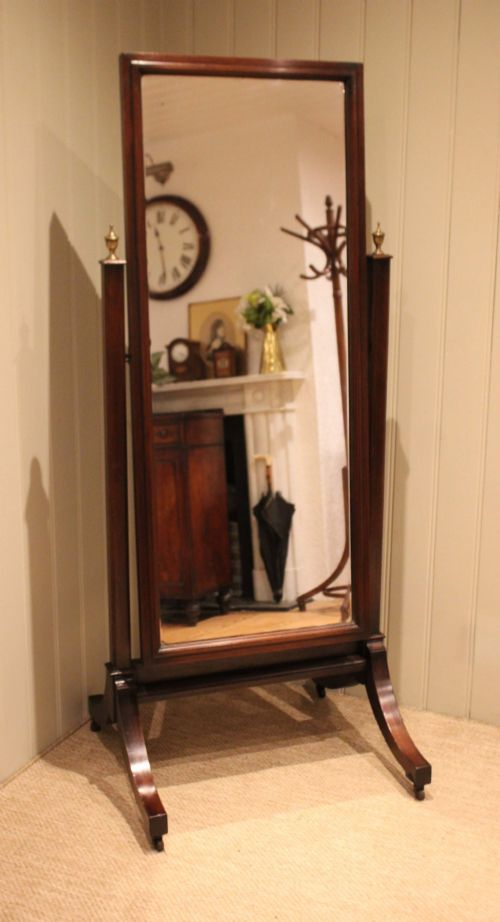
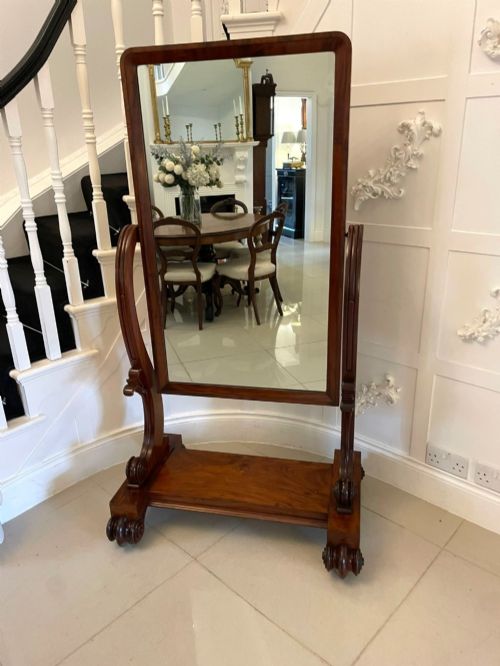
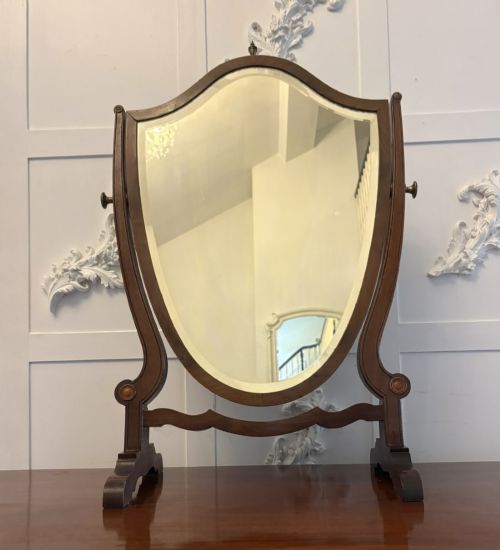
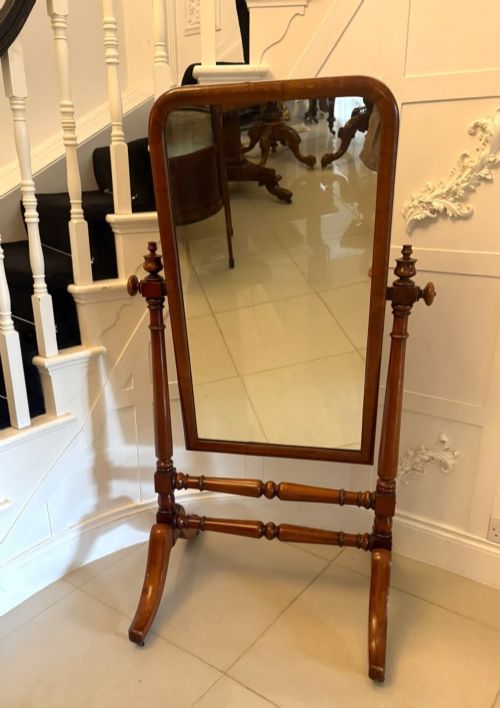
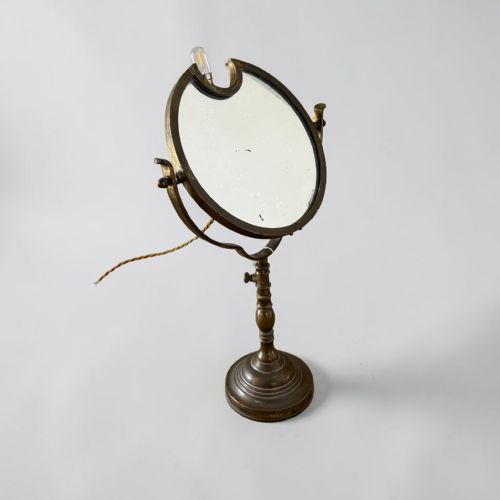
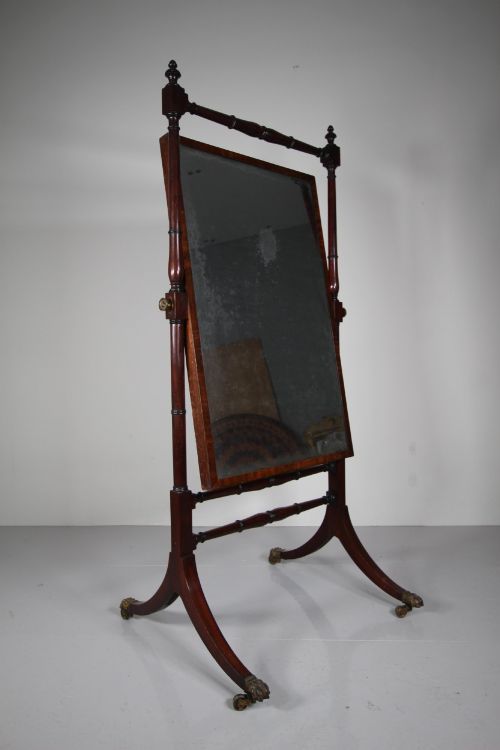
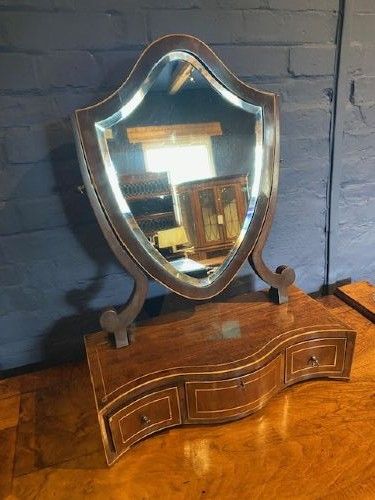
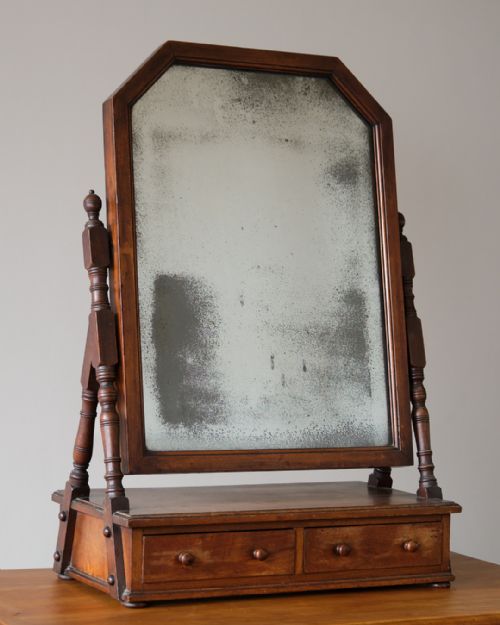
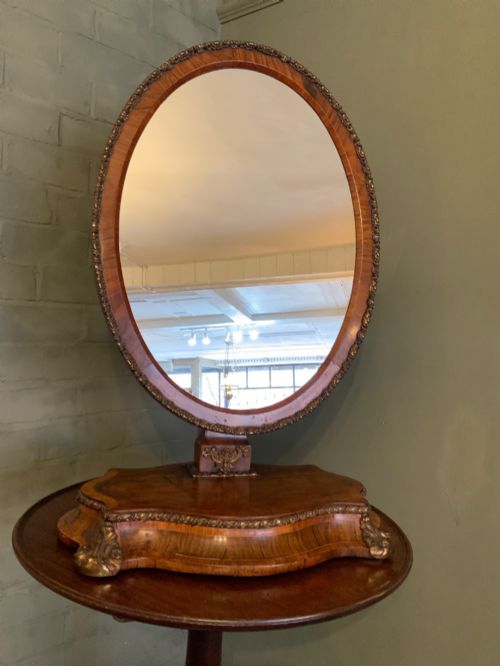
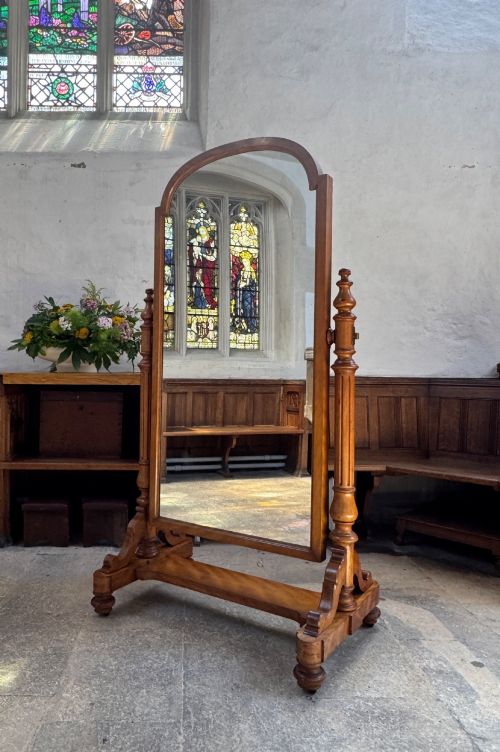
A standing swing mirror takes several distinct forms, ranging from tall cheval frames designed for full-length views to compact toilet mirrors meant for a dressing table. Mahogany and walnut dominate these pieces, alongside oak, satinwood, and brass hardware.
Cheval mirrors stand upright on four legs or a heavy pedestal base, swinging freely within a vertical wooden frame. Smaller tabletop and dressing variants sit on bracket feet or small box bases fitted with drawers.
The selection spans the eighteenth century through the Edwardian period and the early twentieth century. Georgian, Regency, and Victorian examples appear frequently in mahogany and walnut.
Materials and construction
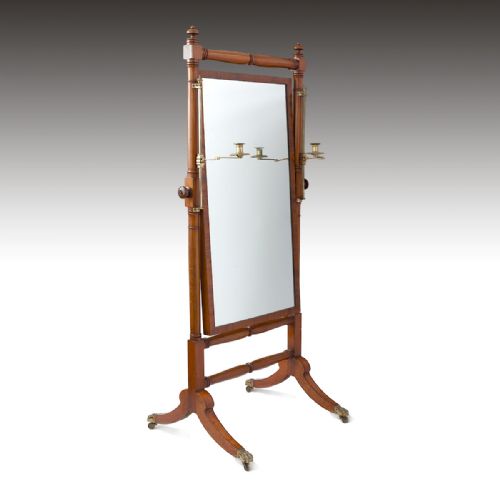
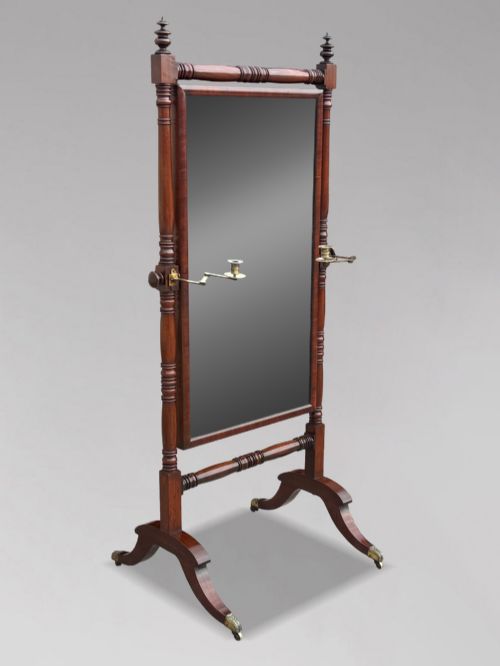
Cabinetmakers built these frames using solid hardwoods like mahogany, walnut, and oak, often applying flame veneers or satinwood inlays for decorative contrast. Brass candle holders, hinges, and pivoting screws allowed the mirror plate to tilt at various angles.
Mirror glass was set into rebated frames and held with wooden pins or backboards. Freestanding cheval designs relied on sturdy side pillars secured to heavy trestle bases for stability.
Standing Swing Mirror Retail Price Guide 2026
Typical asking prices for standing swing mirror among the pieces listed under this phrase on Sellingantiques today, from the lower quarter to the upper quarter. They describe what is for sale here now, not the wider market.
Some nineteenth-century mahogany cheval mirrors include brass articulated candle holders, letting you check your reflection long after the sun has set.
Judging quality in swing mirrors
Quality rests on the selection of timber and the crispness of the cabinetwork. Fine grain figures in mahogany or walnut and precise joinery distinguish superior workshop production from standard output.
Proportion and stability define the better pieces. A well-balanced frame swings smoothly on its pivots without leaning or straining the supporting uprights.
Heal and Sons·Gillow
The Standing Swing Mirror Glossary
- Cheval mirror
- A large standing swing mirror supported by a vertical frame and four legs. It allows a full-length view of the person standing before it.
- Toilet mirror
- A smaller swing mirror mounted on a box base or small feet, designed to sit on a dressing table. These often feature small storage drawers beneath.
- Swing mirror
- Any mirror suspended on pivots between two upright posts to allow the glass to tilt. This mechanism is central to both floor-standing and tabletop versions.
- Ormolu
- Gilded bronze mounts applied to furniture and mirror frames for decoration. It appears on French and English pieces from the eighteenth and nineteenth centuries.
- Plate glass
- The flat sheet of glass used in the mirror frame. Original historic plates often show subtle imperfections or soft reflections.
Standing Swing Mirror: Frequently Asked Questions
How do I date a swing mirror?
Dating relies on timber choice, construction methods, and hardware styles. Georgian and Regency pieces typically use dense mahogany with fine dovetails, while Victorian and Edwardian examples introduce varied veneers and different turning details.
Secondary woods inside drawers and the backing boards also offer clues to age. Examining the pivot screws and glass plate provides further context for the period of manufacture.
Where should I place a cheval mirror?
A tall cheval mirror works best in a bedroom or dressing room where floor space allows it to stand clear of walls. Positioning it near a natural light source helps maximise reflection in the room.
Ensure the floor is level so the heavy frame bears even weight across its feet. This keeps the pivoting mechanism aligned and prevents strain on the side pillars.
Are toilet mirrors adjustable?
Toilet mirrors use brass side screws or pivot pins that let the glass tilt forward or backward. This adjustment allows the user to alter the angle of reflection.
Over time, these pivots may loosen or stiffen with dust. Gentle adjustment of the hardware restores smooth movement without damaging the wooden uprights.
What is the difference between cheval and dressing mirrors?
A cheval mirror stands directly on the floor to provide a full-length view of the user. It requires a sturdy base and tall side pillars to support the swinging frame.
A dressing mirror is smaller and sits on top of a chest or table. Many of these tabletop versions include small drawers in the base for storing trinkets and accessories.