



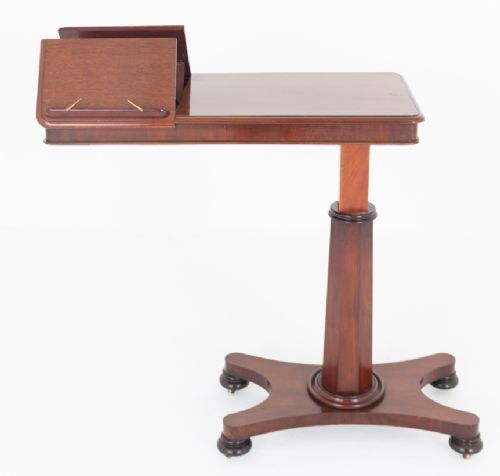
Standing Book Rest
A standing book rest offers a dedicated platform for hands-free reading, combining practical utility with period craftsmanship.
Standing Book Rest
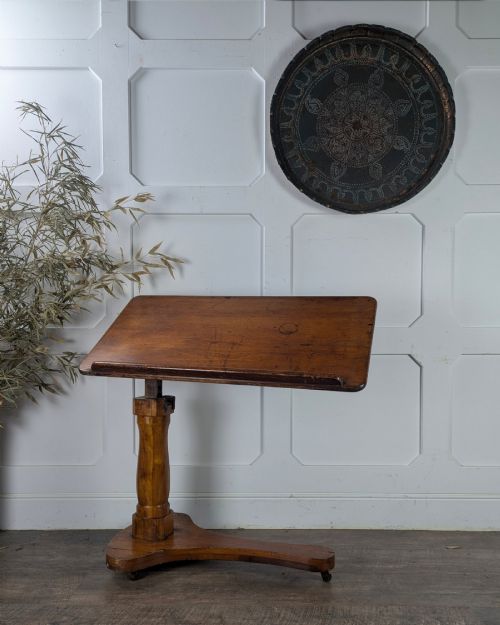
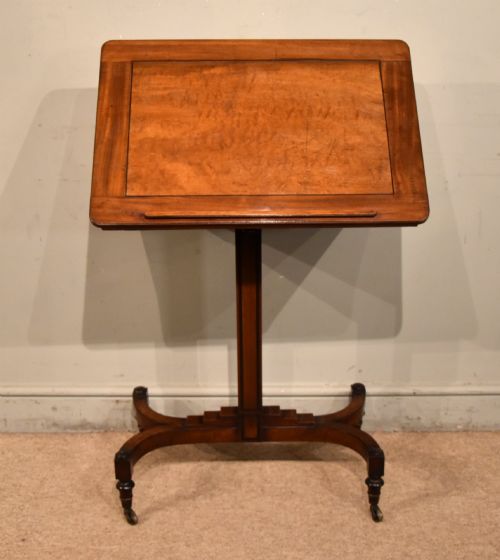
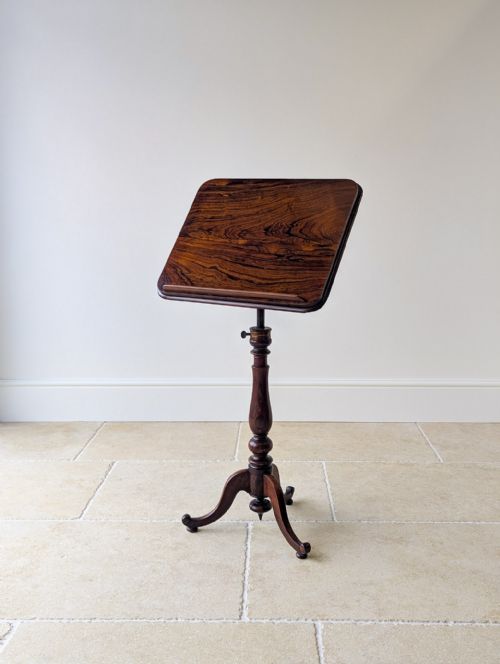
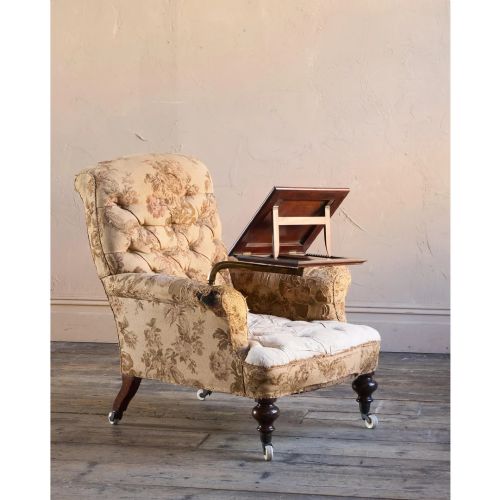
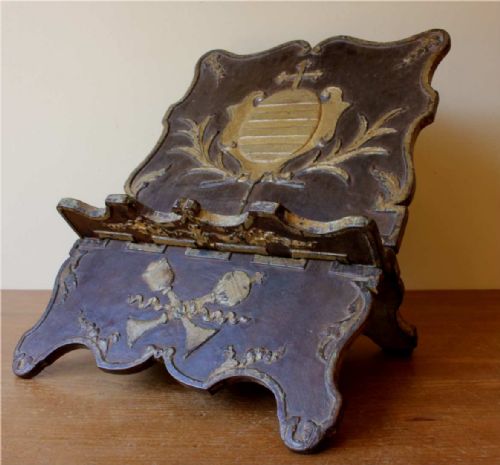
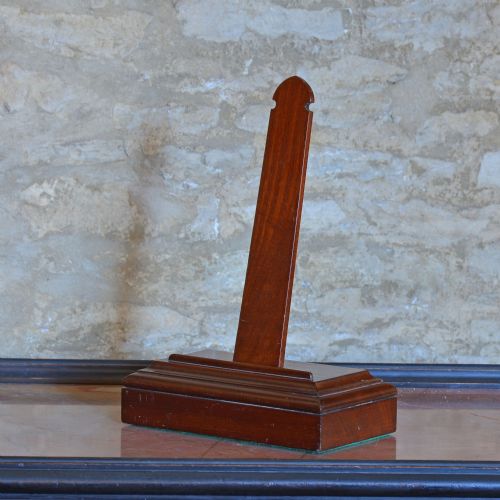
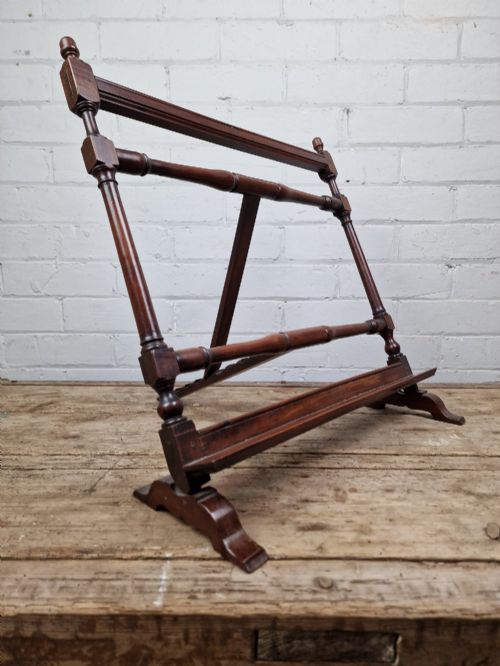
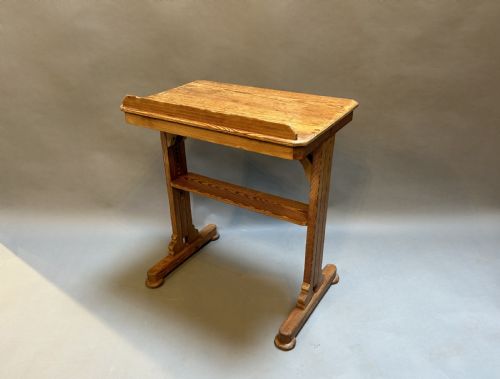
A standing book rest serves as a functional support for heavy folios, Bibles, and reading material, appearing across periods from the eighteenth century to the twentieth century. These pieces take various forms, including lecterns, reading stands, adjustable tables, and extending book slides.
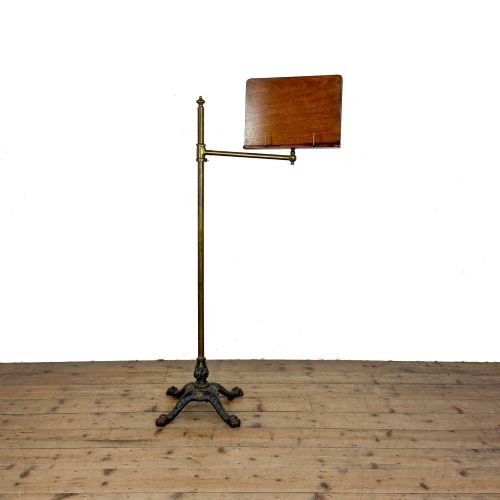
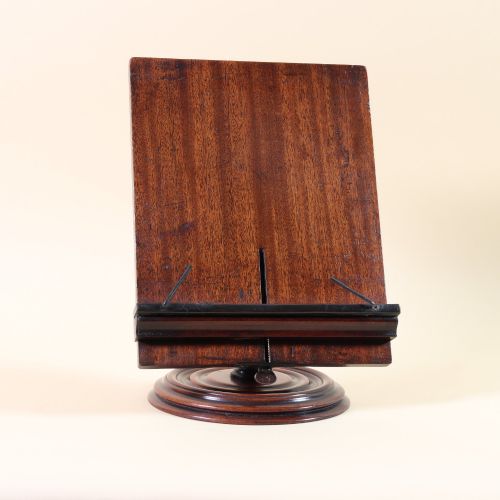
The versions most commonly met on this page include mahogany reading tables, oak and pine lecterns, and brass ecclesiastical pieces. Makers also produced folding book pedestals, walnut music stands, and extending book rests featuring brass and wood.
Originating from domestic libraries, churches, and study spaces, these items reflect the diverse needs of readers across Regency, Victorian, and Edwardian eras. Buyers encounter both floor-standing lecterns and table-top variants designed for specific literary tasks.
How they were made
Craftsmen utilised timbers such as mahogany, oak, walnut, teak, and pine, often pairing them with structural elements in brass and cast iron. Cabinetmakers shaped and joined these woods to create stable platforms and adjustable mechanisms for daily use.
Decoration relied on carving, ebonising, mother-of-pearl inlay, and transfer printing, as seen in Mauchline ware and Anglo-Indian carved teak. Metal components involved casting and brasswork to build ratchets, hinges, and extending brackets that permitted height and angle adjustments.
An eighteenth-century oak lectern depicts an eagle with outstretched wings, ready to assist a reader.
What varies in quality
The refinement of the adjustment mechanism distinguishes superior examples, where ratchets, brass screws, and folding supports operate smoothly and hold heavy volumes securely. Simpler fixed or basic folding versions offer functional utility without the mechanical complexity of fully adjustable library tables.
The choice of material and depth of carving also define the standard of a piece, from plain pine lecterns to heavily carved mahogany, walnut, and ecclesiastical brass eagles. Finer pieces demonstrate careful attention to wood selection, joint construction, and decorative detailing such as inlay or turned supports.
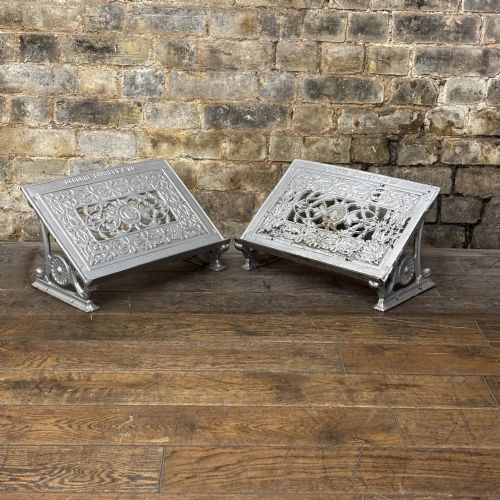
Osborne Garrett and Co·Carters of London
The Standing Book Rest Glossary
- Lectern
- A tall desk with a slanted top designed to hold a book or speech for a standing reader. These often appear in ecclesiastical or library settings.
- Book slide
- An extending rack designed to hold a row of books upright on a desk or table. These frequently incorporate folding ends or brass mounts.
- Mauchline ware
- Souvenir items made from whitewood featuring photographic transfers of local views. These pieces were popular during the Victorian period.
- Ecclesiastical
- Relating to the Christian Church or clergy. Pieces of this nature often include brass eagle lecterns and church book rests.
- Folio
- A large book size formed by folding sheets of paper once. These volumes require robust stands to support their weight during reading.
Standing Book Rest: Frequently Asked Questions
What is a standing book rest?
A standing book rest is a specialised piece of furniture designed to hold open books, Bibles, or music sheets at a comfortable reading angle. These items range from floor-standing lecterns to adjustable table-top stands.
They provided hands-free reading for scholars, clergy, and musicians in libraries, churches, and studies across past centuries.
How do I use one today?
You can use a standing book rest to display large art books, hold recipes in a kitchen, or support a tablet during reading. Their adjustable mechanisms allow you to set the ideal viewing angle.
Many styles fit easily on desks, side tables, or floor spaces, bringing period character into modern rooms.
How do I identify the period?
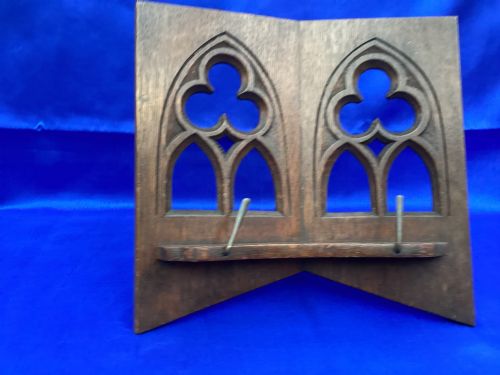
Dating relies on observing the timber species, construction methods, and stylistic details such as Gothic Revival arches or Regency brass mounts. Victorian and Edwardian examples often feature extending brass actions and ebonised finishes.
Earlier eighteenth-century pieces display heavier oak construction, hand-carved motifs like eagles, and simpler folding mechanisms.
Were they used in churches?
Many lecterns and book rests served ecclesiastical purposes, holding missals and Bibles for church services. Brass eagle lecterns and heavy oak stands are typical examples of this tradition.
These pieces were built to withstand frequent use in chapels, cathedrals, and parish churches.