


Staithes Group Painting
A staithes group painting captures the coastal and rural life of Yorkshire through the lens of British Impressionism and early twentieth century realism.
Staithes Group Painting
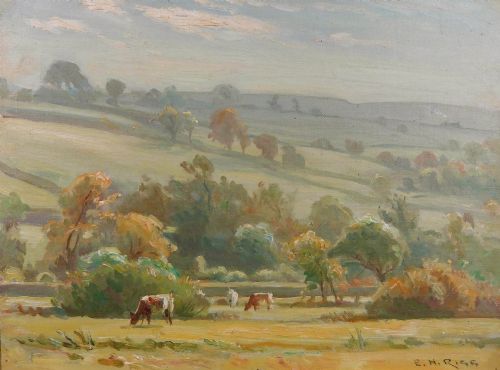
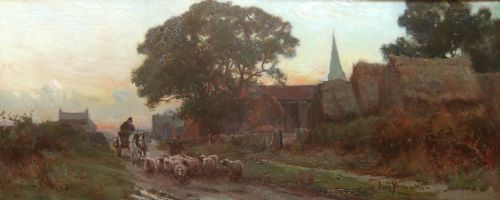
A staithes group painting represents the output of a tight knit community of artists who worked in the North Yorkshire fishing village and surrounding dales from the late Victorian era onwards. These works most commonly take the form of oil paintings on canvas or panel, alongside watercolours on paper depicting local harbours, rural farmsteads, and moorland streams.
The subjects span from figures working in fields and village streets to expansive coastal views and intimate garden still lifes. Collectors encounter pieces dated across the early decades of the twentieth century, reflecting a distinct regional chapter in British art history.
How they were made
Artists utilised oil paint and watercolour pigment applied to canvas, paper, or wooden panels to capture the changing light of the Yorkshire coast and countryside. The techniques employed draw upon British Impressionism and traditional realism, balancing loose brushwork with careful observation of tone and atmosphere.
Supports range from heavy woven canvas stretched over wooden frames to absorbent paper for watercolours and rigid panels suited for plein air sketching.
Staithes Group Painting Retail Price Guide 2026
Typical asking prices for staithes group painting among the pieces listed under this phrase on Sellingantiques today, from the lower quarter to the upper quarter. They describe what is for sale here now, not the wider market.
The listed works span from the Victorian era through the nineteen forties, employing oil paint and watercolour on canvas, paper, and panel.
What varies in quality
Quality rests in the sureness of the brushwork and the artist's ability to render natural light and local atmosphere without overworking the surface. Stronger examples display confident composition and a distinct handling of pigment that brings immediacy to the Yorkshire landscape.
Works executed outdoors on location often carry a vitality that studio reproductions lack, though finished exhibition pieces demonstrate greater compositional ambition.
Ernest Higgins Rigg·Owen Bowen·Ernest Dade·Arthur Tucker·James William Booth·Florence Hess·James Watson·Frederick W Jackson·Rowland Henry Hill·Frederick Mayor·Joseph Alfred Terry
The Staithes Group Painting Glossary
- British Impressionism
- A style of painting characterised by visible brushstrokes, an emphasis on light in its changing qualities, and ordinary subject matter. This approach defines much of the regional work produced along the Yorkshire coast.
- Plein air
- The act of painting outdoors to capture the actual light and weather of a scene directly onto the canvas or panel. Many coastal and rural studies derive from this direct method.
- Oil paint
- A slow drying paint made by mixing pigments with a drying oil, typically linseed oil. It allows for rich blending and thick impasto application.
- Watercolour
- A paint consisting of colour pigments suspended in a water soluble vehicle. Artists apply washes of this medium onto paper to achieve luminous and transparent effects.
- Panel
- A flat piece of wood used as a support for painting instead of stretched canvas. Smaller landscape studies frequently utilise this rigid format.
Staithes Group Painting: Frequently Asked Questions
What is a staithes group painting?
These works are paintings and watercolours created by artists associated with the Yorkshire fishing village of Staithes and surrounding areas during the late nineteenth and early twentieth centuries.
They record the daily routines of local fishermen, rural farm labourers, and the distinctive landscape of the North Yorkshire moors and coast.
How were these paintings created?
Artists worked en plein air using oil paint on canvas or panel, and watercolour pigment on paper, to capture natural light directly from the subject.
Their methods combined the loose brushwork of Impressionism with the observational detail of British realism.
Where did the artists work?
While centred around the North Yorkshire fishing port of Staithes, the artists travelled throughout the surrounding dales, villages, and coastal towns such as Whitby and Hinderwell.
Their subjects extend across Yorkshire landscapes, farmyards, and occasional overseas scenes.
How do I date a staithes group painting?
Dating relies primarily on artist signatures, exhibition records, and inscribed dates on the reverse of canvases or mounts from the Victorian period through the nineteen forties.
Stylistic shifts from tighter realism towards more expressive impressionistic brushwork also offer clues to the period of creation.