
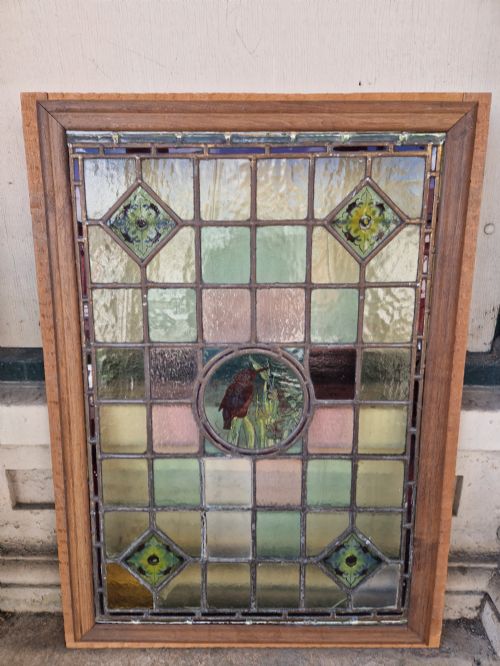


Stained Glass Window Light
A stained glass window light brings the rich colour and detailed hand painting of the nineteenth and early twentieth centuries directly into a modern interior.
Stained Glass Window Light
When you search for a stained glass window light, you find architectural salvage panels and windows that filter daylight through coloured and leaded glass. These pieces range from Victorian examples to later 1930s Dutch folk art designs.
The most common pieces on this page are leaded glass windows dating from around 1900, often incorporating hand-painted countryside scenes, flowers, or birds. You also encounter Edwardian panels and larger Art Nouveau configurations intended for architectural installation.
Makers and craftsmen utilised timber frames, pine wood surrounds, and traditional lead cames to hold the glass panels together. Many examples integrate clear bullseyes or amber bullseyes alongside painted pictorial elements.
Materials and Construction
Glaziers built these windows using segments of coloured and painted glass held together by lead cames, soldered at the joints to form secure geometric or pictorial designs. Artisans applied enamel paints directly to the glass surface, firing the panels to bond the pigment permanently before assembly.
Support structures typically consist of timber or pine wood frames, providing rigid perimeters for heavy leaded glass panels. Architectural salvage pieces often retain traces of original paint on their wooden surrounds, reflecting their period of origin.
Listings feature periods spanning from the nineteenth century through the 1930s, utilising materials such as lead, timber, and hand-painted glass.
Assessing Quality
Quality rests in the intricacy of the hand-painted details, such as countryside scenes, bird motifs, and floral swags, compared to purely geometric leaded patterns. The skill of the glass painter determines the depth and expression found in figural designs like Dutch boys and girls or lake scenes.
The structural integrity of the lead cames and the condition of the glass panels govern the durability of the piece. Well-preserved wooden frames and sturdy lead work ensure that the window light maintains its architectural stability.
The Stained Glass Window Light Glossary
- Lead came
- The grooved lead strips used to hold individual pieces of glass together in a window. These pliable strips are soldered at the intersections to create the structural grid.
- Bullseye
- A small, rounded disc of glass formed during the glassblowing process, featuring a central pontil mark. These are frequently set into leaded windows to catch and refract light.
- Architectural salvage
- Building materials recovered from older structures slated for demolition or renovation. This category preserves windows and panels for reuse in new settings.
- Art Nouveau
- A decorative style prevalent in the late nineteenth and early twentieth centuries, characterised by flowing, organic lines. Pieces from this era often feature natural motifs.
- Enamel paint
- Opaque or translucent pigment applied to glass surfaces and fired in a kiln. This technique allows for fine details in pictorial window designs.
Stained Glass Window Light: Frequently Asked Questions
How do I hang a stained glass window light?
These architectural pieces require secure hanging brackets attached to the window frame or structural timber rather than standard picture hooks. Install them in front of an existing light source or window opening to let natural daylight illuminate the glass.
Ensure the weight of the timber surround and leaded glass is fully supported by fixings tied into wall studs or robust window surrounds. Professional installation is recommended for larger panels and two-section windows.
Can these windows be fitted into modern homes?
Yes, many buyers mount these salvaged panels inside existing window apertures or hang them against interior walls as decorative art pieces. They work well in living spaces where coloured glass filters incoming daylight.
Standard sizes vary from compact single panels to large multi-section Art Nouveau installations. Measure your available space carefully before selecting a piece.
How do I identify the period of a window?
Stylistic clues such as floral motifs, painted birds, and geometric lead patterns point toward specific eras like the Victorian or Edwardian periods. Dates range from late nineteenth-century Gothic Revival examples to 1930s Dutch folk art designs.
Materials also help date a piece, with older pine wood frames and hand-painted countryside scenes indicating turn-of-the-century craftsmanship. Examine the style of the painted figures and lettering for further chronological context.
What is the difference between a panel and a window?
A stained glass panel is typically the decorative glazed insert itself, while a stained glass window usually includes the surrounding timber frame or salvage structure. Both serve the same decorative function when mounted against a light source.
Panels offer flexible placement options for interior display, whereas complete windows retain their original architectural context and mounting surrounds.