





Staffordshire Pottery Toby Jug
These Staffordshire pottery toby jug pieces are traditional drinking vessels shaped as seated figures, offering character and history for your home.
Staffordshire Pottery Toby Jug
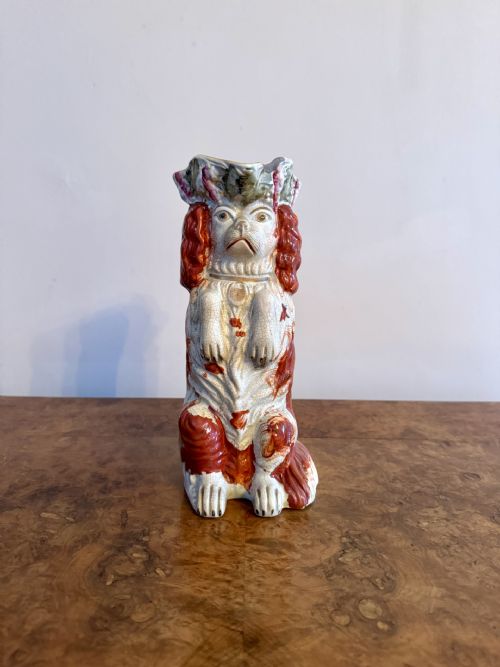
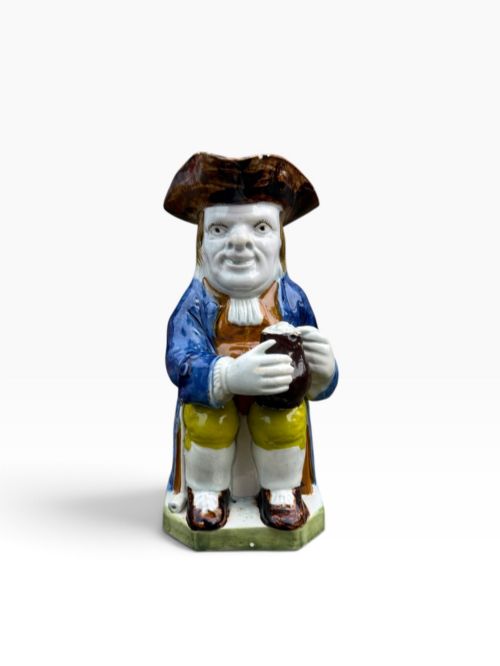
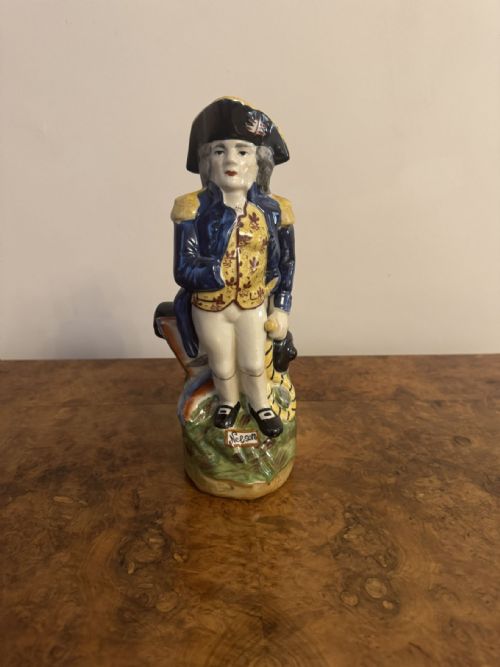
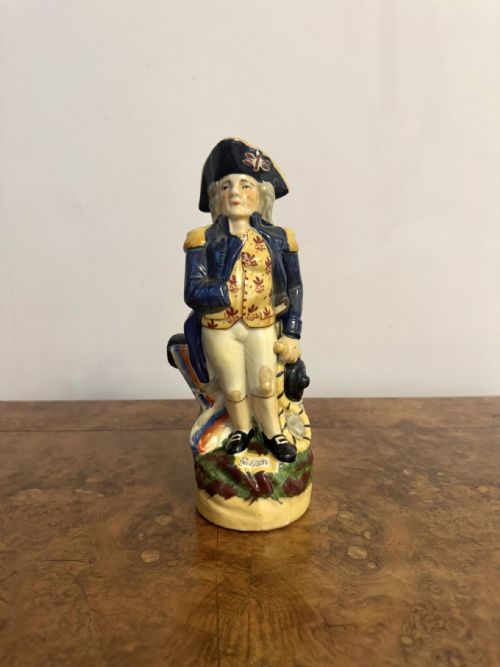
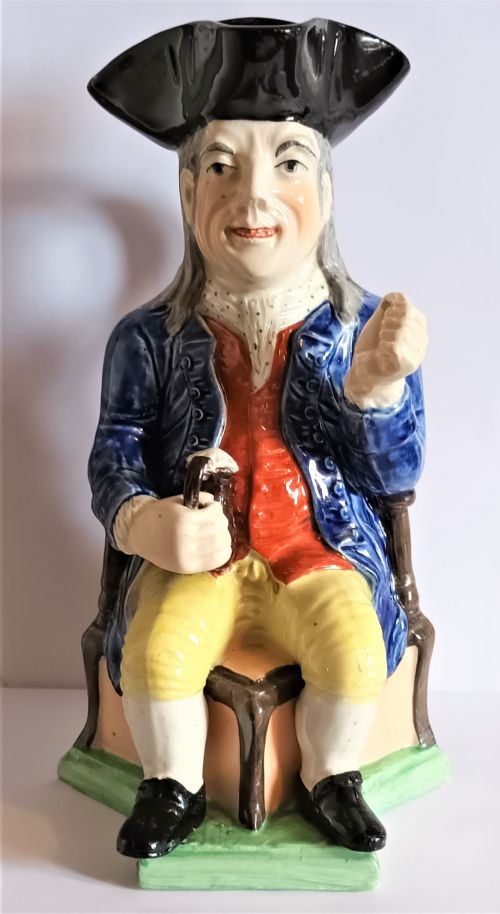
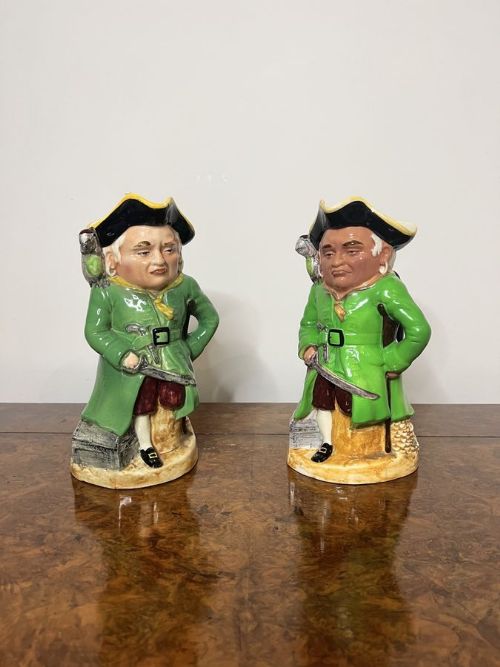
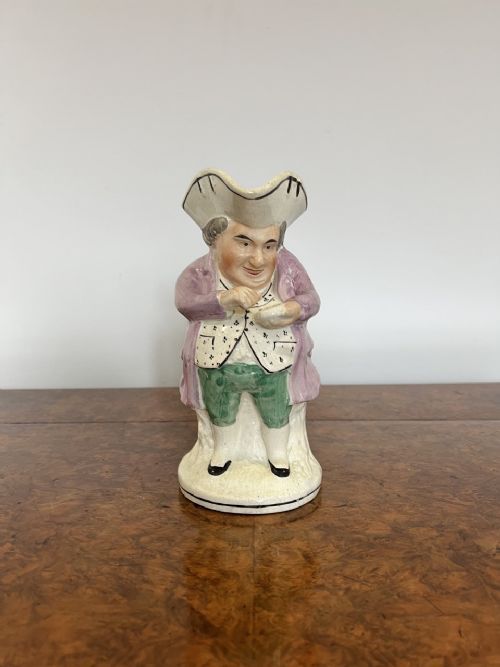
When you search for a staffordshire pottery toby jug, you encounter moulded ceramic figures that depict notable historical personages, local characters, and animals such as spaniels. The pieces span periods from the Georgian era through the Victorian epoch and into the twentieth century.
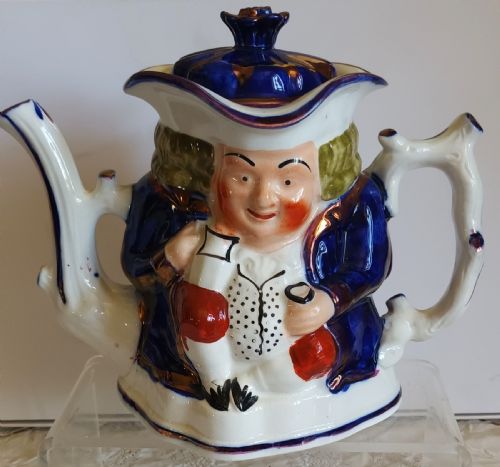
You are most likely to meet Victorian Staffordshire examples on this page, alongside earlier Georgian specimens from the Yorkshire Potteries and later twentieth century teapots. These vessels take various forms including pepperpots, teapots, and water jugs alongside traditional character jugs.
Materials and construction methods
Potters built these figures using earthenware and ceramic bodies, shaped by hand or moulded in traditional workshops. The makers then applied lead glaze to seal the porous clay and provide a smooth surface.
Colour and decoration came from oxide pigments and enamel paints brushed onto the surface before firing. Certain pieces feature copper lustre highlights to catch the light and add depth to the glazed ceramic.
Staffordshire Pottery Toby Jug Retail Price Guide 2026
Typical asking prices for staffordshire pottery toby jug among the pieces listed under this phrase on Sellingantiques today, from the lower quarter to the upper quarter. They describe what is for sale here now, not the wider market.
Listings feature earthenware ceramics from the Georgian and Victorian periods, alongside early twentieth-century examples.
Judging the quality of these figures
Quality rests upon the crispness of the mould and the clarity of the painted details across the face and clothing. Finer examples display precise application of oxide pigments and carefully controlled glaze finishes.
The sophistication of the modelling distinguishes standard production from superior pieces. Stronger artistic intent shows in the expressive character of the figures, whether depicting Lord Nelson, Mr Snuff, or a seated spaniel.
The Staffordshire Pottery Toby Jug Glossary
- Earthenware
- A porous pottery body fired at lower temperatures than stoneware or porcelain. It requires a glaze to hold liquids.
- Lead glaze
- A glossy coating containing lead oxide applied to pottery before firing. It creates a smooth and protective finish over the ceramic body.
- Oxide pigment
- A metallic compound used to impart colour to glazes and clay bodies. Cobalt, copper, and iron oxides create blues, greens, and browns.
- Enamel
- Low-firing glass decoration applied over a fired glaze. It allows for bright surface colours on ceramic figures.
- Copper lustre
- A metallic glaze finish producing a reflective copper sheen. Potters applied this technique to enhance decorative areas on earthenware.
Staffordshire Pottery Toby Jug: Frequently Asked Questions
What is a Staffordshire pottery toby jug?
A Staffordshire pottery toby jug is a ceramic vessel modelled as a robust, seated character holding a mug and a pipe or jug. These pieces combine sculptural form with functional design.
Potters across Staffordshire and Yorkshire produced these figures in various sizes to represent specific historical figures, fictional personalities, and animals.
How were these jugs used originally?
These vessels served as drinking jugs for ale and beer in homes and taverns during the Georgian and Victorian periods. Their cheerful presence added a sociable element to gatherings.
Some smaller examples functioned as teapots or pepperpots, while others served primarily as decorative objects on mantelpieces and sideboards.
How do I date a toby jug?
Dating relies on stylistic clues, the type of ceramic body, and the characteristics of the glaze and pigments used. Georgian pieces often display different modelling styles compared to Victorian iterations.
Examining the base and the wear patterns provides further indication of age, though maker marks remain relatively scarce on these traditional pieces.
How should I display them at home?
These figures suit placement on sturdy shelves, mantelpieces, or inside glass-fronted cabinets where their colours can be appreciated. Keeping them away from direct sunlight protects the enamel decoration.
Pairing individual jugs with pairs or related animal figures creates an engaging display that highlights the variety of nineteenth-century ceramic production.