




Staffordshire Mantle Ornament
These Staffordshire mantle ornament pieces bring nineteenth-century shelf presence into a room through earthenware figures and spill vases.
Staffordshire Mantle Ornament
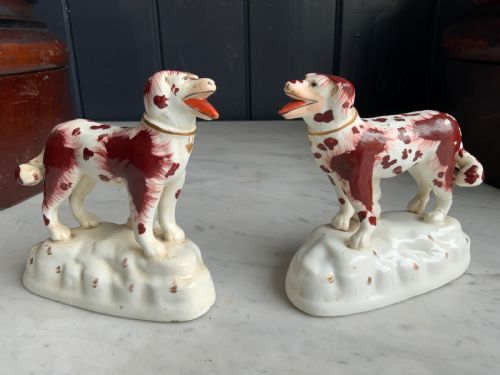
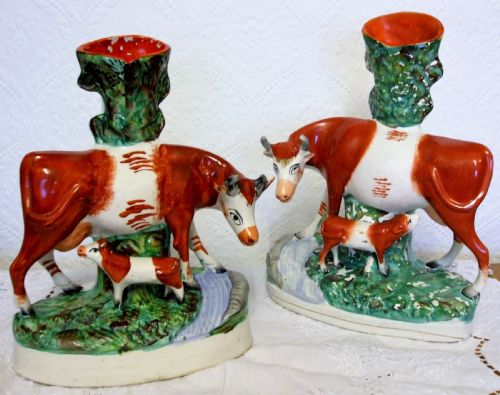
A Staffordshire mantle ornament encompasses earthenware figures, decorative figurines, and spill vases shaped to sit on a Victorian fireplace. These pieces take the form of dogs such as spaniels, greyhounds, pugs, and poodles, alongside cows, sheep, and historical portraits.
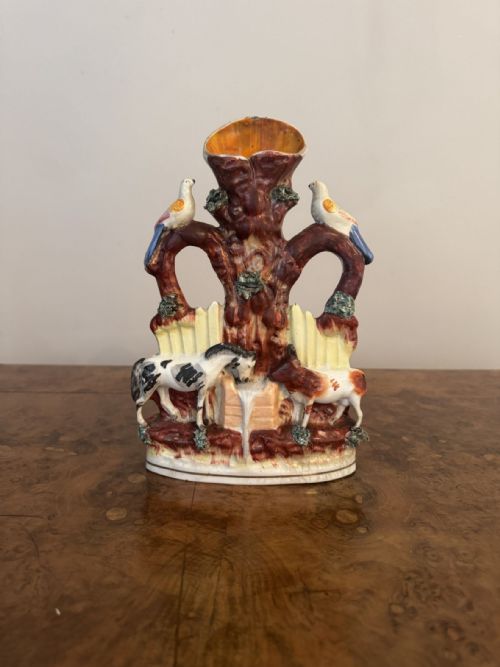
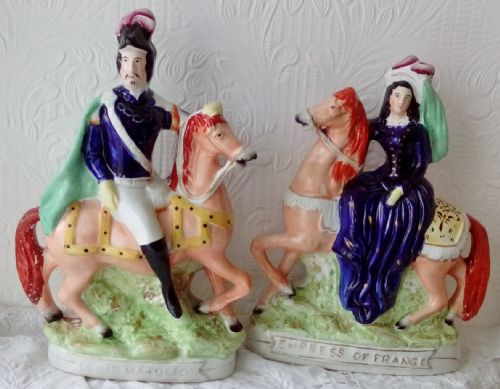
The most common versions met here include pairs of spaniels on cushions, flatback figures representing historical figures like Napoleon III and Empress Eugenie, and functional spill holders. Makers produced these ceramic figures to decorate domestic interiors during the nineteenth century.
The selection ranges from simple pottery figures to detailed hand-painted pairs with glass eyes and gilt highlights. Buyers encounter works spanning from the Regency period through the late nineteenth century.
Materials and methods
Potters shaped these objects using earthenware and ceramic bodies, applying lead glaze and enamel colours to finish the surfaces. Many examples feature painted details and gilt accents applied over the glaze.
Certain models incorporate moulded texture such as encrusting or applied wool effects, particularly on animal coats. Workshops finished select pairs with glass eyes to create a realistic expression.
Staffordshire Mantle Ornament Retail Price Guide 2026
Typical asking prices for staffordshire mantle ornament among the pieces listed under this phrase on Sellingantiques today, from the lower quarter to the upper quarter. They describe what is for sale here now, not the wider market.
The listings span earthenware and porcelain materials, featuring Victorian styles alongside Regency period pieces.
Assessing quality in Staffordshire figures
The presence of matching pairs and original glass eyes elevates certain figures above standard production pieces. Wear to the gilt highlights and enamel colours occurs naturally across the nineteenth-century range.
The Staffordshire Mantle Ornament Glossary
- Flatback
- A figure moulded with a finished front and a flat, unglazed or minimally decorated back designed to stand against a wall or mantle.
- Spill Vase
- A ceramic holder designed to store thin wooden spills used for lighting fires or pipes.
- Earthenware
- Porous pottery fired at lower temperatures, serving as the standard body for these nineteenth-century figures.
- Enamel
- Opaque vitreous colours painted over the glazed ceramic surface before a final low-temperature firing.
- Encrusting
- Applied clay particles or slip used to create a textured, woolly surface on animal figures.
Staffordshire Mantle Ornament: Frequently Asked Questions
What is a Staffordshire mantle ornament?
A Staffordshire mantle ornament is a ceramic figure or spill vase produced in the nineteenth century for domestic display. These pieces typically depict animals or historical personalities.
Potters created them in earthenware with hand-painted enamel decoration and lead glaze.
Where were these figures placed?
These ceramic figures were designed to stand on the mantlepiece above a fireplace in Victorian homes. Pairs of dogs or portrait figures often flanked the centre of the shelf.
They also sat upon sideboards and cabinets within the living spaces of the period.
What subjects are most common?
Animals form a large portion of the subjects, particularly spaniels, greyhounds, sheep, and cows with calves. Royal portraits and literary characters also appear frequently across the listings.
Pairs of dogs seated on blue cushions represent a traditional form within this category.