
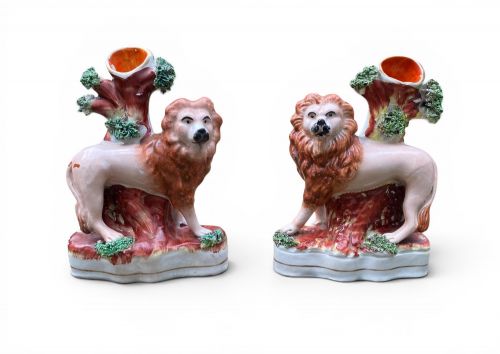


Staffordshire Mantel Ornament
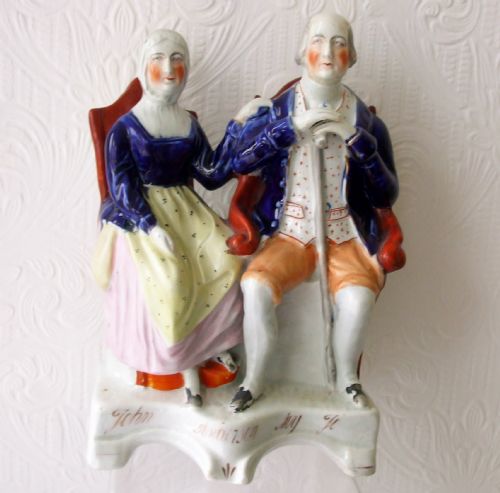
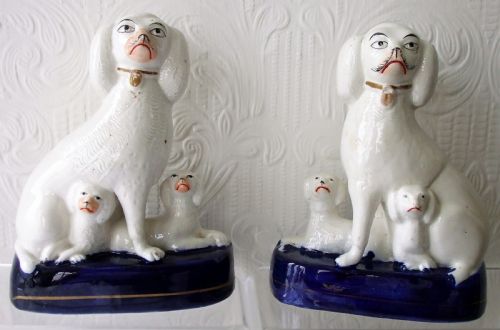
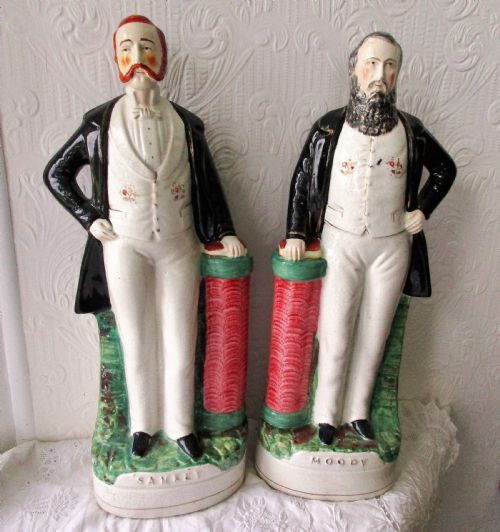
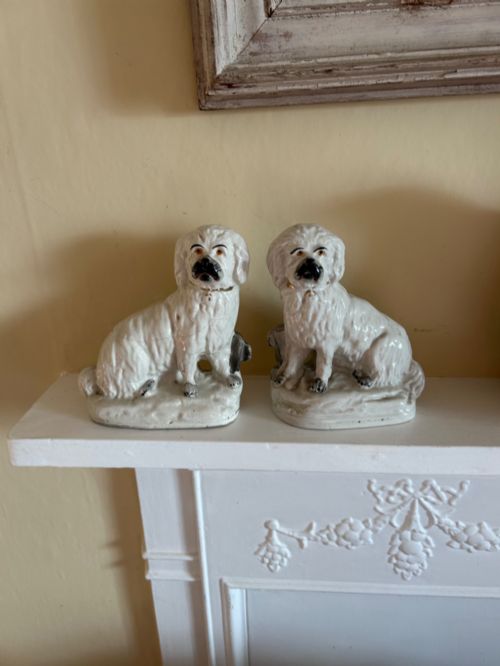
These Staffordshire mantel ornament examples span the Victorian decades, bringing fireside charm and animal figures into the home.
Staffordshire Mantel Ornament
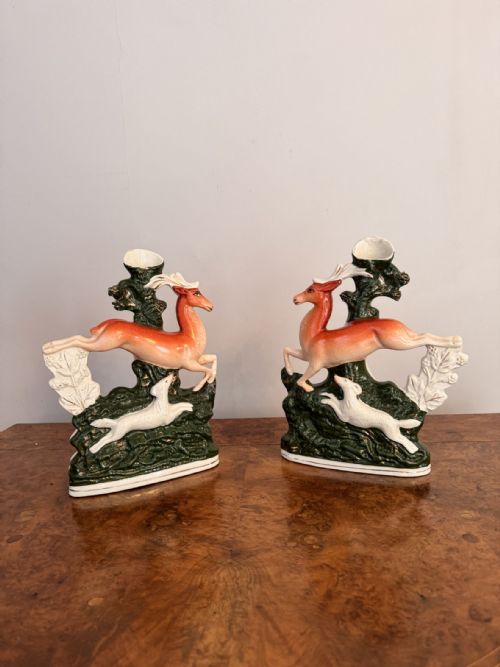
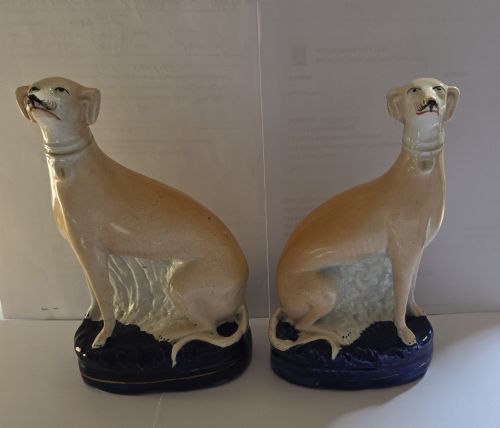
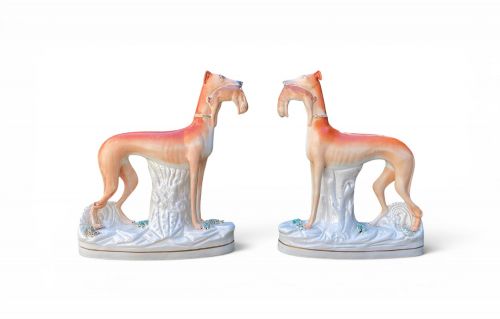
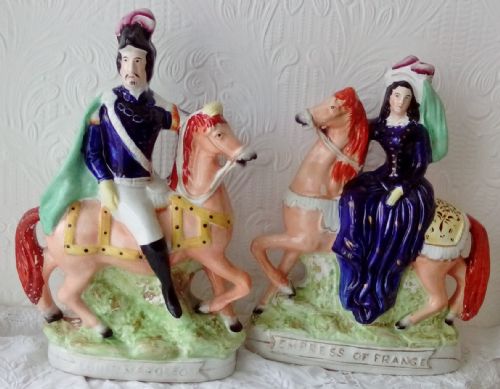
A Staffordshire mantel ornament is typically a ceramic figure or pair designed to sit upon a fireplace ledge, drawn from nineteenth-century pottery traditions. The examples found here take the form of spill vases, flatback portraits, and seated dogs including greyhounds, poodles, and spaniels.
Makers produced these chimney ornaments to appeal to domestic tastes, recording animals, literary characters, and historical figures. Pairs dominate the selection, intended to sit symmetrically at either end of a mantelpiece.
Dating primarily from the Victorian era, these pottery figures range from modest country pieces to larger modelled subjects. Buyers encounter both spaniels decorated with copper lustre or gilt and more elaborate narrative groups.
How They Were Made
Potters formed these earthenware figures using moulds, creating hollow bodies that reduced weight and drying time. Artisans then applied lead glaze to seal the porous ceramic body.
Colour came from enamel paint applied over or under the glaze, sometimes supplemented by copper lustre or gilt accents. Flatback construction ensured the figures stood firmly against a wall when placed on a narrow shelf.
Stare closely at a pair of spaniels and discover that their painted eyes seem to follow you across the room.
What Varies in Quality
The richness of the enamel and the brilliance of the glaze determine the visual impact of a pair. Strong, clean colour application distinguishes better pieces from simpler, heavier pottery output.
Thomas Parr
The Staffordshire Mantel Ornament Glossary
- Flatback
- A ceramic figure modelled in the round at the front with a flattened, unglazed or lightly finished back designed to stand against a wall.
- Spill vase
- A hollow cylindrical holder integrated into a figure, designed to hold wooden tapers used for lighting pipes or candles.
- Lead glaze
- A glossy coating containing lead oxide applied to earthenware to waterproof the porous clay and enrich the colours beneath.
- Earthenware
- A porous pottery body fired at lower temperatures, commonly used for nineteenth-century domestic figures.
- Enamel paint
- Vitreous coloured decoration applied over a fired glaze and fixed by a secondary low-temperature firing.
Staffordshire Mantel Ornament: Frequently Asked Questions
What are Staffordshire mantel ornaments?
These ceramic figures and spill vases were made in the pottery towns during the nineteenth century to decorate domestic hearths. They include dogs, lions, and portrait figures.
Potters produced them in large numbers to satisfy popular demand for ornamental chimney pieces.
Why were they made as pairs?
Mantel ornaments were traditionally displayed in matched pairs to create symmetry at either end of a fireplace shelf. Many animals, particularly spaniels and greyhounds, were moulded to face one another.
This balanced arrangement suited the formal interior decoration of Victorian homes.
How do I date a Staffordshire figure?
Dating relies on stylistic clues, ceramic bodies, and manufacturing techniques characteristic of the Victorian period. Most pieces date between the middle and the late nineteenth century.
Earlier examples often use pearlware glazes, while later Victorian pieces show different modelling depths and enamel palettes.
What is a spill vase figure?
A spill vase figure combines a decorative subject, such as a dog or a castle, with an upright cylindrical tube. This tube held wooden spill sticks used to transfer fire from the hearth to lamps or pipes.
They served a practical daily function alongside their decorative role.