


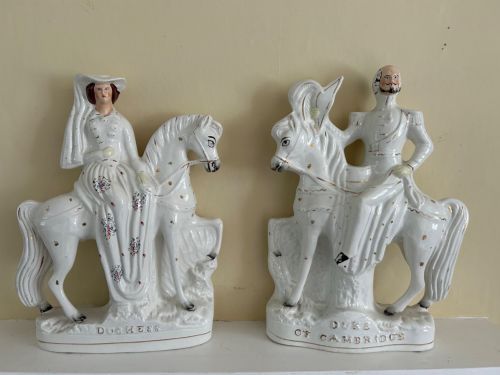

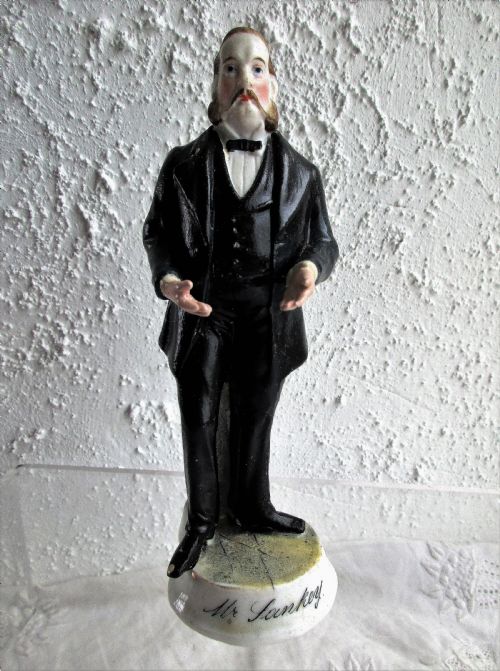


Staffordshire Flatback Figurine
Staffordshire flatback figurine pieces are cheerful Victorian earthenware mantel ornaments depicting royals, animals, and theatrical heroes that bring instant warmth to a room.
Staffordshire Flatback Figurine
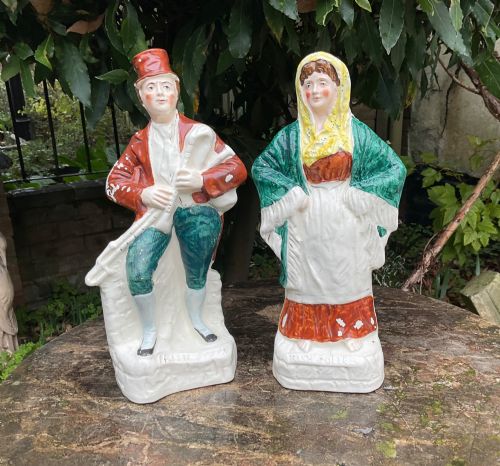
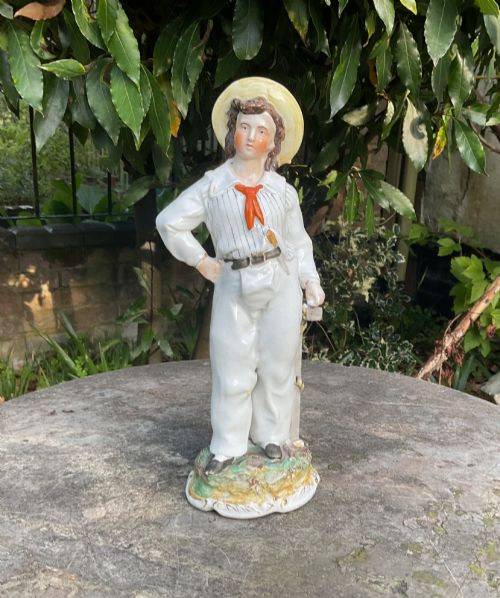
A Staffordshire flatback figurine is a Victorian ceramic object designed primarily to sit on a mantelpiece, finished with a decorated front and a flat, unglazed or lightly glazed back. These pieces draw their subjects from contemporary news, royalty, folklore, literature, and domestic scenes.
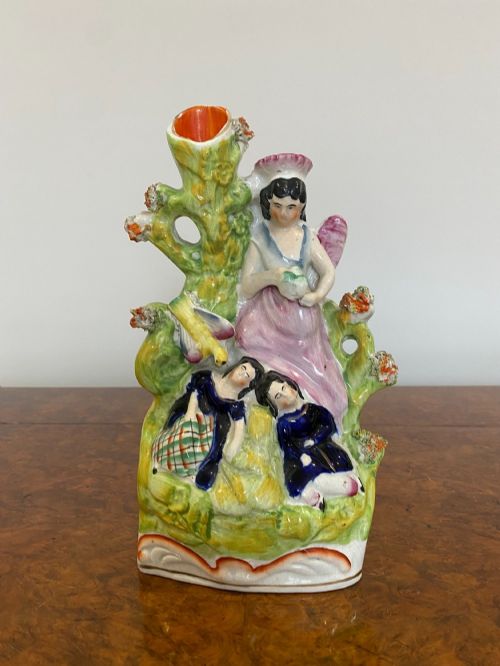
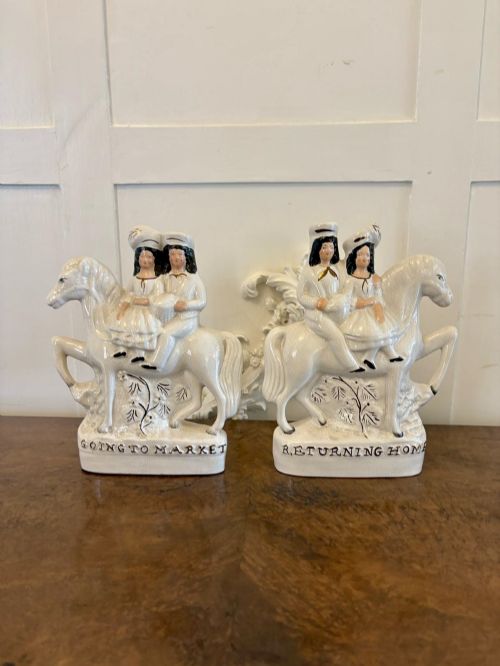
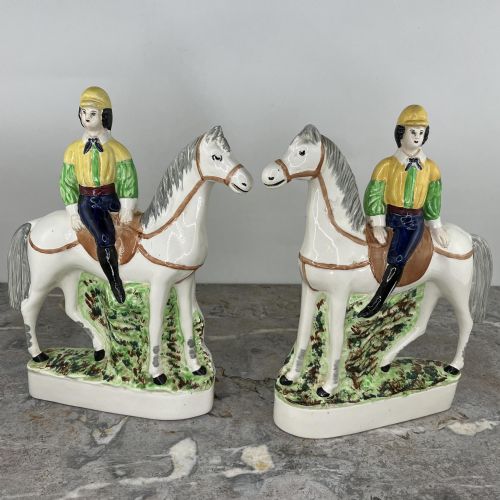
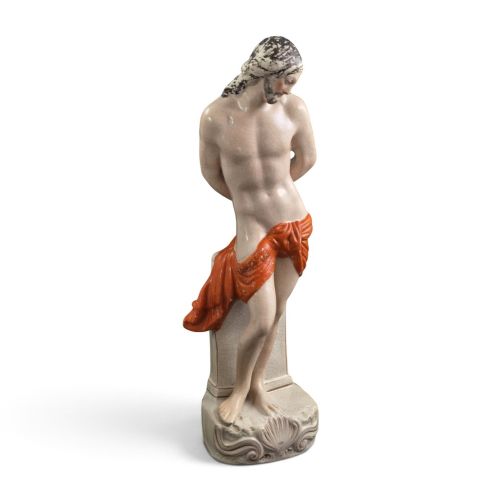
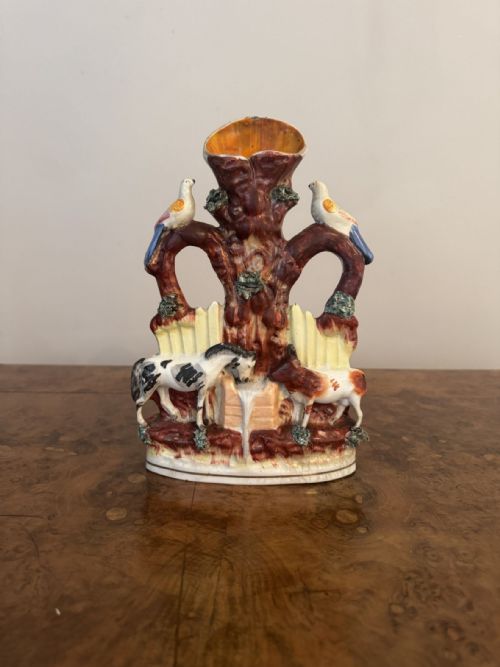
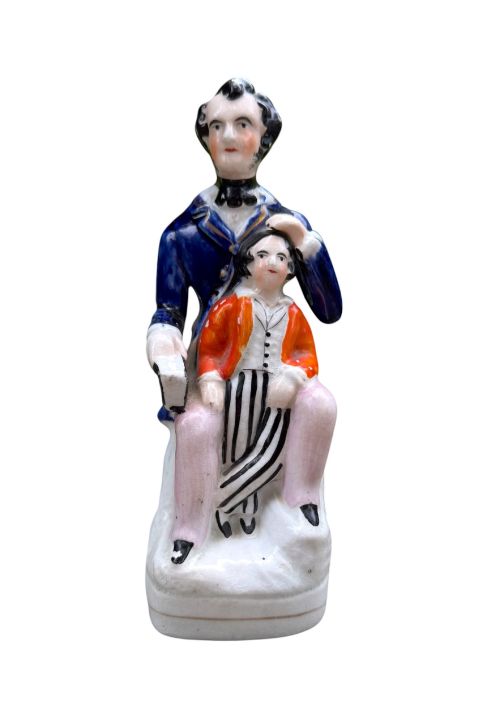
The versions most commonly met here span the nineteenth century, including portraits of monarchs like Queen Victoria, pairs of theatrical or rural characters, and animal studies such as greyhounds, zebras, and deer. Makers also produced functional variations such as spill vases and watch holders alongside standard decorative figures.
Most examples belong broadly to the Victorian era, with dates stretching across the middle and later decades of the nineteenth century. They function as domestic ornaments intended to catch the eye in a parlour or drawing room rather than for handling.
Materials and methods
Potters shaped these objects using earthenware clay, pressing it into moulds to create the characteristic hollow body and flat back. Once cast and dried, the pieces received a lead glaze to seal the porous body and provide a smooth surface.
Staffordshire Flatback Figurine Retail Price Guide 2026
Typical asking prices for staffordshire flatback figurine among the pieces listed under this phrase on Sellingantiques today, from the lower quarter to the upper quarter. They describe what is for sale here now, not the wider market.
Listings feature Victorian earthenware pieces utilising lead glaze, enamel paint, and gilt.
Judging quality and character
The appeal also depends on the subject matter and scale, as larger equestrian groups or unusual portrait pairs demand greater modelling skill. Preservation of the original enamel colours and gilding directly shapes the visual impact of a piece.
Lord Shaftesbury·Louis Napoleon·Empress of France·John Anderson·Prince Albert
The Staffordshire Flatback Figurine Glossary
- Flatback
- A ceramic figure modelled fully on the front and sides while the reverse remains flat and typically unglazed. This technique allowed potters to save materials and place the pieces flush against walls or mantelpieces.
- Spill vase
- A hollow cylindrical holder incorporated into a ceramic figure, designed to hold wooden spills for lighting pipes or fires. These vessels combine practical utility with figurative decoration.
- Lead glaze
- A glossy coating containing lead oxide applied to earthenware before firing to produce a shiny, protective finish. It gives the pottery surface its characteristic reflective sheen.
- Enamel paint
- A glossy, vitrifiable paint applied over the fired glaze to add colour to the ceramic surface. It sits slightly raised on the body.
- Watch holder
- A decorative ceramic form featuring a small hook or recess near the top to suspend a pocket watch. They often take architectural or figural shapes.
Staffordshire Flatback Figurine: Frequently Asked Questions
What are staffordshire flatback figurine pieces?
They are hollow earthenware mantel ornaments made in nineteenth-century Britain, featuring flat backs and hand-painted decoration.
Potters designed them to be viewed from the front as decorative displays in Victorian homes.
How were staffordshire flatback figurine items used?
Victorian households placed them on mantelpieces, ledges, and chests of drawers to brighten domestic interiors.
Some specialised variants, such as spill vases or watch holders, served practical household purposes alongside their decorative role.
How do you date a staffordshire flatback figurine?
Dating relies on stylistic clues, subject matter connected to historical events, and the characteristics of the earthenware body and glaze.
Many pieces depict mid-Victorian monarchs, military campaigns, or theatrical figures that anchor their production period.
Are all staffordshire flatback figurine pieces pairs?
Makers produced both single figures and symmetrical pairs representing characters, animals, or literary companions.
Pairs were often intended to sit at either end of a mantelpiece to create a balanced display.