



Staffordshire Blue Dish
A Staffordshire blue dish brings deep cobalt scenes of castles, rivers, and exotic lands onto heavy earthenware and pearlware bodies.
Staffordshire Blue Dish
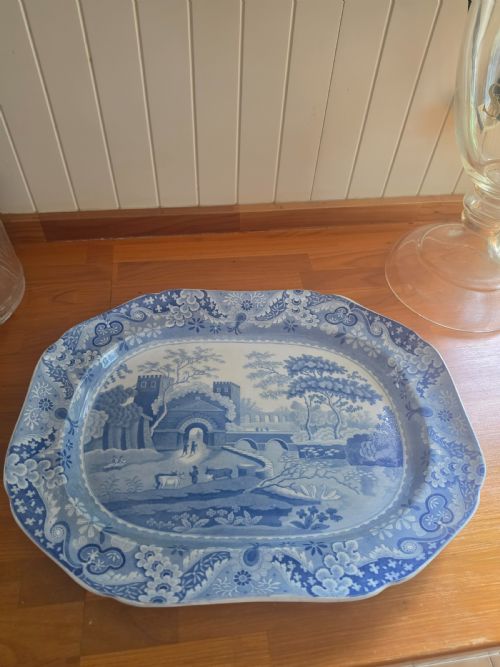
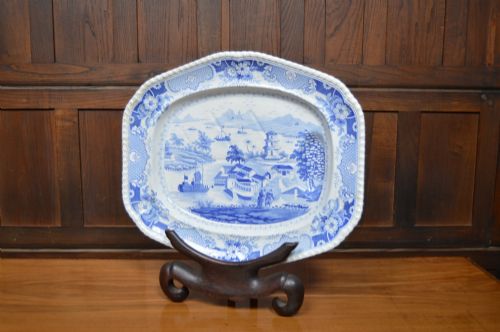
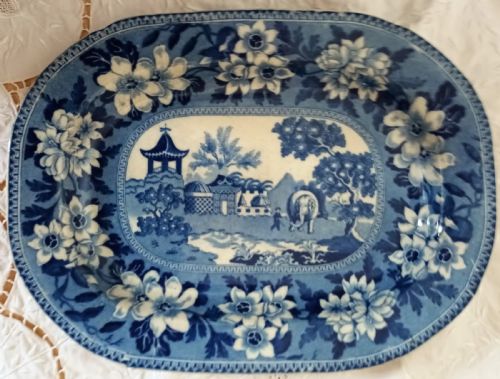
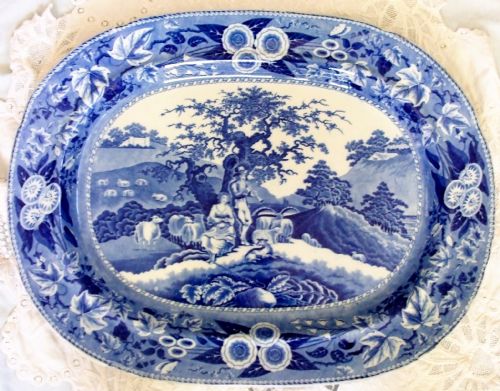
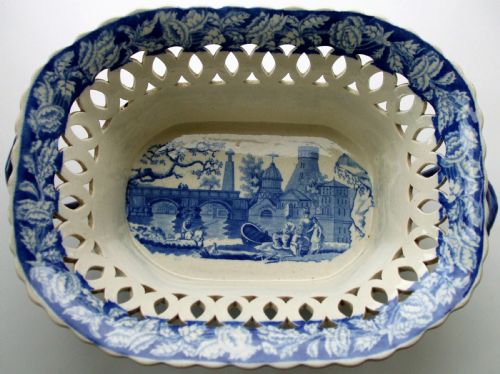
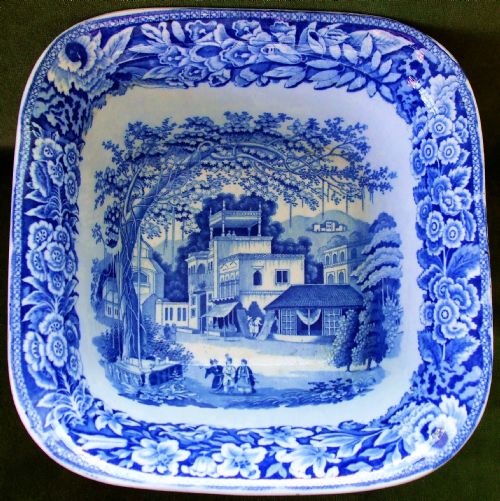
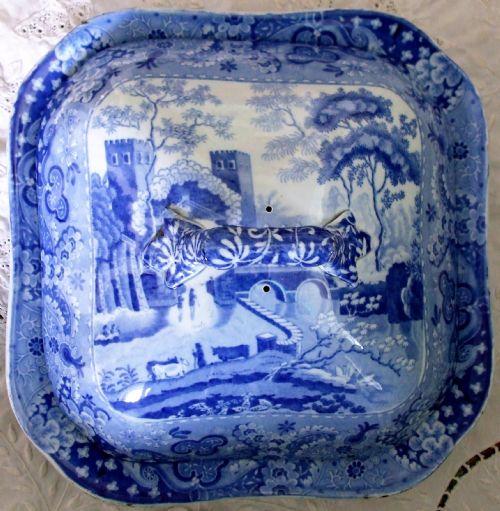
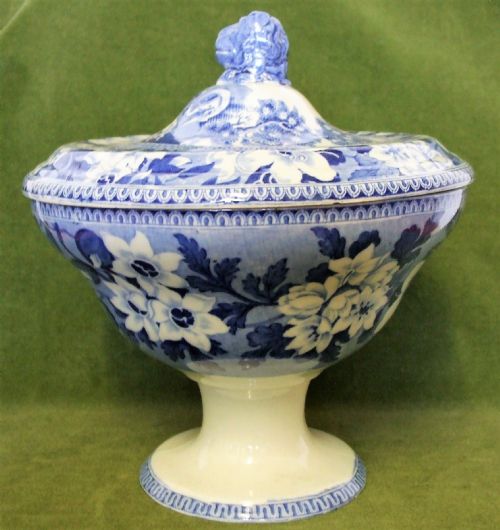
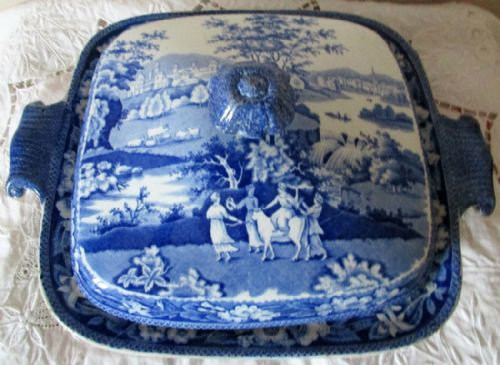
A Staffordshire blue dish encompasses large meat platters, vegetable tureens, chestnut baskets, and decorative plates produced across the nineteenth century. These pieces emerge from Georgian, Regency, and Victorian periods, often decorated with named topographical views, pastoral subjects, or Chinoiserie patterns.
Buyers most frequently encounter large serving platters and meat plates bearing intricate blue transfer prints alongside smaller plates and pickle dishes. Forms range from simple earthenware plates to heavy ironstone dishes fitted with drainer inserts and gravy wells.
The aesthetic relies heavily on transfer printing, a technique that allowed potteries to apply detailed pictorial designs onto ceramic bodies with consistent precision. Landscapes depicting castles, bridges, and foreign street scenes dominate the domestic output of this tradition.
Materials and production methods
Potters shaped these vessels from earthenware, pearlware, and ironstone, applying fluid glazes over cobalt pigment decorations. The body material determines the weight and tone of the piece, with pearlware offering a subtle blueish tint beneath the glaze.
Designs transferred onto the clay surface using engraved copper plates and tissue paper before firing in kilns. Cobalt oxide supplied the deep blue colour that survived high temperatures without losing definition.
Listings feature earthenware, pearlware, and ironstone bodies decorated with cobalt pigment under clear glaze across the nineteenth century.
Factors determining quality
Quality rests in the crispness of the transfer print and the balance of the pictorial composition across the curved surface of the dish. Finer examples maintain sharp lines in complex scenes without blurred edges or pooled cobalt glaze.
Spode·J. & R. Clews·John Rogers & Son·William Adams·John Davenport
The Staffordshire Blue Dish Glossary
- Transferware
- Pottery decorated by applying a printed design from an engraved copper plate using tissue paper. This technique enabled mass production of detailed pictorial scenes.
- Pearlware
- A refined earthenware developed with a bluish glaze that masked the yellowish tone of the clay body. It served as a common base for blue and white ceramics around the turn of the nineteenth century.
- Ironstone
- A dense, durable type of heavy ceramic patented in the nineteenth century to withstand rigorous daily use. It provides a sturdy alternative to softer earthenware.
- Comport
- A raised serving dish or pedestal bowl used for presenting fruit or sweetmeats at the table. These pieces often match the pattern of accompanying dinner services.
- Pickle dish
- A small, specialised vessel shaped for holding condiments or pickles alongside larger meat courses. They frequently adopt leaf or shell contours.
Staffordshire Blue Dish: Frequently Asked Questions
How do I date a Staffordshire blue dish?
Dating relies on stylistic clues, ceramic bodies, and registry marks stamped into the base. Pearlware bodies and specific pastoral transfer patterns typically point towards the early nineteenth century, while heavier ironstone and distinct Victorian borders indicate later decades.
Makers' marks and pattern names provide further confirmation when present on the reverse. Comparing the border designs against known factory archives helps narrow the production window.
Can I use these dishes for serving food?
Most antique earthenware and pearlware pieces function safely for dry or cold foods, though age and old hairline cracks require careful handling. Hand washing protects the historical glaze from harsh detergents and modern thermal shock.
Many collectors prefer to display large platters and tureens on walls or dresser shelves rather than risk active use. Ironstone pieces remain robust, but gentle care preserves the integrity of the transfer print.
Why are some patterns named after places?
Potteries drew inspiration from travel books, romantic views, and popular prints depicting American scenery, Scottish castles, and Eastern landscapes. Naming patterns after specific locations appealed to a public fascinated by exploration and picturesque geography.
These topographical titles help historians and collectors identify the source of the engraver's imagery. Series depicting bridges, churches, and naval battles remain particularly sought after.