





Staffordshire Animal Figures
Staffordshire animal figures bring the character of nineteenth-century parlours to life through earthenware dogs, lions, and farm animals.
Staffordshire Animal Figures
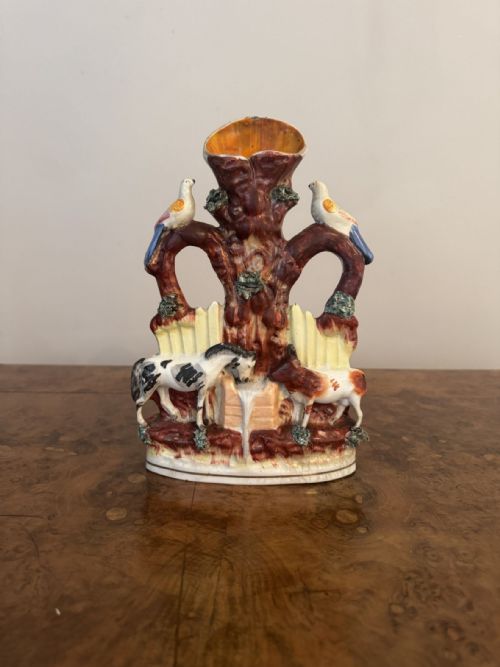
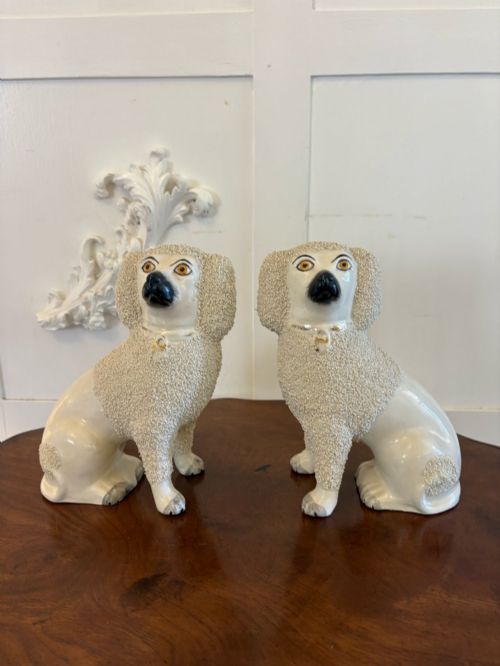
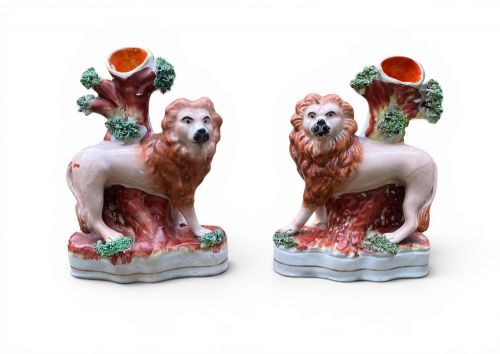
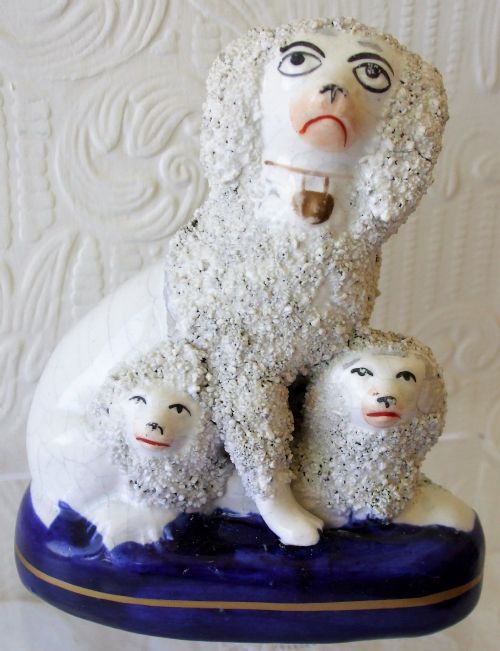
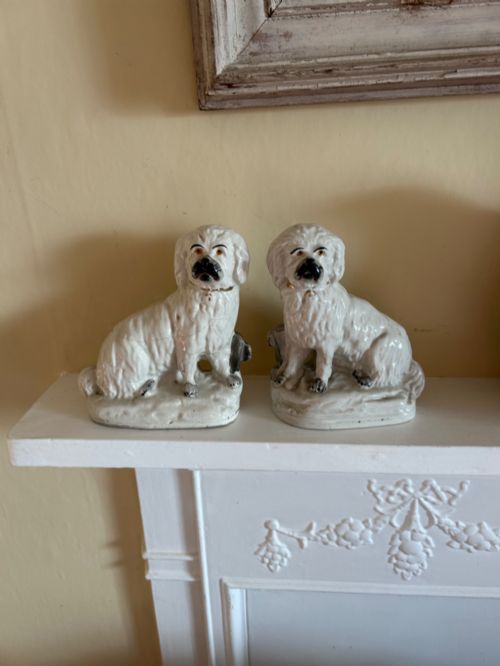
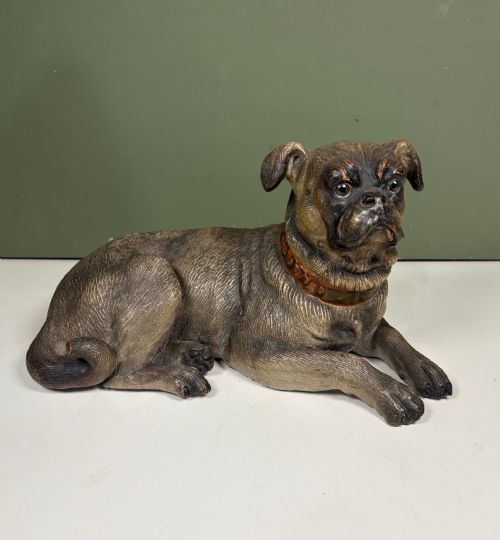
Staffordshire animal figures represent a charming tradition of ceramic sculpture spanning the nineteenth century, including the Victorian era. When you search for staffordshire animal figures, you encounter earthenware dogs, lions, sheep, and exotic beasts modelled for domestic display.
Pairs of poodles, lions, and spaniels dominate the selection, often intended to sit on either side of a mantelpiece. Formats range from decorative figurines and spill vases to inkwells and bookends.
The objects originate from English kilns, capturing both domestic pets and wild creatures like zebras, snow leopards, and cows with calves. Pearlware versions also appear, linking the tradition back towards earlier Georgian and Regency tastes.
How they were made
Potters shaped these earthenware and pearlware figures using earthenware bodies, applying lead glazes and vibrant enamels to finish the surface. Many pieces feature rich treacle glaze finishes, creating a dark, glossy appearance.
Makers often cast the ceramic forms in moulds before hand-painting details like facial expressions, coats, and markings. The combination of ceramic bodies and glossy glaze techniques defines the physical nature of these nineteenth-century pieces.
Staffordshire Animal Figures Retail Price Guide 2026
Typical asking prices for staffordshire animal figures among the pieces listed under this phrase on Sellingantiques today, from the lower quarter to the upper quarter. They describe what is for sale here now, not the wider market.
Nineteenth-century potters captured snow leopards and zebras from imagination and prints, long before anyone in Staffordshire had seen one.
What varies in quality
The depth and consistency of the glaze, whether standard lead glaze or treacle glaze, significantly alters the visual presence of the ceramic. Pairs that match closely in size and painted detail command greater appreciation than mismatched or heavily worn counterparts.
Walton·Wooley·Rockingham Pottery
The Staffordshire Animal Figures Glossary
- Pearlware
- A refined earthenware developed in the late eighteenth century featuring a pale bluish glaze that pools in crevices.
- Spill vase
- A hollow ceramic tube attached to a figure designed to hold wooden tapers for lighting pipes or candles.
- Treacle glaze
- A dark, translucent brown glaze yielding a glossy, treacle-like finish popular on nineteenth-century figures.
- Earthenware
- Porous pottery fired at lower temperatures, serving as the primary body material for these figures.
- Enamel
- Opaque colours painted over the fired glaze before a final low-temperature fixing in the kiln.
Staffordshire Animal Figures: Frequently Asked Questions
Are these figures usually found in pairs?
Many of these ceramic animals were produced as matching pairs to flank a fireplace or mirror. Mirror-image poses are particularly common among poodles and lions.
Single figures do appear, but matched pairs represent a significant portion of nineteenth-century domestic pottery.
What animals were commonly portrayed?
Poodles and lions are the most frequently encountered subjects, reflecting Victorian affection for pets and exotic zoo animals. Sheep, cows with calves, deer, and zebras also feature in the repertoire.
Domestic dogs range from greyhounds and pugs to Maltese terriers.
How were spill vases used?
Spill vases incorporated a hollow vertical tube alongside the animal figure to hold wooden spills for transferring flame from hearth to candle. They served a practical function in nineteenth-century households before matches became common.
Over time, the practical use faded while the decorative animal form remained collectible.