





Square Wooden Display Table
A square wooden display table brings architectural balance to a room, offering a sturdy surface for lamps, plants, and decorative objects.
Square Wooden Display Table
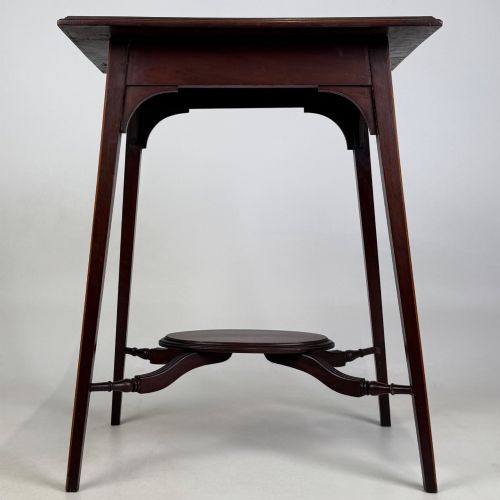
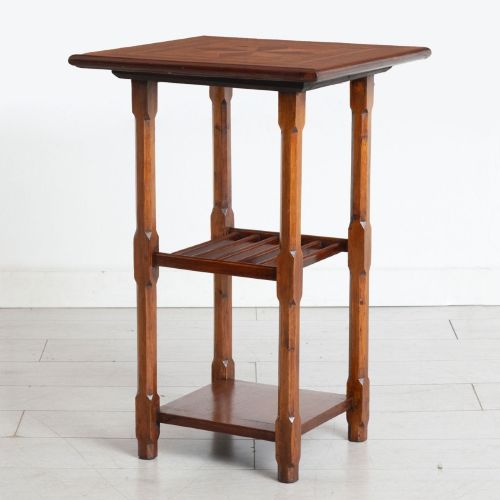
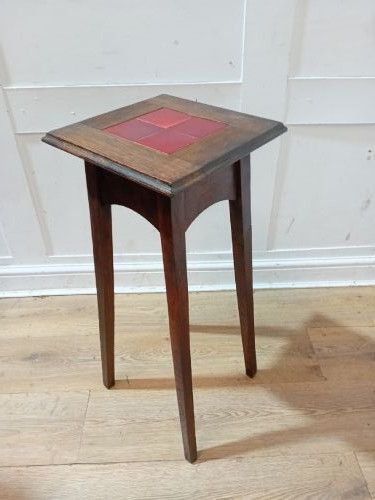
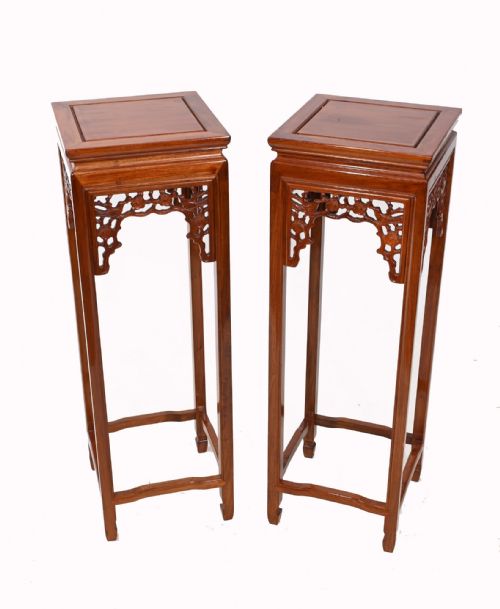
When you search for a square wooden display table, you enter a category defined largely by Edwardian pieces, Arts and Crafts designs, and nineteenth-century Chinese hardwood stands. These forms function primarily as side tables, occasional tables, plant stands, and jardiniere pedestals within domestic interiors.
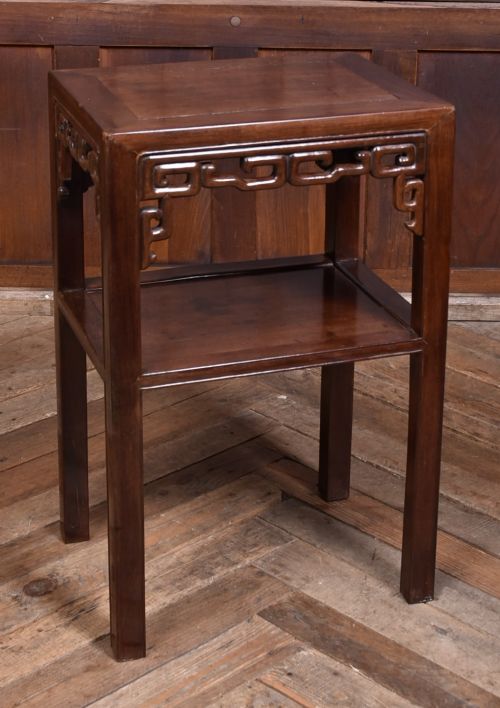
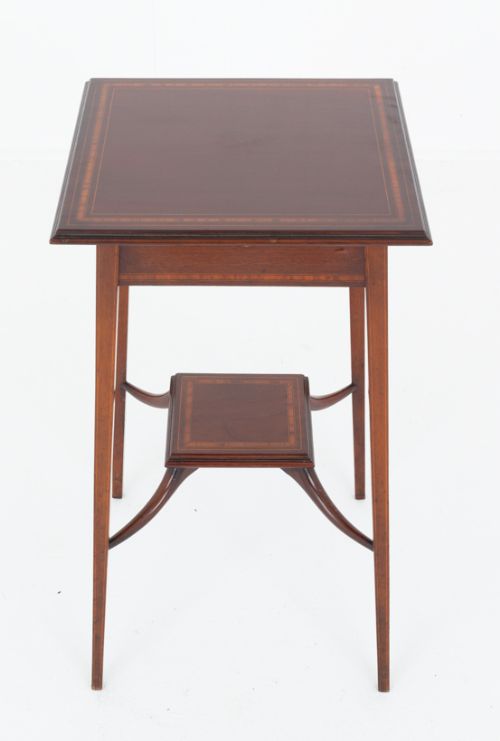
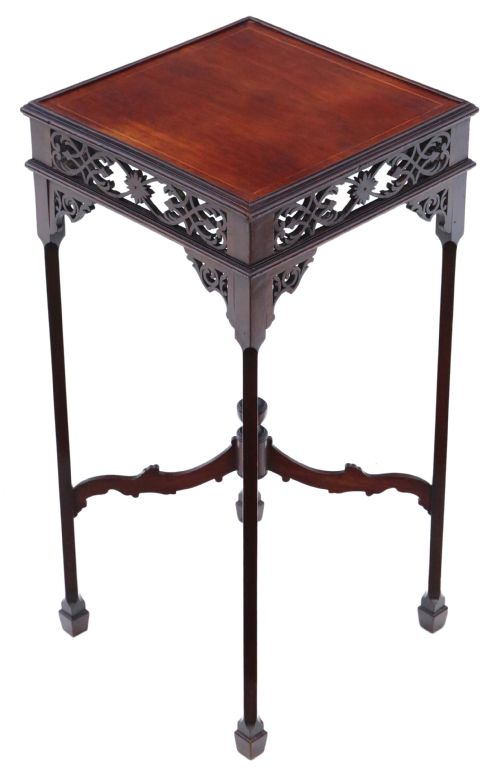
Edwardian interpretations on this page rely heavily on mahogany, satinwood, and boxwood inlay, often channelling Sheraton and Chippendale revivals. Alongside these sit Chinese Qing dynasty hongmu stands and carved hardwood tiers, alongside robust oak Arts and Crafts creations.
The most common versions encountered here are compact side tables and plant stands from around nineteen hundred. They bridge the gap between practical furniture and decorative display pieces, suiting corners or beside seating arrangements.
Construction and materials
Makers utilised dense timbers such as mahogany, oak, hardwood, and satinwood to build these square tables. Inlaid timber and boxwood provide contrasting decorative banding on revival pieces, while traditional Asian pieces rely on carved hardwood and hongmu.
Joinery methods vary between the eras, from Edwardian veneered surfaces and fine edge-banding to the carved structural joinery of nineteenth-century Chinese stands and the solid member construction seen in Arts and Crafts oak.
Several tables feature four folding flaps, ready to expand instantly for tea when unexpected visitors drop by.
Assessing quality
Quality reveals itself in the selection of timber and the precision of the inlay. Satinwood and figured mahogany show greater depth when the grain is chosen with care.
Carving depth and sharpness separate standard production from superior examples, particularly on Chinese Qing dynasty stands and Arts and Crafts pieces where hand-working is paramount.
The Square Wooden Display Table Glossary
- Hongmu
- A traditional Chinese term for dense hardwoods, often translated as red wood. These timbers provide the heavy, durable structure for nineteenth-century stands.
- Inlaid timber
- Pieces of contrasting wood fitted flush into a primary surface to create decorative patterns. This technique appears frequently on Edwardian tables.
- Jardiniere stand
- A tall table or pedestal designed specifically to hold a large plant pot or flower bowl. These share dimensions with plant stands and display tables.
- Occasional table
- A small, movable table used for various fleeting purposes in a room. They populate the Edwardian and nineteenth-century selections here.
Square Wooden Display Table: Frequently Asked Questions
What is a square wooden display table used for?
These pieces serve as platforms for lamps, vases, plants, and small ornaments in living spaces. Their compact square footprint makes them adaptable for corners and beside seating.
They also function as tea tables or small side surfaces when paired with appropriate seating.
How do I date an Edwardian display table?
Edwardian pieces date from the reign of King Edward VII between nineteen hundred and nineteen ten. They frequently feature mahogany, satinwood inlay, and revival styles.
Look for light timber tones and refined decorative banding characteristic of Sheraton revivals from that decade.
What is the difference between an occasional table and a plant stand?
Occasional tables generally offer a wider top surface suited for lamps and books. Plant stands and jardiniere stands tend to have taller, narrower proportions designed to elevate flora.
Both formats appear frequently in nineteenth-century and Edwardian listings.
Are Chinese Qing dynasty stands made of hardwood?
Yes, nineteenth-century Chinese stands in this category utilise dense hardwoods such as hongmu. These timbers provide the necessary weight and strength for carved multi-tier displays.
They often feature distinctive joinery and carved panels distinct from European revival furniture.