
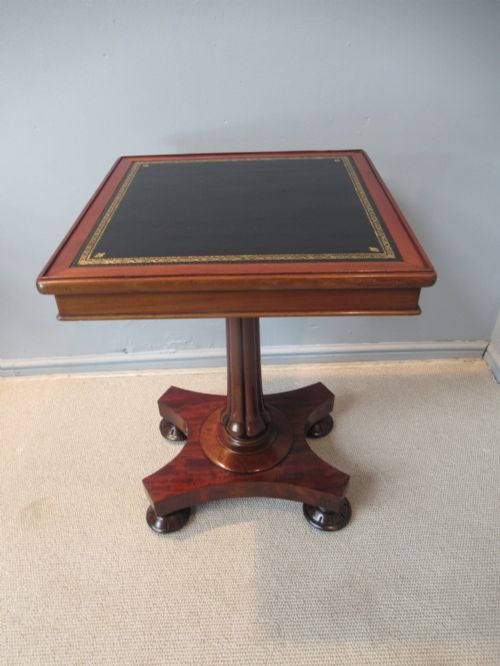


Square Mahogany Table
A square mahogany table brings functional balance to a room, offering clean geometric lines paired with rich timber grain.
Square Mahogany Table
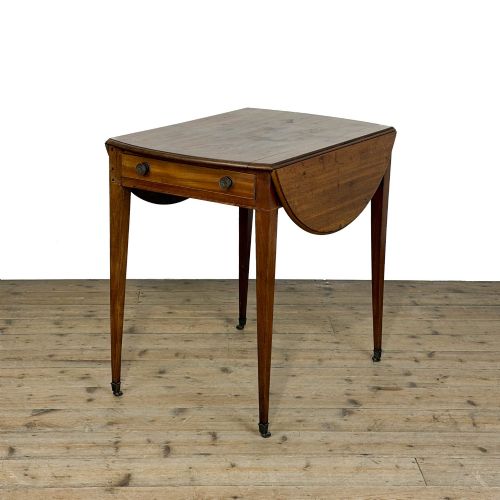
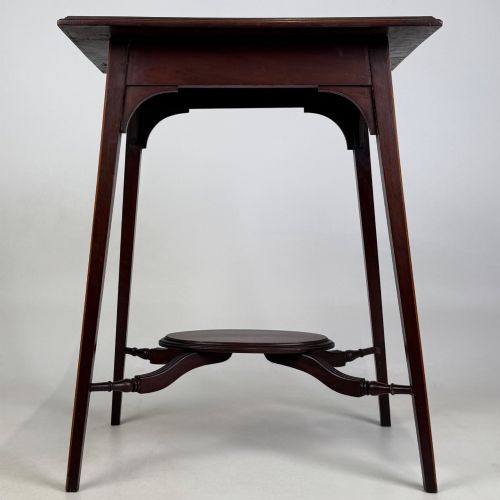
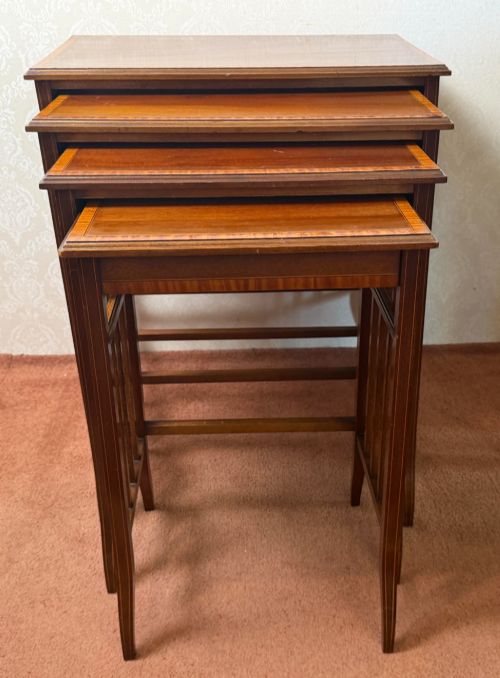
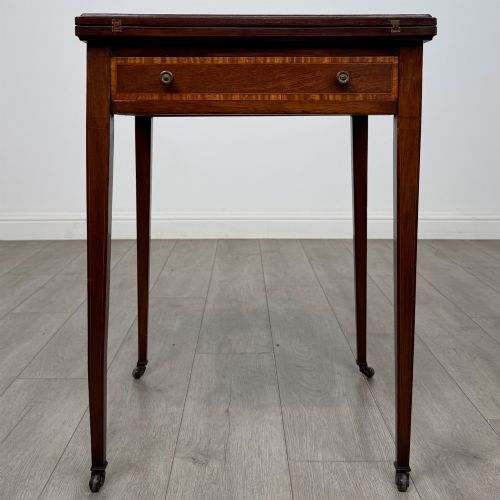
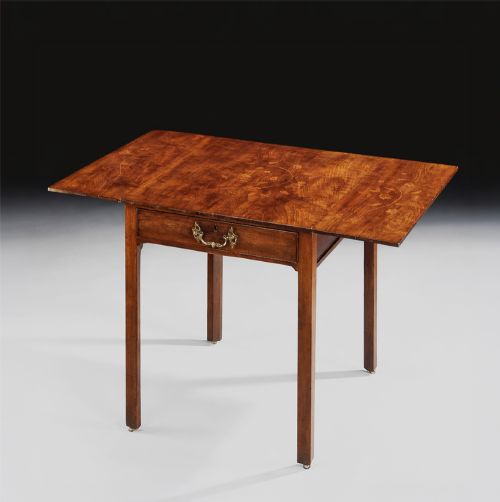
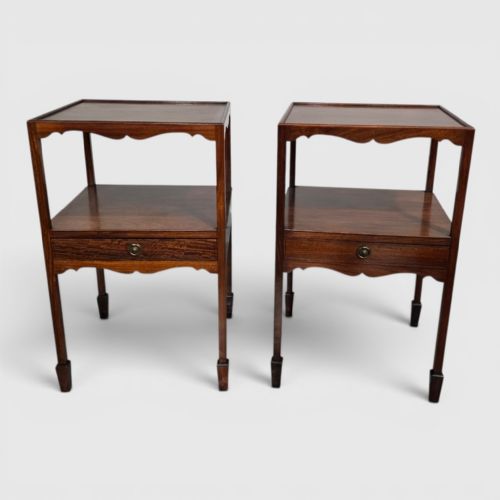
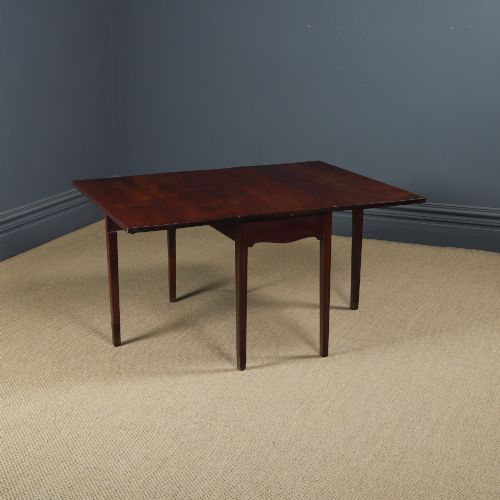
A square mahogany table spans various historical periods, appearing in forms such as compact wine tables, bedside stands, occasional lamp tables, and larger dining formats.
The pieces encountered on this page range from 18th-century Georgian and Regency designs to Edwardian revivals and early 20th-century craftsmanship.
Makers utilised the inherent strength of mahogany to construct stable square tops supported by pillars, tripod bases, or square tapering legs.
Construction and materials
Makers relied primarily on solid mahogany and mahogany veneers, often incorporating secondary timbers like pine alongside brass fittings, leather inserts, and glass.
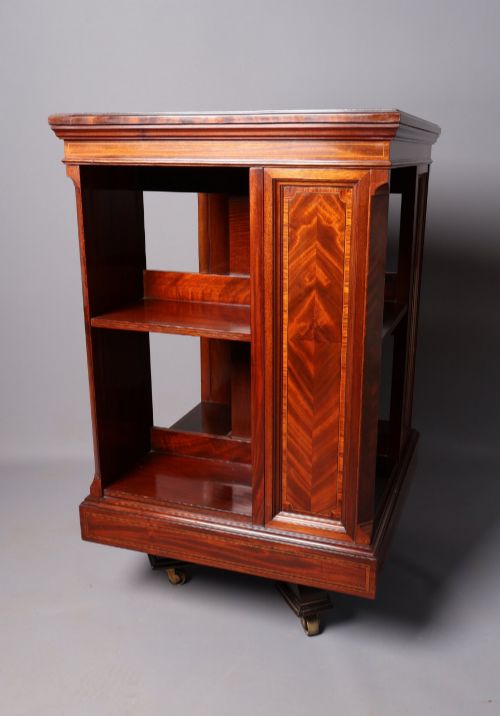
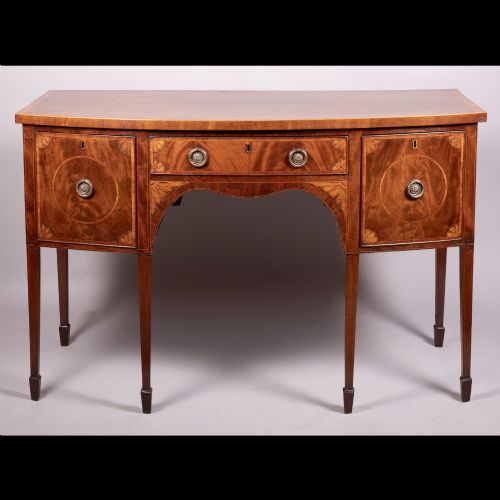
Decoration frequently involved delicate satinwood and boxwood inlay, stringing, and marquetry to accentuate the geometric form of the square top.
Tilt-top tables were originally designed to hide discreetly against dining room walls between evening toasts.
Distinctions in quality
Quality rests upon the selection of timber grain, such as plum pudding mahogany, and the precision of the joinery in the legs and tilt-top mechanisms.
Refinement is evident in the crispness of satinwood cross-banding and the careful execution of fine wood inlay rather than applied ornamentation.
Maple & Co
The Square Mahogany Table Glossary
- Mahogany
- A durable tropical hardwood prized for its rich reddish-brown colour and fine grain.
- Cross-banding
- A decorative border of veneer laid perpendicular to the grain of the main surface.
- Tripod base
- A support structure featuring three legs radiating from a central pillar.
- Marquetry
- Elaborate patterns formed by the insertion of different woods into a veneer surface.
Square Mahogany Table: Frequently Asked Questions
How do I identify a Georgian square table?
Georgian pieces display proportion and restraint, often featuring simple tripod bases or square tapering legs without excessive embellishment.
Construction methods from this era utilise traditional joinery and dense, heavy timber stock.
Where should I place an occasional table?
An occasional table suits corners, bedside settings, or beside seating where a compact surface is required.
The square top allows the piece to sit flush against walls while offering practical space for lamps or books.
What is a tilt-top mechanism?
Tilt-top mechanisms allow the square table surface to pivot vertically when not in use for convenient storage.
This historical feature was common on wine tables and supper tables to save space in period rooms.
How do Edwardian tables differ from Georgian ones?
Edwardian versions often incorporate revival styles such as Sheraton Revival, featuring lighter proportions and decorative stringing.
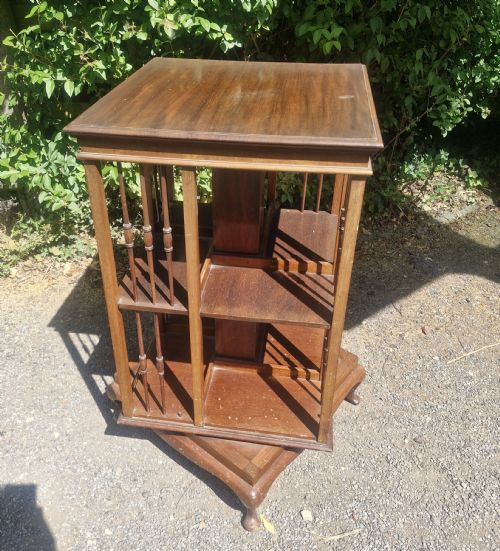
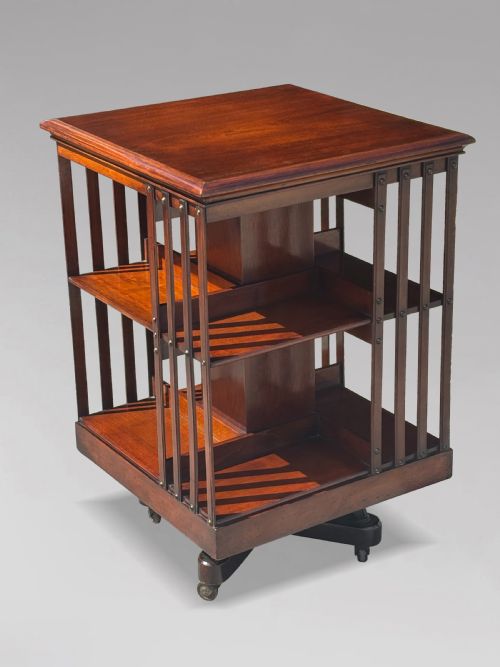
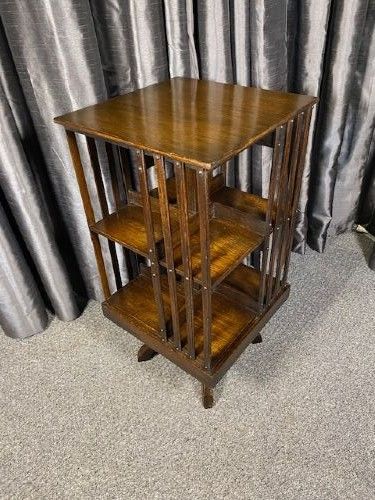
These later pieces frequently include satinwood inlay and varied occasional forms like plant stands and revolving bookcases.