




Square Gemstone Ring
A square gemstone ring brings geometric discipline to the hand, combining crisp lines with the deep colour of emeralds, sapphires, rubies, and diamonds.
Square Gemstone Ring
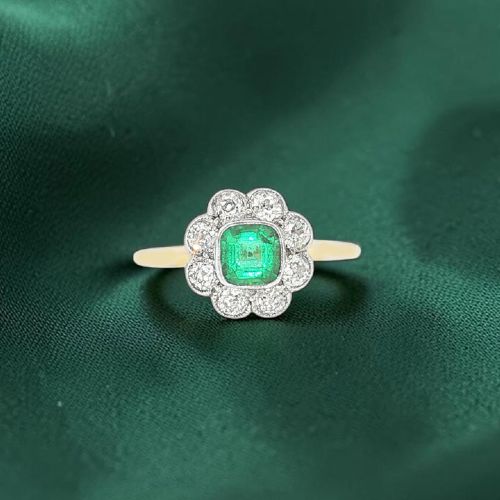
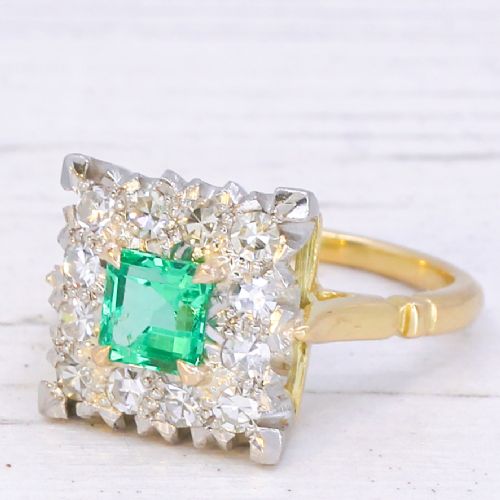
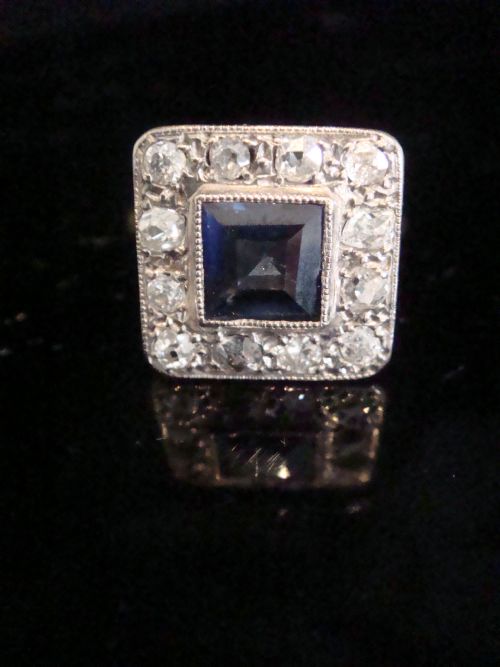
A square gemstone ring sets a distinct geometric stone or cluster into precious metal, creating a sharp profile upon the hand. When you search for a square gemstone ring, you encounter designs ranging from early twentieth-century cluster formations to mid-century cocktail settings.
The Edwardian and Art Deco periods dominate these pieces, favouring platinum and yellow gold alongside emerald, ruby, sapphire, and diamond. Cluster arrangements and step-cut stones define the visual language of these eras.
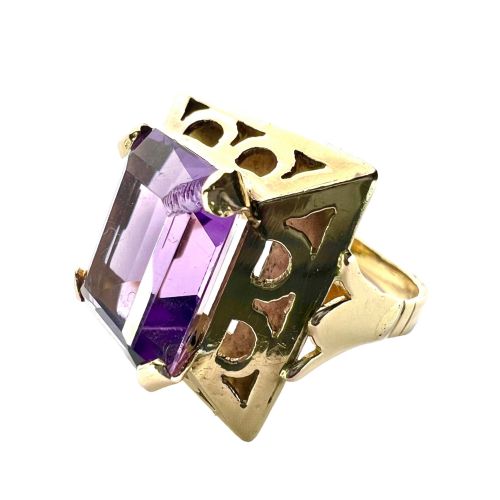
Later mid-century examples bring larger aquamarines and bold cocktail proportions into the selection. These pieces demonstrate how jewellers balanced angular geometry with softer wearable contours across successive decades.
How they were made
Goldsmiths utilised platinum and various carats of gold, including eighteen-carat yellow and white gold, to construct secure settings for square-cut and cluster stones. Platinum offered exceptional strength for delicate Edwardian and Art Deco claw or bezel work, holding bright diamonds and rich coloured gems firmly in place.
Gemstones such as emeralds, rubies, sapphires, and aquamarines were shaped into step-cuts, princess-cuts, or arranged in tight clusters alongside old-cut diamonds. Metalwork often combined yellow gold shanks with white gold or platinum gallery tops to enhance the brilliance of the mounted stones.
Listings span from the Edwardian era through the 1960s, featuring platinum, yellow gold, white gold, diamonds, emeralds, rubies, sapphires, and aquamarines.
What varies in quality
The fineness of the metalwork and the clarity of the central gemstone determine the distinction between average and exceptional examples. Precise claw placement and balanced symmetry in cluster arrangements show the hand of a skilled maker.
Natural gemstone origin, treatment documentation, and the crisp execution of geometric facets elevate certain pieces above standard production. The preservation of original mounting details and clean metal junctions reflect superior craftsmanship.
The Square Gemstone Ring Glossary
- Cluster ring
- A ring design featuring a central gemstone surrounded by a border of smaller stones, typically diamonds. This arrangement maximises overall visual impact and sparkle.
- Art Deco
- A design style spanning the 1920s and 1930s characterised by sleek geometric lines and symmetry. It heavily influenced modern ring geometry.
- Step-cut
- A stone cutting style featuring parallel facets that create a stair-like appearance, commonly used for emeralds. This cut emphasises stone clarity and depth of colour.
- Old-cut diamond
- A hand-faceted diamond cut popular before modern brilliant standards were established. These stones display softer facet patterns and high crowns.
Square Gemstone Ring: Frequently Asked Questions
How do I date a square gemstone ring?
Dating relies upon examining the mounting style, metal combinations, and gemstone cuts present in the piece. Edwardian examples often feature delicate platinum-topped gold work, whereas Art Deco pieces show strict geometric symmetry.
Mid-century rings frequently scale up in size, introducing substantial aquamarines or bolder cocktail proportions. Hallmarks and specific setting techniques further clarify the manufacturing period.
What metals are used in these rings?
Platinum and various grades of gold form the structural foundation of these antique and vintage rings. Platinum gained preference in the early twentieth century for its strength and bright white finish.
Yellow gold frequently appears in shanks and earlier Edwardian mountings, sometimes paired with white metal gallery tops. Fourteen-carat and eighteen-carat alloys provide durability for daily wear.
Are the coloured gemstones treated?
Treatment varies significantly depending on the stone type and the era in which the ring was made. Certain emeralds and sapphires carry certification noting the presence or absence of oils and heat treatments.
Historical stones often retain their original natural characteristics, while documentation on modern laboratory reports details any clarity enhancements. Examining specific certificates provides precise data on gemstone treatments.
How should I care for an antique ring?
Regular inspection by a professional jeweller ensures that claws and settings remain secure around the central stones. Gentle cleaning with warm soapy water and a soft brush maintains metal and gemstone brilliance.
Avoiding harsh ultrasonic cleaners protects fragile emeralds and treated stones from damage. Storing the ring separately prevents scratching from other jewellery items.