



Sporting Landscape Art
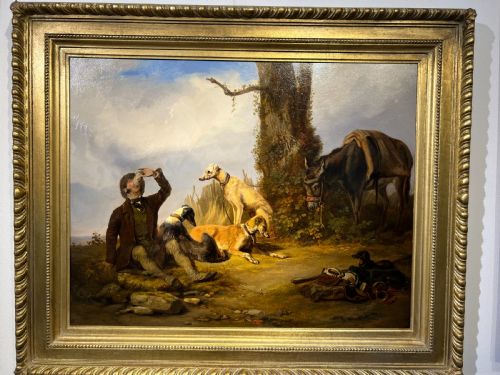
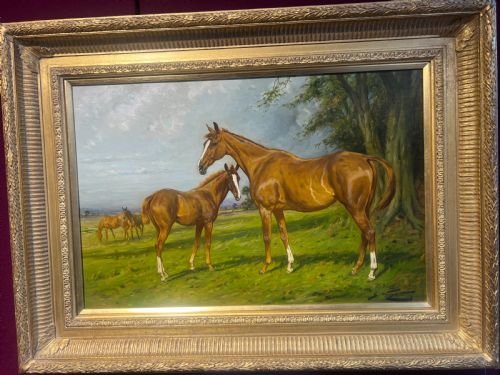
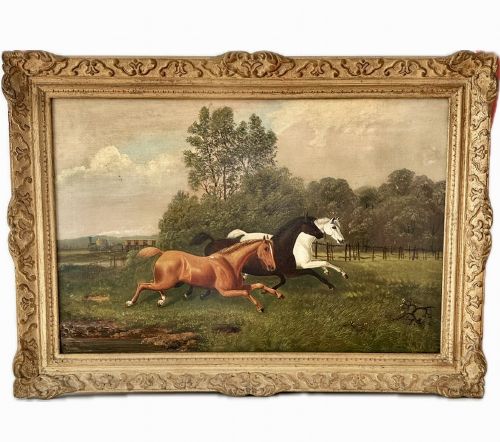
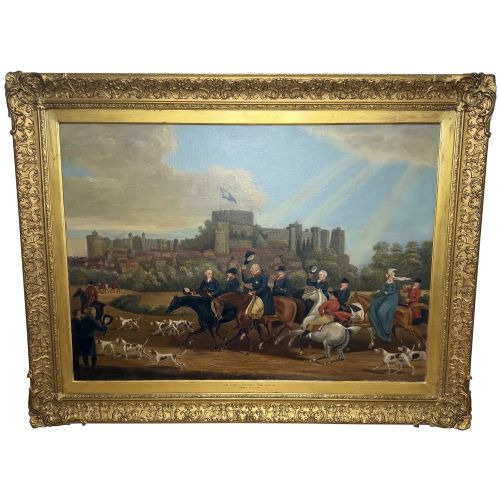
Sporting landscape art brings together horses, hounds and countryside views in oil paintings from the nineteenth and early twentieth centuries.
Sporting Landscape Art
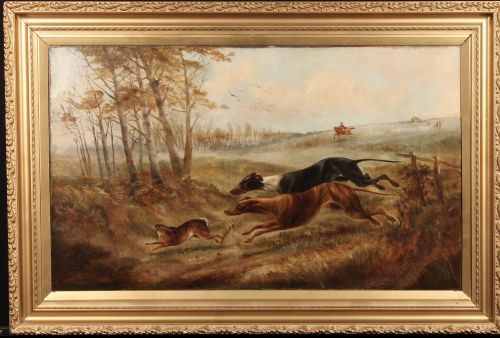
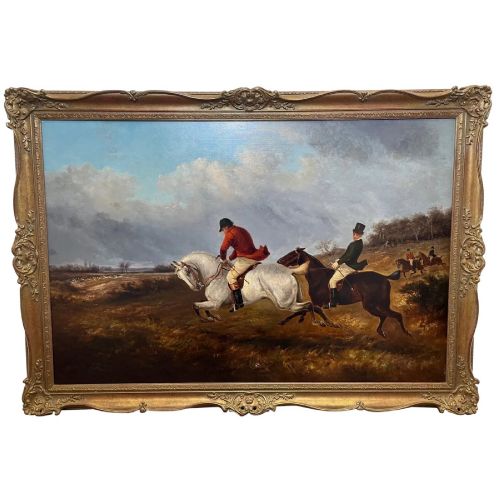
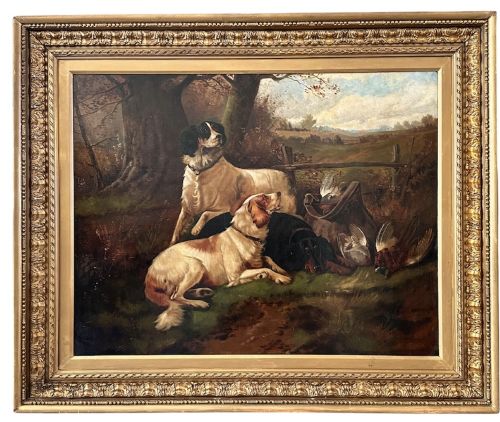
Sporting landscape art captures rural pursuits, equestrian scenes and working dogs set within detailed countryside views. Buyers searching for sporting landscape art will mostly find nineteenth century and Edwardian oil paintings on canvas.
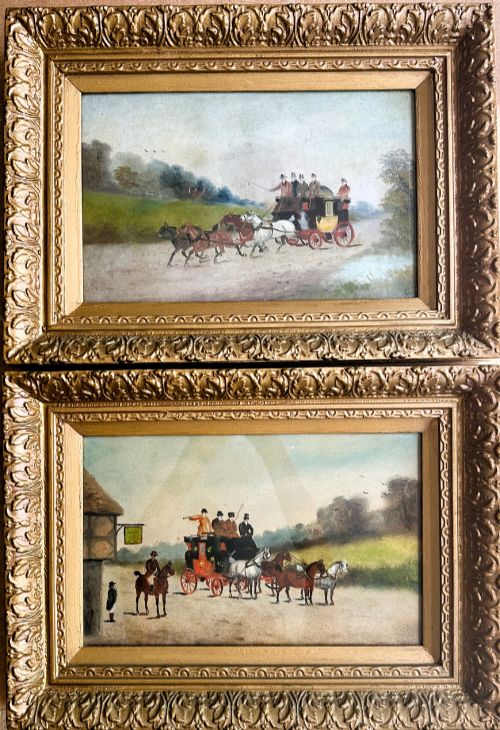
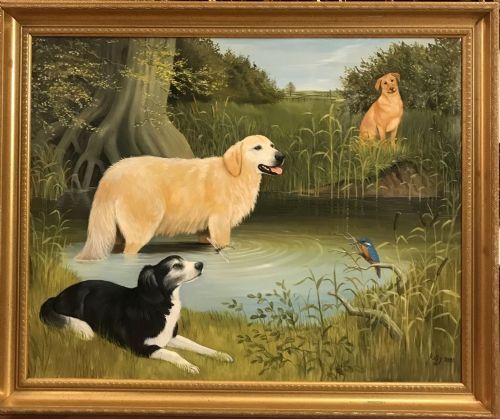
The subjects range from fox hunting packs and coaching scenes to portraits of individual horses and gun dogs resting in open fields. These works reflect a distinct tradition of British rural and equestrian painting spanning the Victorian and Edwardian eras.
Materials and Technique
These works are painted in oil paint on canvas or wooden supports, often finished with giltwood and gold leaf frames. Artists built up the compositions using traditional brushwork to render the textures of animal coats and rural scenery.
Canvas serves as the primary ground for the vast majority of these oil paintings, allowing for layered pigments that capture light and weather in the landscape.
Some coaching scenes capture stagecoaches caught mid-snowstorm, proving that historical commuters faced weather delays just as we do.
Variations in Quality
Quality rests on the precision of animal anatomy and the atmospheric depth of the surrounding countryside. Finer works display exact musculature in horses and hounds alongside a more considered handling of light.
The integration of the figures into the wider landscape distinguishes the more accomplished canvases from standard decorative pieces.
Thomas Smythe·John Sargent Noble·Sir Edwin Henry Landseer·George Wright·John Emms·John Ferneley Senior·John Frederick Herring Senior·Arthur Wardle·Philip Henry Rideout·George Armfield·Fannie Moody·Colin Graeme Roe·Clifton Tomson·Robert Cleminson·John Frederick Herring Jnr·Samuel Henry Alken·John Sanderson Wells·Alfred Duke·Michael Lyne·Henri Schouten·John Atkinson·John Charles Maggs
The Sporting Landscape Art Glossary
- Oil on Canvas
- A traditional painting medium where oil paints are applied to a stretched woven fabric support. This combination allows for rich colour blending and durability over centuries.
- Giltwood
- Wood carved and coated with a thin layer of gold leaf or metallic gilt. It is commonly found framing nineteenth century paintings.
- Equestrian Sporting Scene
- An artwork depicting horses, riders, or racing subjects. These compositions frequently form a major part of rural British art.
- Coach and Horses
- A subject showing horse-drawn carriages operating on historical routes or through coaching inns. Artists utilised these scenes to depict speed and movement in landscape settings.
Sporting Landscape Art: Frequently Asked Questions
What subjects appear in sporting landscape art?
These works feature fox hunting packs, coaching scenes, racehorses and gun dogs positioned within countryside or river views.
The animals and human figures share the canvas with detailed depictions of rural weather, trees and open terrain.
Which periods do these paintings come from?
The available pieces largely date from the nineteenth century through the Edwardian era, spanning the Victorian period and the early nineteen-hundreds.
Earlier Regency examples and mid-twentieth century works also appear among the selections.
How should I hang these oil paintings?
These works suit traditional wall placements, often paired with the original giltwood frames that accompany many of the canvases.
Keep them away from direct sunlight and excessive moisture to protect the oil paint and canvas over time.
Are these paintings executed on canvas?
Oil on canvas is the primary medium used for the vast majority of these historical sporting works.
Artists utilised this combination to achieve depth in the landscape backgrounds and realistic textures in the animal subjects.