


Traditional Horse Carriage Art
Traditional horse carriage art brings together coaching scenes, model caravans, and equestrian paintings that capture the movement of historical British transport.
Traditional Horse Carriage Art
When you search for traditional horse carriage art, you encounter oil paintings, framed wall art, and scale models depicting coaching scenes and mail carriages. These works preserve the visual history of horse-drawn travel across the nineteenth and early twentieth centuries.
The pieces on this page span several decades, featuring subjects such as Royal Mail coaches, winter snow journeys, and fox hunting scenes. You will find framed wall art alongside scale models, reflecting diverse interpretations of equestrian life.
Originating across periods from the Georgian and Regency eras through the Edwardian years, these depictions showcase British sporting traditions. Each object presents a distinct window into historical coaching routes and carriage craftsmanship.
Materials and construction
Painters applied oil paint on canvas and paper to render detailed coaching scenes, often highlighting horses, hounds, and snow-covered roads. Giltwood frames frequently complement these oil paintings, adding structural support and period finish.
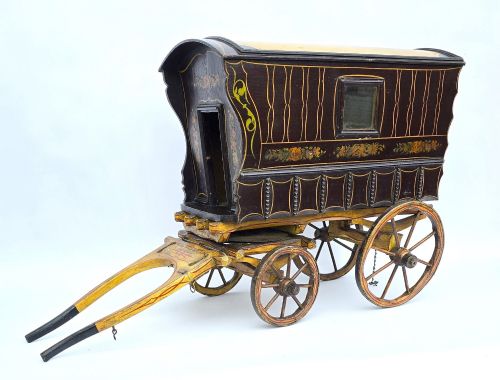
Model makers utilised wood and metal to construct scale models of caravans and carriages, incorporating painted details and glass elements. These mixed media constructions require precise assembly to replicate actual historical vehicles.
Listings include works from the Georgian, Regency, Victorian, and Edwardian periods, utilising wood, glass, and oil on canvas.
Distinguishing quality
The finesse of brushwork and the anatomical accuracy of horses and hounds separate finer oil paintings from simpler decorative works. Artists who rendered subtle light effects in winter snow scenes or complex coach harness details achieve a higher level of execution.
In scale models, the precision of woodwork and the crispness of painted finishes determine the overall standard. Pieces bearing legible signatures from established makers demonstrate documented craftsmanship that elevates their standing.
R.D. Roberts·George Wright·Philip Henry Rideout·Samuel Henry Alken·John Charles Maggs·John Richard Worsdale
The Traditional Horse Carriage Art Glossary
- Oil on Canvas
- Pigments bound in a drying oil applied to a stretched canvas support. This medium allowed artists to build rich textures and deep tones for coaching landscapes.
- Giltwood
- Wood carved and coated with a thin layer of gold leaf or metallic gilt. It commonly frames traditional sporting paintings from the nineteenth century.
- Scale Model
- A physical representation of a carriage or caravan built to reduced proportions. These objects rely on wood and metal to mirror full-sized vehicles.
- Folk Art
- Artistic work created within a traditional culture by self-taught or local makers. Caravan models of this type reflect regional craftsmanship rather than formal academy training.
Traditional Horse Carriage Art: Frequently Asked Questions
What subjects appear in these paintings?
These works primarily depict mail coaches, stagecoaches, and tandem carriages navigating historical British routes. Scenes often feature winter snow settings, hounds, and equestrian sporting events.
Artists focused on capturing the motion of horses and the intricate details of carriage design during transit.
How do model caravans differ from paintings?
Model caravans are three-dimensional scale representations constructed from wood and metal, mirroring actual transport vehicles. Paintings are two-dimensional works executed in oil on canvas or paper.
Both forms document traditional horse-drawn transport but offer entirely different visual experiences for a room.
Which periods do these pieces represent?
The items span from the Georgian and Regency eras through the Victorian and Edwardian periods. Many works date specifically from the nineteenth and early twentieth centuries.
This broad timeline encompasses shifting artistic styles within British sporting and folk art traditions.