




Sporting Dog Oil Artwork
A sporting dog oil artwork captures the canine companions of the field, gun, and estate in traditional painted pigment.
Sporting Dog Oil Artwork
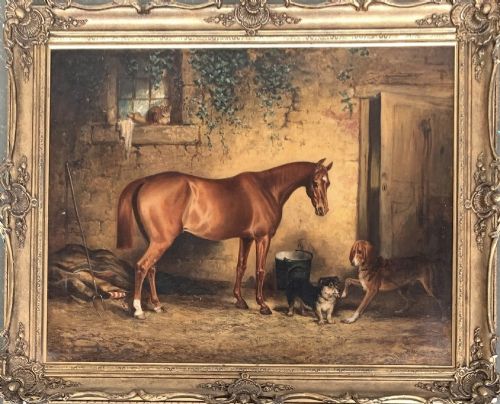
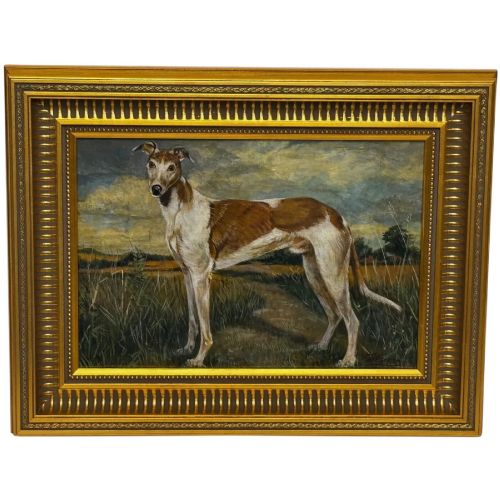
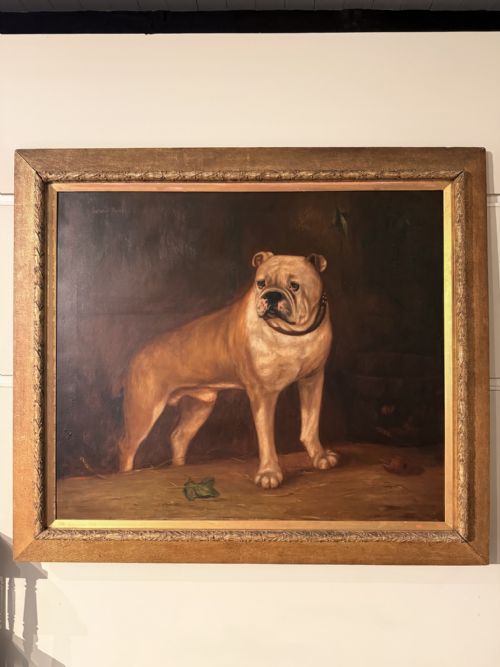
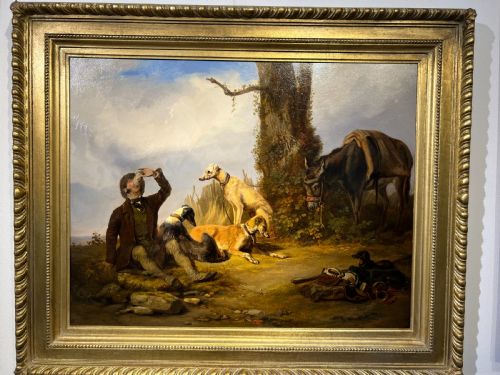
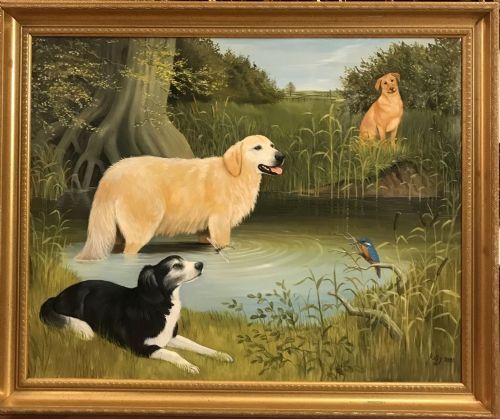
Sporting dog oil artwork spans centuries of canine portraiture, depicting spaniels, retrievers, terriers, and hounds in landscapes and rural scenes. These paintings record specific working breeds, from gun dogs with game to terriers guarding barns and greyhounds on the racetrack.
The pieces appearing on this page date primarily from the nineteenth century into the mid-twentieth century, encompassing Victorian and Georgian eras. Canvases range from naive depictions to detailed works by named animal artists of the British sporting tradition.
How they were made
Painters applied oil paint to stretched canvas or wooden boards, building up layers of pigment to render the coats, expressions, and musculature of the dogs. Many works feature gilded wood frames, utilising gesso to create ornate mouldings around the central image.
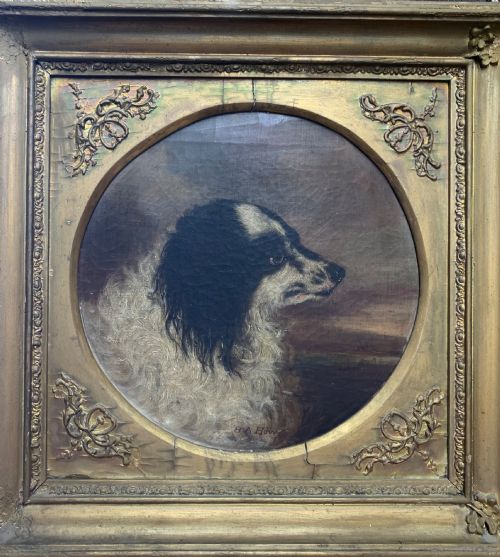
Artists captured natural light in moorland, woodland, and pastoral settings, using oil mediums to achieve depth in the fur and surrounding landscapes. Canvas supports were frequently housed within heavy giltwood frames characteristic of nineteenth-century presentation.
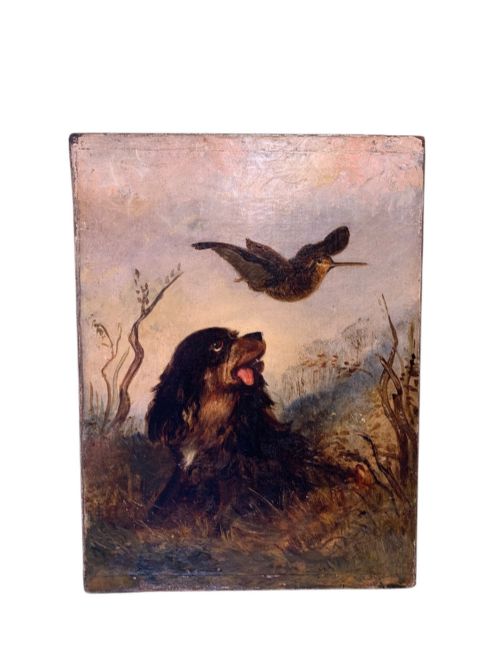
The selection includes depictions of spaniels, retrievers, collies, terriers, and hunting hounds set in various landscapes.
What varies in quality
The distinction between standard works and finer pieces lies in the anatomical accuracy of the animal and the expressiveness of the brushwork. Master painters rendered the exact texture of a coat and the alert posture of a hunting dog with precision, whereas lesser examples rely on formulaic compositions.
Provenance and attribution elevate certain canvases, particularly those signed by established nineteenth-century animal artists or linked to prominent estates. The integration of the dog within a detailed landscape rather than a stiff backdrop also marks the finer tier of the range.
Henry Barraud·John Sargent Noble·Sir Edwin Henry Landseer·John Emms·William Barraud·Samuel Raven·George E Sharpe·Colin Graeme Roe·Valentine Thomas Garland·John Trivett Nettleship·Fannie moody·Edwin Frederic Holt·Alfred Duke·Henri Schouten·Robert cleminson·Philip Eustace Stretton·James Ward Ra
The Sporting Dog Oil Artwork Glossary
- Oil on Canvas
- A painting medium where pigments bound in drying oil are applied to a woven fabric support stretched across a wooden frame. This technique dominated British sporting art for centuries.
- Gesso
- A paint mixture consisting of a neutral binder mixed with chalk, gypsum, or pigment. It was applied to wooden frames as a base before gilding.
- Victorian Sporting Art
- Artwork produced during the reign of Queen Victoria that focuses on field sports, hunting dogs, horses, and rural pursuits. It forms a core category of nineteenth-century British painting.
- Canvas
- The heavy woven fabric stretched over a wooden stretcher bar to serve as the foundation for oil paintings. It remains the most common support found in this category.
Sporting Dog Oil Artwork: Frequently Asked Questions
What is a sporting dog oil artwork?
A sporting dog oil artwork is a traditional painting created with oil paints on canvas or board, depicting dogs bred for hunting, shooting, or rural work. These pieces range from intimate individual portraits of terriers and spaniels to larger scenes of hounds on the hunt.
Created primarily during the Georgian and Victorian periods, these artworks document the close relationship between humans, working dogs, and the British countryside. They serve as both historical records of specific breeds and examples of traditional animal painting.
How were these dog paintings displayed?
Historically, these oil paintings hung in country houses, sporting estates, and drawing rooms, often framed in ornate gilded wood to complement traditional interior decor. They celebrated prized working dogs, hunting companions, and famous pack animals.
Today, they are displayed in living spaces as focal points on wood-panelled or painted walls, pairing well with traditional or eclectic interiors. Proper placement avoids direct sunlight to protect the oil pigments and canvas.
How do I date a sporting dog oil painting?
Dating relies on stylistic clues, framing techniques, canvas preparation, and the clothing or architecture appearing in any background landscape. Victorian and Georgian pieces often feature specific clothing styles, stretcher construction, and handwritten inscriptions on the reverse.
Signatures, artist attribution, and records of exhibited works also help narrow the timeline. Many pieces carry dates directly in the artist's hand or archival framing labels on the wooden stretcher.
What subjects appear in these paintings besides dogs?
Alongside the central dog portraits, these artworks frequently incorporate horses, human handlers, game birds such as woodcock, and rural landscapes. Hunting scenes often include figures in top hats, guns, ponies, and rural architecture.
Other compositions show terriers guarding farm interiors against rats or working in snowy winter landscapes. Each element places the dog within its working environment.