



Traditional Dog Portrait Art
Traditional dog portrait art captures the character and prestige of beloved animals through historical painted works.
Traditional Dog Portrait Art
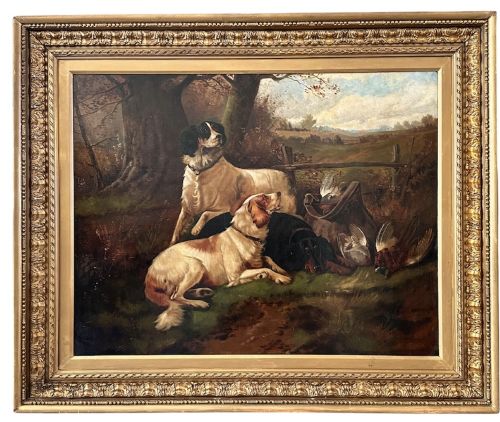
Traditional dog portrait art encompasses historical painted depictions of hounds, spaniels, terriers, and working dogs produced across the nineteenth and twentieth centuries.
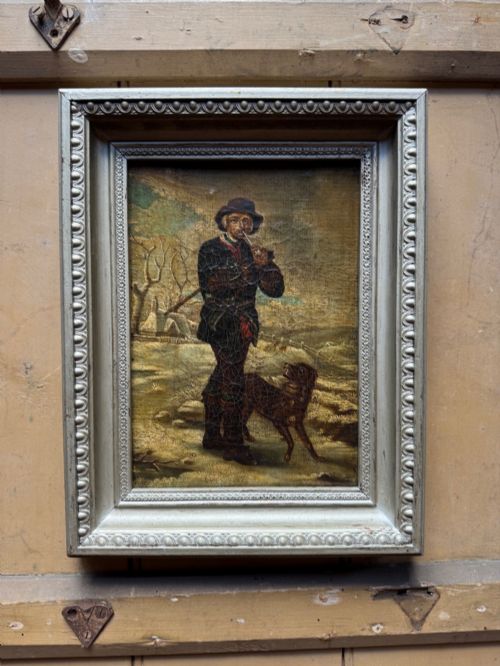
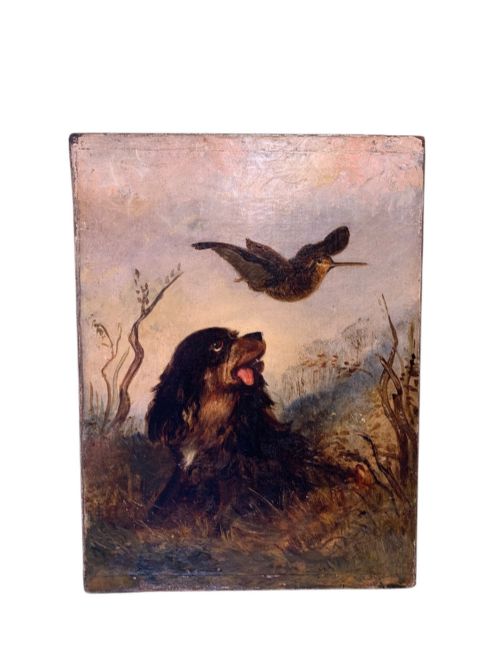
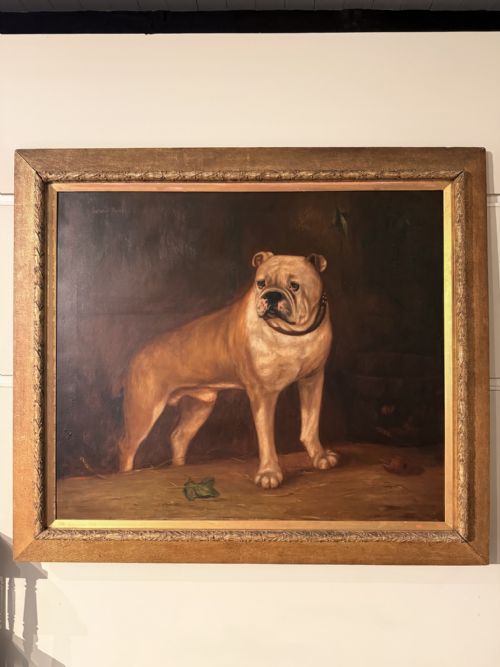
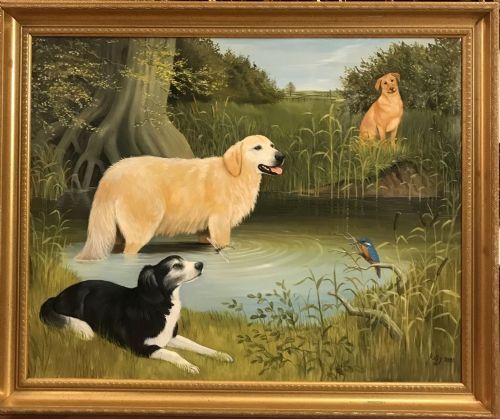
A buyer searching for traditional dog portrait art meets pieces ranging from Victorian sporting scenes and naive school depictions to detailed oil paintings on canvas or wood panels.
The subjects appear either alone in landscapes and interiors or alongside human companions, reflecting the social standing and sporting pursuits of their owners during periods such as the Victorian era and mid-century.
How They Were Made
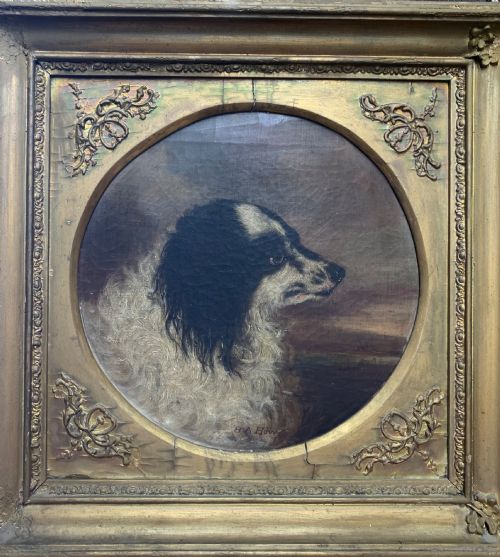
Artists applied oil paint onto stretched canvas, wooden panels, or board, often building rich textures to render the coats of spaniels, terriers, and hounds.
Many works incorporate gilt wood framing that complements the depth of the pigments used in nineteenth and twentieth-century animal painting.
The materials recorded in these listings consist primarily of oil paint on canvas, wood panels, and board, complemented by gilt wood frames.
What Varies In Quality
The skill of the painter dictates how convincingly the animal's anatomy, expression, and texture are rendered within the composition.
Provenance and attribution to documented sporting or animal artists elevate a piece above anonymous works from the naive school.
Henry Barraud·John Sargent Noble·LM Webb·William Barraud·George E Sharpe·Fannie Moody·Edwin Frederic Holt·Colin Graeme Roe·Henri Schouten·Valentine Thomas Garland·James Ward·Charles Bilger Spalding·John Emms·Samuel John Carter
The Traditional Dog Portrait Art Glossary
- Oil Paint
- A slow-drying medium composed of pigments suspended in a drying oil, typically linseed. This technique allows artists to build rich layers and subtle tones for animal coats.
- Canvas
- A heavy woven fabric stretched across a wooden frame to serve as a support for oil paintings. It provides the primary surface for many historical animal portraits.
- Gilt Wood
- Wood decorated with gold leaf or gold paint, commonly forming the decorative frames of nineteenth-century paintings. These frames enhance the visual weight of the artwork.
- Sporting Art
- A genre of painting dedicated to field sports, horses, and hounds. This tradition heavily influences canine portraiture by placing dogs in working or rural landscapes.
- Naive School
- Art produced by self-taught painters working outside academic traditions. These pieces display a direct, unpretentious perspective on subjects like border collies and terriers.
Traditional Dog Portrait Art: Frequently Asked Questions
What periods do these dog paintings come from?
The works originate largely from the nineteenth century, including the Victorian era, alongside pieces from the early and mid-twentieth century.
Dates span specific decades recorded across the current selection, reflecting shifting artistic approaches to animal portraiture.
Which dog breeds appear most often?
Spaniels, terriers, gun dogs, and hunting hounds feature prominently across the painted canvases and panels.
Other representations include collies, bulldogs, pugs, and st bernards shown in interiors, landscapes, or sporting contexts.
How were these historical dog portraits framed?
Many paintings are housed in period frames constructed from wood with gilt finishes.
These surrounds range from simple wooden mouldings to ornate giltwood frames typical of nineteenth-century presentation.
Are these paintings signed by artists?
Certain works bear signatures or attributions to recognised animal and sporting painters of the nineteenth and twentieth centuries.
Other examples originate from naive or anonymous schools where individual authorship remains unrecorded.