

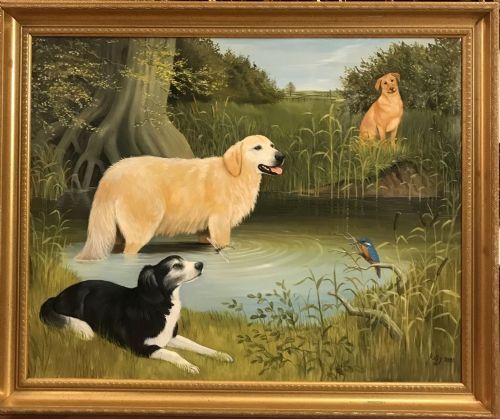


Working Dog Oil Painting
A working dog oil painting captures canine intelligence and utility, offering collectors a rich piece of rural history for the home.
Working Dog Oil Painting
When you search for a working dog oil painting, you are looking at fine art depictions of hounds, terriers, and spaniels engaged in sporting or rural life. These pieces span from the seventeenth century through to the mid twentieth century, capturing breeds such as collies, setters, and terriers in detailed landscapes.
On this page, you are most likely to meet Victorian works and mid-twentieth-century canvases depicting terriers on the scent or spaniels grouped together. These oils range from formal portraits of individual dogs to lively genre scenes featuring ploughmen, horses, and their faithful companions.
The subjects reflect the practical roles dogs played in rural British and Northern European life, from ratting to guarding. Painters of these scenes utilised traditional realism and sporting art conventions to record the loyalty and focus of the animals.
How they were made
Artists applied oil paint onto stretched canvas, often housed within gilded wood frames that complemented the rich tones of the imagery. The combination of oil on canvas allowed painters to build deep textures in the coats of the dogs and the surrounding landscapes.
Canvas mounted on wood stretchers served as the primary support for these detailed fine art paintings. Gilt frames provided a traditional finish that enhanced the visual depth of the Victorian rural realism and sporting art styles.
Listings feature oil on canvas materials across Victorian, seventeenth-century, and mid-twentieth-century periods in traditional realism and sporting art styles.
What varies in quality
The distinction between standard works and exceptional pieces lies in the anatomical accuracy of the canine subjects and the expressiveness of their poses. Skilled painters captured the specific texture of a rough collie coat or the tense posture of terriers guarding a rat trap with convincing realism.
Composition and background detail also separate the finer examples from simpler student or decorative efforts. Works by established practitioners integrate the dog into a coherent landscape, balancing natural light and atmospheric depth across the canvas.
John Emms·John Trivett Nettleship·Colin Graeme Roe·George Armfield·Edward Armfield·George Cole·George Wright
The Working Dog Oil Painting Glossary
- Oil on canvas
- A painting technique where pigmented oil paint is applied to a woven fabric stretched across a wooden frame. This method allows for subtle blending and rich texture.
- Sporting art
- A genre of painting dedicated to rural sports, hunting, horses, and working dogs. It records the traditions of the countryside and the animals central to them.
- Victorian rural realism
- An artistic approach from the nineteenth century focusing on honest depictions of country life and labour. It frequently includes working animals portrayed without idealisation.
- Gilded wood
- Wood treated with a thin layer of gold leaf or gold-coloured metallic finish, commonly used for traditional picture frames. This finish adds warmth and highlights the artwork within.
Working Dog Oil Painting: Frequently Asked Questions
What is a working dog painting?
A working dog painting is a fine art piece depicting breeds traditionally kept for tasks such as herding, hunting, or pest control. These artworks record the physical characteristics and active roles of dogs in historical rural settings.
Such pieces range from intimate portraits of individual collies or spaniels to narrative genre scenes involving terriers and sporting dogs.
How were these paintings displayed?
Historically, these canvases hung in country houses, sporting lodges, and domestic parlours within decorative gilt wood frames. The framing matched the formal tastes of the Victorian era and earlier periods.
Today, they remain suited for traditional interiors, country homes, or spaces dedicated to canine and sporting art.
How do I identify the period?
Period identification relies on stylistic clues, clothing in any human figures, framing materials, and the canvas preparation on the reverse. Victorian works often show distinct realism and rich earth tones.
Earlier Northern European pieces exhibit different handling of light and pigment, reflecting the artistic conventions of the seventeenth century.
What subjects are most common?
Terriers engaged in ratting or guarding, collies in landscapes, and spaniels grouped together appear frequently in these listings. Setters and plough teams with dogs also represent common sporting and agricultural subjects.
These motifs highlight the close relationship between working dogs and rural labour across several centuries.