



Spode Blue and White
Spode blue and white pieces are transfer-printed ceramics offering remarkable depth of cobalt detail, drawing collectors through their rich historical patterns.
Spode Blue and White
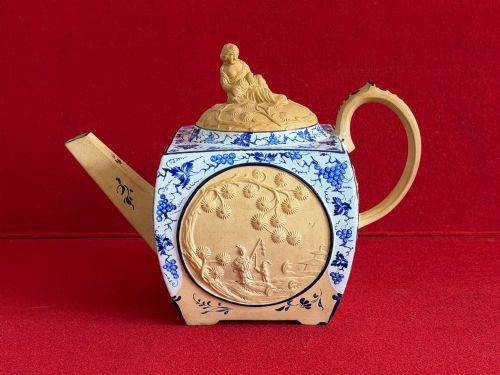
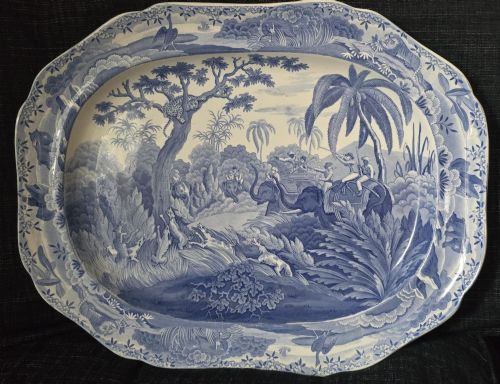
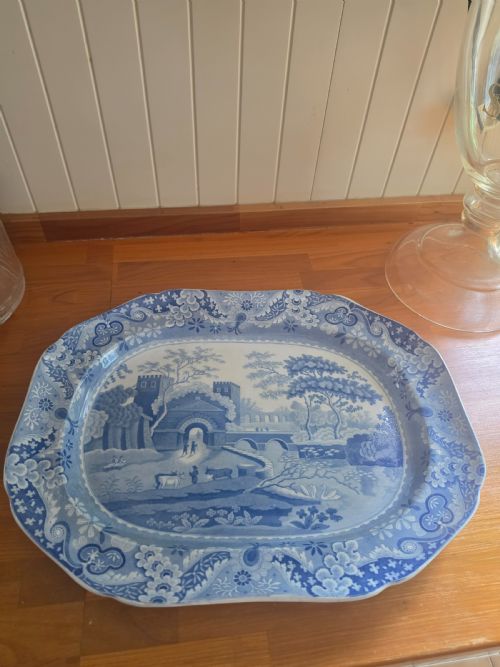
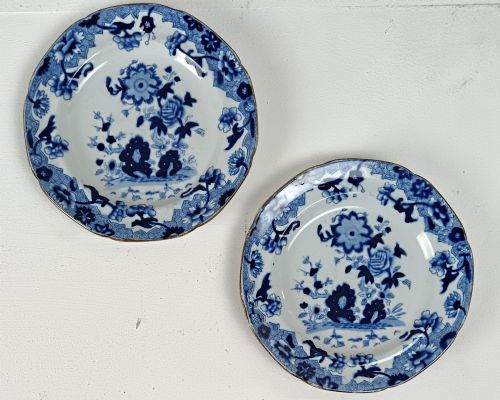
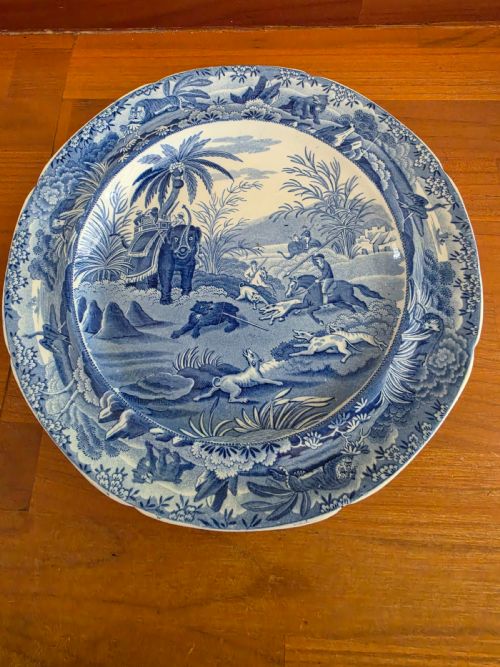
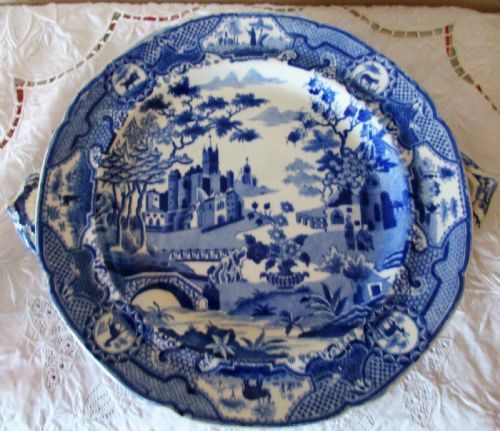
Spode blue and white items encompass a wide array of domestic and decorative objects, most frequently appearing as serving platters, meat dishes, plates, and teapots originating from the Georgian and 19th Century periods. These pieces showcase various transfer-printed patterns, ranging from classical architectural scenes like the Bridge of Lucano to elaborate figurative subjects such as the India Sporting Pattern and Italian landscapes.
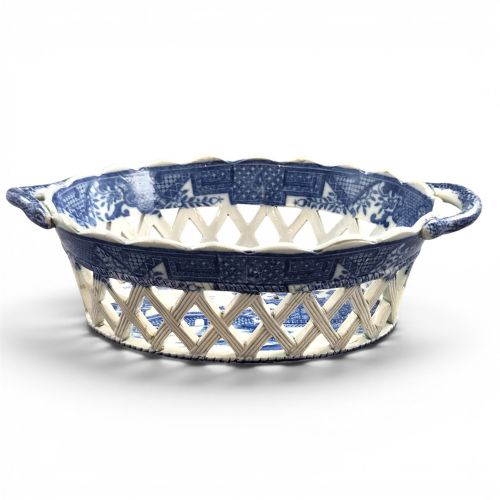
The selection ranges from utilitarian tableware like tea plates and sauce tureen stands to grander decorative forms including footbaths, chestnut baskets, and water jugs. Buyers navigating this selection will most commonly encounter earthenware and pearlware surfaces decorated in deep blue oxide, reflecting the prolific output of Staffordshire potteries during the Regency and early Victorian eras.
How they were made
Makers produced these ceramics primarily using earthenware, pearlware, caneware, and new stone, shaping them on potter's wheels or pressing them into moulds for items like baskets and footbaths. Artisans then applied transfer printing, a technique where a design was engraved onto a copper plate, inked with cobalt blue, and transferred onto the ceramic body via tissue paper.
Following the transfer of the design, workers applied a transparent glaze to fix the pigment before firing the pieces in kilns to achieve the characteristic glossy finish and deep blue contrast. Stoneware and ironstone variants provided alternative, more robust bodies for heavier serving vessels and large meat platters intended for rigorous dining room use.
Spode Blue and White Retail Price Guide 2026
Typical asking prices for spode blue and white among the pieces listed under this phrase on Sellingantiques today, from the lower quarter to the upper quarter. They describe what is for sale here now, not the wider market.
Listings feature earthenware, pearlware, and stoneware bodies decorated with blue transfer prints across the Georgian, Regency, and 19th Century periods.
What varies in quality
The crispness of the transfer print dictates much of the visual standard, with superior examples displaying sharp lines and deep cobalt saturation without blurring or smudging. The complexity and ambition of the form also elevate a piece, distinguishing standard utility plates from reticulated chestnut baskets or large footbaths requiring advanced moulding skill.
The condition of the glaze and the complexity of the specific pattern influence the standing of an item within the market. Well-preserved surfaces retain an even gloss and clean white ground that enhances the contrast of the blue transfer work.
Spode·Copeland and Garrett·Copeland Spode
The Spode Blue and White Glossary
- Transfer printing
- A decoration technique using an engraved copper plate to pull an inked design onto tissue paper, which is then pressed onto the ceramic body. This method allowed intricate patterns to be replicated with speed and precision.
- Pearlware
- A refined earthenware body developed by Josiah Wedgwood and adopted by Spode, featuring a subtle bluish glaze that sat in recesses to whiten the overall appearance. It served as the primary canvas for early 19th-century blue and white tableware.
- Reticulated
- Describes ceramics featuring openwork fretwork or pierced lattice designs, commonly seen on baskets and fine serving pieces. This delicate work required exceptional control during the drying and firing stages.
- Caneware
- A fine stoneware body possessing a warm, buff-coloured tone resembling bamboo or unglazed biscuit. It provided a contrasting tactile surface for specialised tea wares and decorative vessels.
- New Stone
- A durable, dense ceramic body introduced in the early 19th century to compete with ironstone. It offered increased strength and resistance to chipping for heavy-use items like meat platters and dinner services.
Spode Blue and White: Frequently Asked Questions
How do I identify early Spode blue and white?
Early pieces typically date from the late 18th century through the Georgian period, often utilising pearlware bodies with a characteristic bluish pooling of the glaze in crevices and foot rims.
Makers frequently applied impressed marks alongside blue transfer-printed backstamps, though early iterations relied heavily on the quality of the engraving and the specific depth of the cobalt transfer.
What are transfer-printed patterns on Spode ceramics?
Transfer printing is a method where artisans engraved copper plates with detailed scenes, such as classical architectural views or exotic landscapes, and used them to stamp paper transfers onto fired clay.
This technique enabled potteries to produce consistent, highly detailed decoration across large dinner services and decorative plates before glazing and firing.
How were large meat platters used?
Large meat platters served as the centrepiece for presenting joints of meat at dining tables during the Georgian and 19th-century periods, often featuring deep wells and channels to collect juices.
Servants brought these heavy earthenware and ironstone vessels directly from the kitchens to the dining room to accommodate substantial meals for large households.
Are these pieces safe for everyday dining?
While many items were originally made for domestic dining, antique ceramics of this age require careful handling to preserve their historical glazes and transfer-printed surfaces.
Collectors generally wash them by hand in lukewarm water rather than placing them in modern dishwashers or microwaves to prevent crazing and fading.