


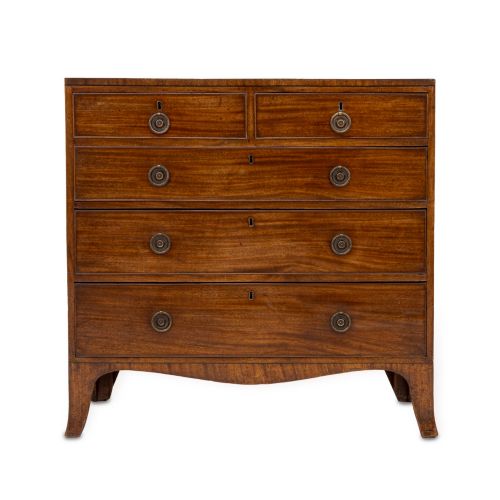
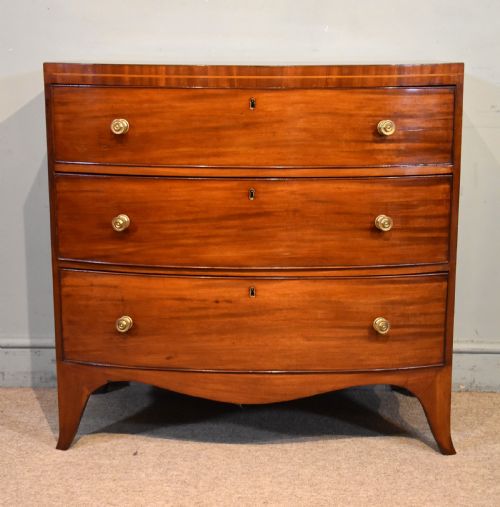

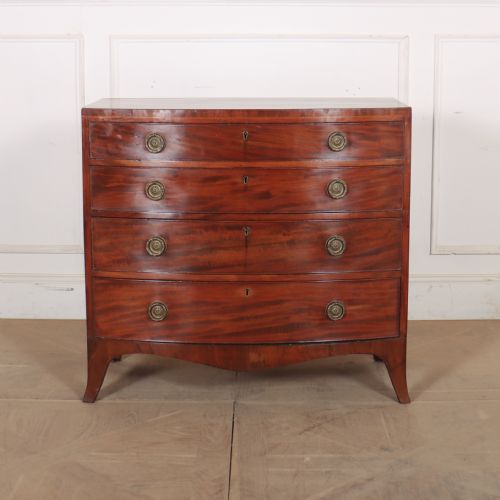


Splayed Leg Mahogany Chest
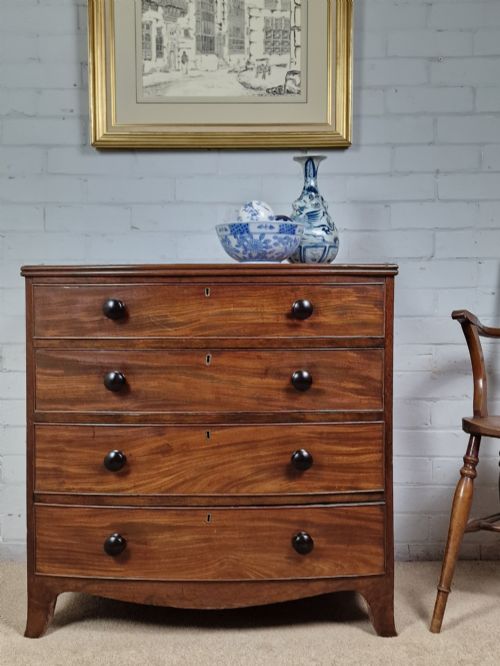
A splayed leg mahogany chest brings distinct architectural poise to a room, offering warm timber tones and characterful bracket feet.
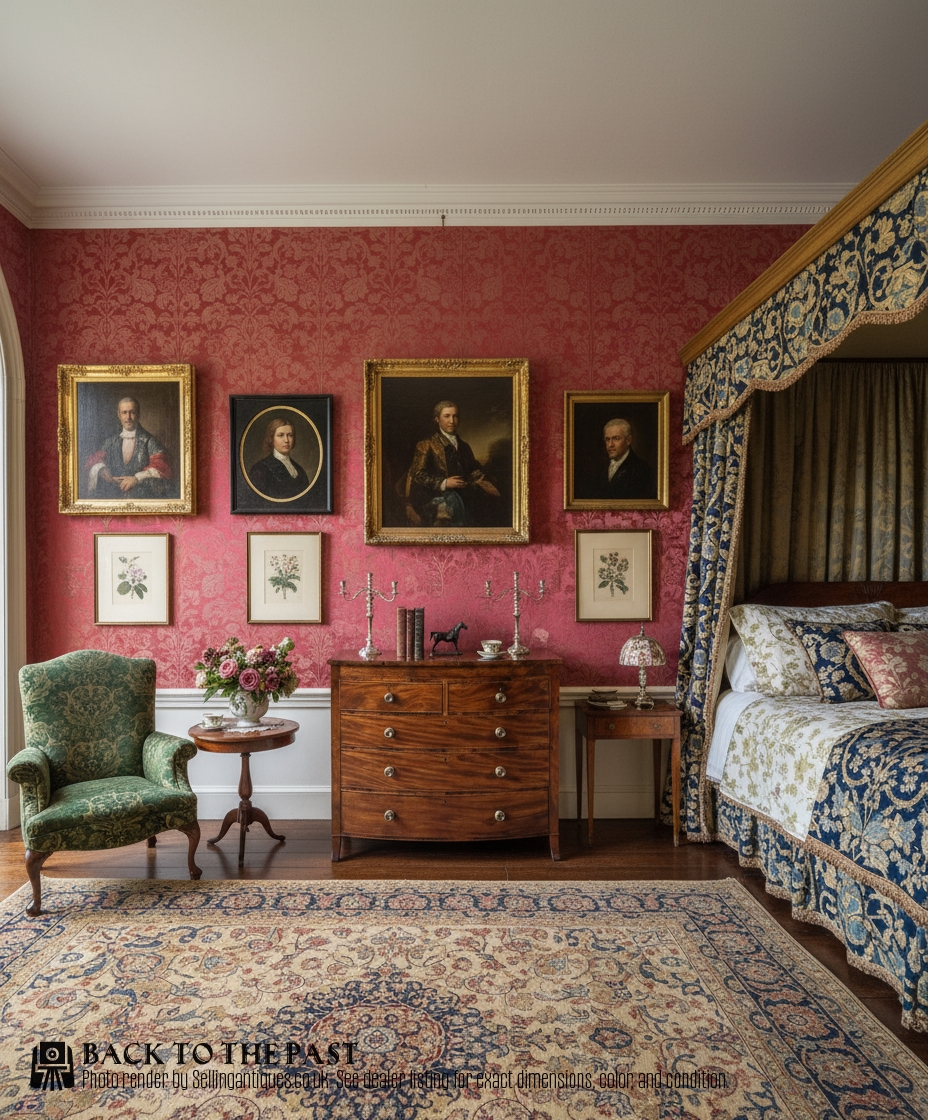
Splayed Leg Mahogany Chest
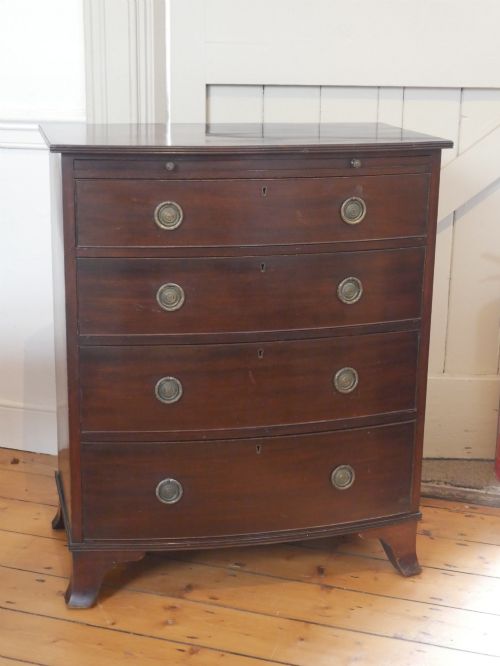
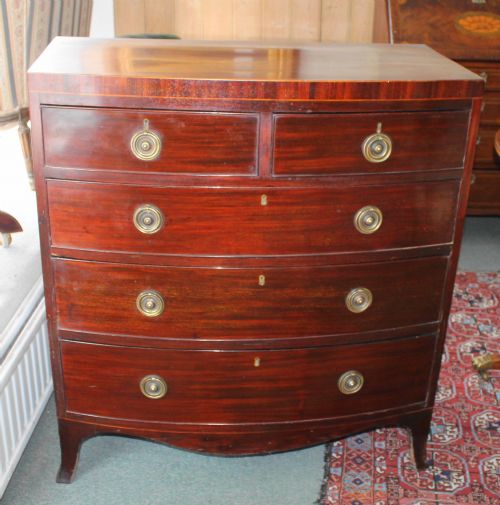
When you search for a splayed leg mahogany chest, you encounter case furniture defined by distinctive outward-angled supports beneath timber drawer carcases. The pieces appearing here span Georgian, Regency, and later periods, capturing both eighteenth-century origins and twentieth-century revivals.
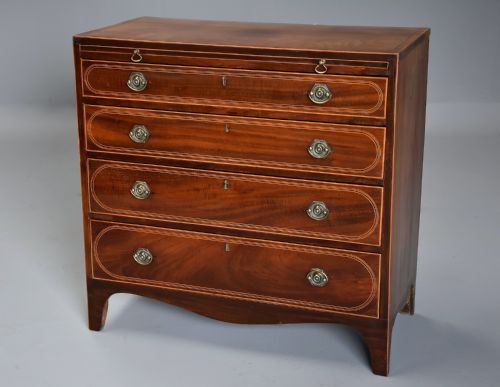
You meet various configurations in these listings, including bow-fronted designs, serpentine profiles, and tallboy chests on chests. Most examples take the form of chests of drawers, often enriched with satinwood inlay or boxwood stringing.
The historical spread reaches from the eighteenth century through the nineteenth century, extending into nineteen-hundreds revivals. These variations reflect shifting cabinet-making fashions while retaining the characteristic timber carcase and foot formation.
Materials and construction
Makers built these pieces primarily using solid and veneered mahogany, often selecting dense boards with rich grain patterns. Secondary timbers such as oak frequently appear in the internal drawer construction.
Surface enrichment relied on contrasting finer woods, incorporating satinwood inlay and boxwood details into the drawer fronts or top edges. Brass hardware, including drop handles and escutcheons, completed the functional assemblies.
Splayed Leg Mahogany Chest Retail Price Guide 2026
Typical asking prices for splayed leg mahogany chest among the pieces listed under this phrase on Sellingantiques today, from the lower quarter to the upper quarter. They describe what is for sale here now, not the wider market.
Some chests hide secret drawers tucked cleverly beneath the top moulding, waiting to be discovered by their next owner.
Assessing quality in cabinet work
Superior examples display crispness in the timber figuring and meticulous precision in the jointing of the splayed feet to the main carcase. The handling of inlay, particularly where satinwood and boxwood meet the primary mahogany surface, marks the distinction between standard and exceptional workshop output.
The condition of the original surface patina heavily influences the character of each piece. Retaining honest warmth and tactile depth in the wood finish elevates a chest well above examples with heavy modern interventions.
Druce & Co
The Splayed Leg Mahogany Chest Glossary
- Splayed leg
- A support that angles outward from the vertical centre of the piece, providing both visual lightness and physical stability.
- Bow front
- A convex curved front profile to a chest of drawers, popular during the Georgian and Regency periods.
- Patina
- The deep surface sheen and colour acquired by mahogany through age, handling, and regular polishing.
- Caddy top
- A raised or moulded tabletop profile reminiscent of the lids found on eighteenth-century tea caddies.
- Tallboy
- A tall chest of drawers constructed in two stacked sections, frequently taking the form of a chest on chest.
Splayed Leg Mahogany Chest: Frequently Asked Questions
How do I date a mahogany chest?
Dating relies on observing construction methods, timber choices, and stylistic cues such as bracket feet or splayed supports. Georgian and Regency pieces display specific carcase assembly traits that differ from later nineteenth-century and revival work.
Examining secondary woods inside the drawers and the style of brass hardware further clarifies the period of manufacture.
Where should I place this chest?
These chests suit living rooms, hallways, or bedrooms where their compact proportions and timber warmth add character. The splayed feet provide an airy visual footprint that works well against plain walls.
Keep timber furniture away from direct heat sources and strong sunlight to protect the polish and wood grain.
How do I maintain mahogany furniture?
Regular dusting with a soft, dry cloth preserves the finish without building up unnecessary wax layers. Occasional application of a suitable beeswax helps nourish the historic timber.
Avoid placing damp items or heavy liquids directly on the mahogany surface to prevent marking.