
Bowed Chest of Drawers
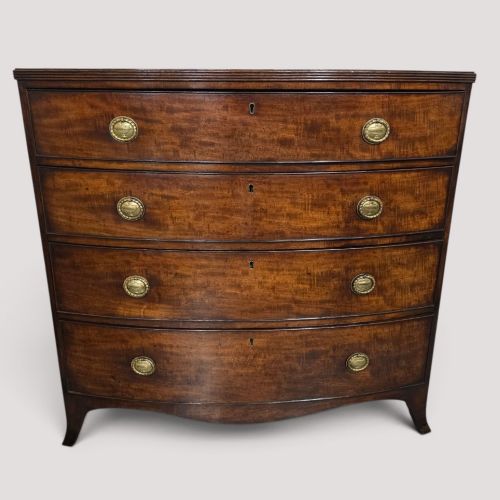
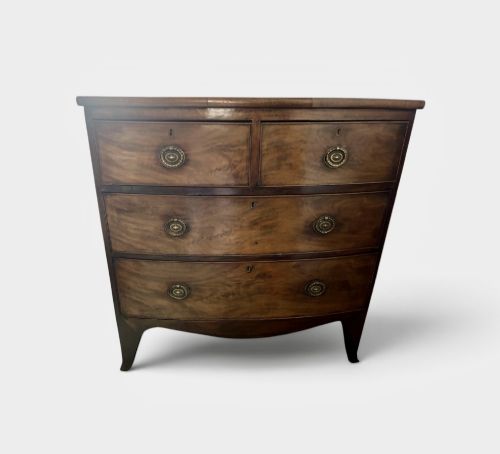
A bowed chest of drawers curves outward at the front to give presence and generous capacity, combining practicality with sculptural elegance.
Bowed Chest of Drawers
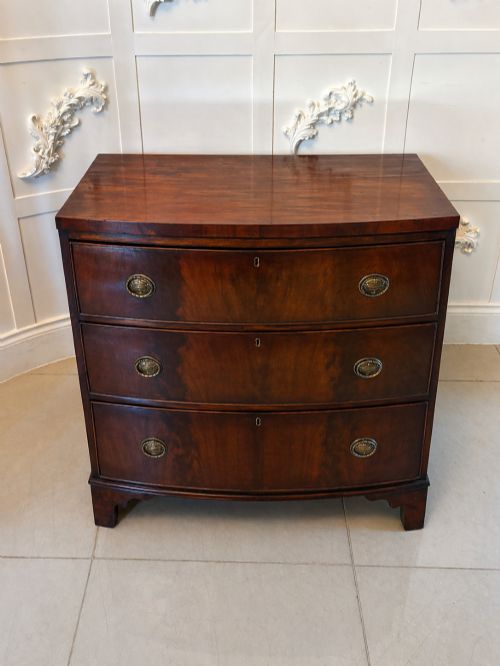
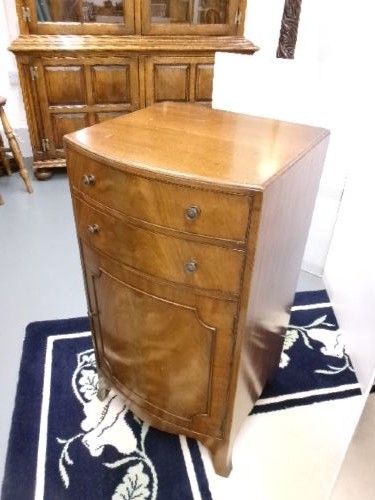
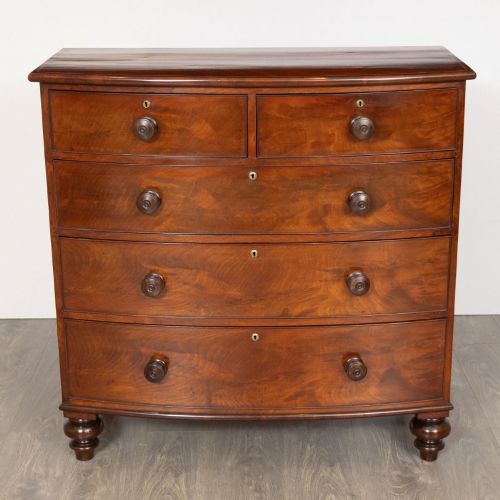
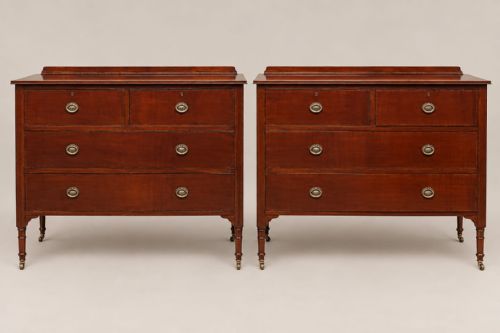
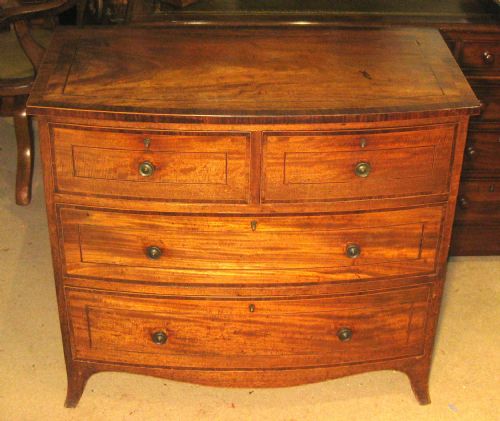
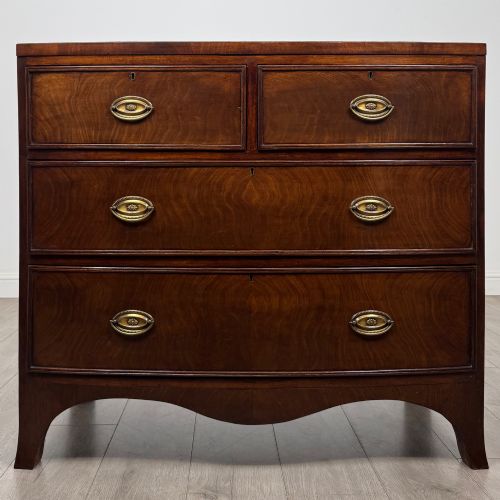
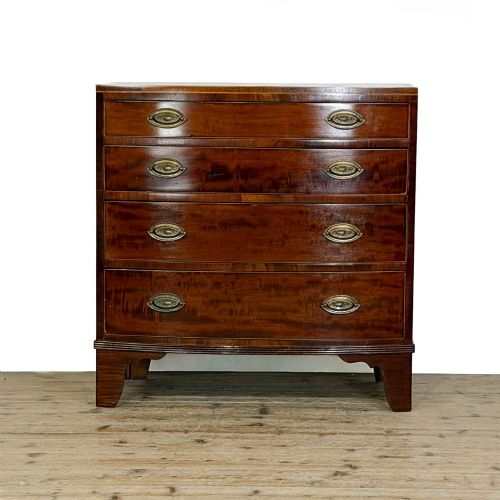
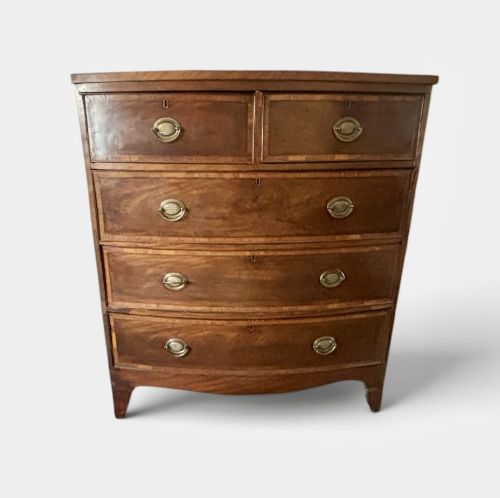
A bowed chest of drawers is a storage piece defined by its curved front, which softens the rigid lines of traditional cabinetmaking. The pieces met here span the Georgian, Regency, Victorian, and later twentieth-century periods, showing how cabinetmakers adapted the curved outline across decades.
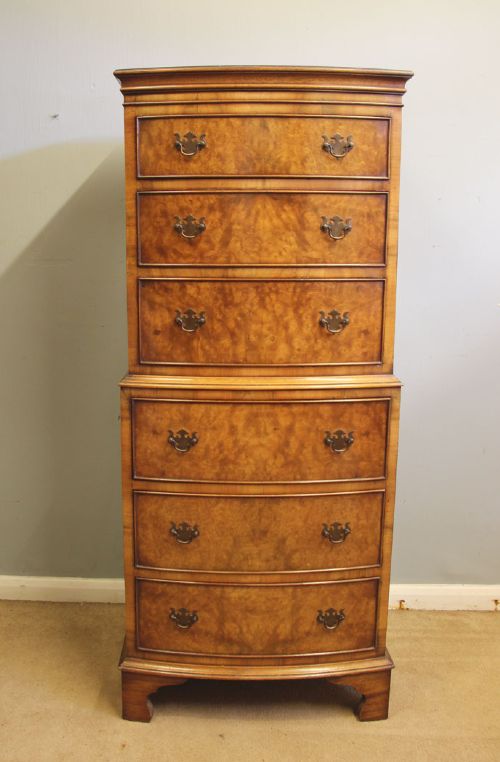
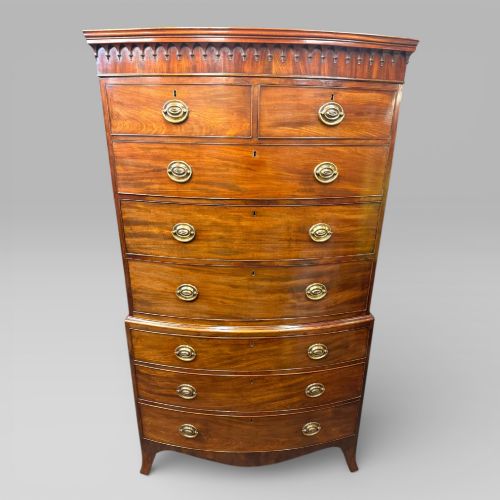
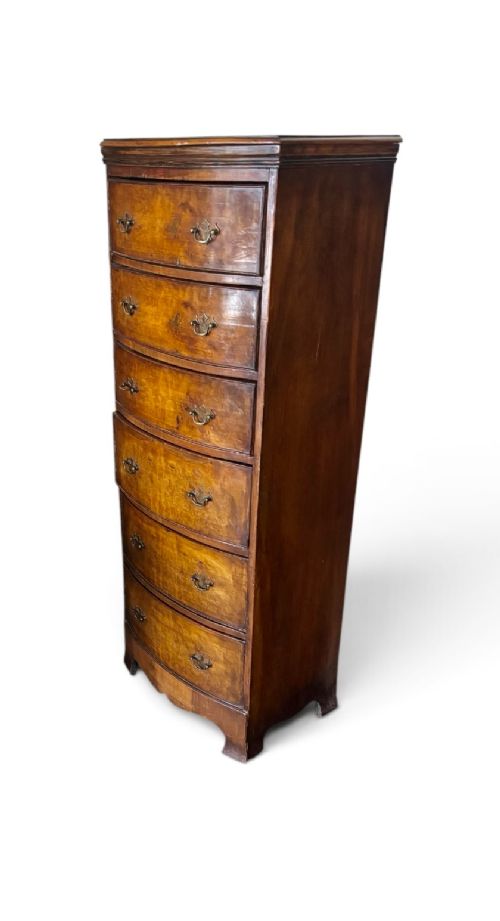
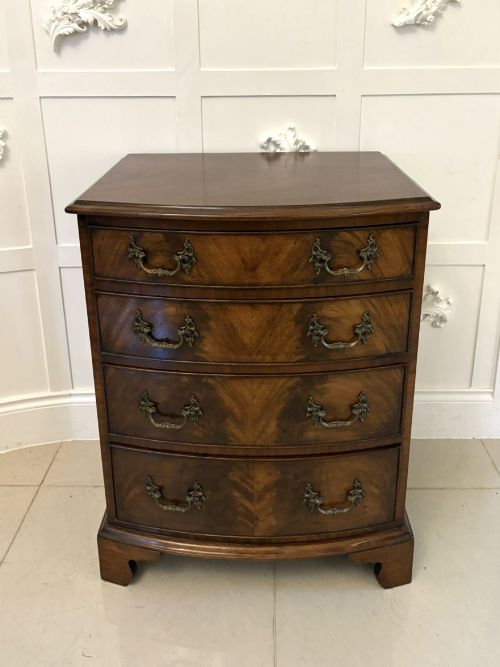
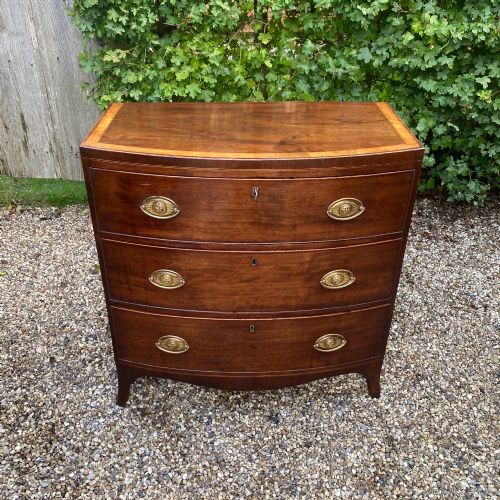
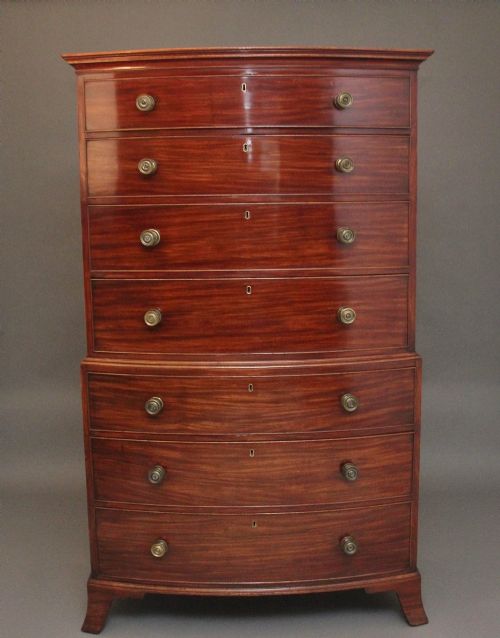
Most examples found on this page are constructed from mahogany, often enhanced with flame veneers, satinwood banding, or walnut. Alongside standard chests, the selection includes tallboys, chests on chests, miniature pieces, and dressing chests.
Makers designed these items for principal bedchambers and parlours where both display and substantial drawer space mattered. The curved profile catches light differently across the grain, making each piece visually distinct from a flat-fronted equivalent.
What Varies in Quality
Quality rests in the handling of the timber figure and the precision of the curved drawer fronts. Finer pieces display matched flame mahogany or burr walnut veneers that flow symmetrically across the drawers, alongside delicate satinwood stringing.
The integration of the curved top, known as a caddy top or moulded edge, dictates the refinement of the silhouette. Stronger examples maintain smooth drawer operation within the curved framework and retain proportion in their bracket feet or valanced skirts.
Listings feature mahogany, burr walnut, and satinwood veneers across Georgian, Regency, and early twentieth-century periods.
The Bowed Chest of Drawers Glossary
- Bow front
- A cabinet front that curves outward in a convex sweep. This shape softens the profile and increases central storage depth.
- Flame mahogany
- A veneer cut from the branch junction of a mahogany tree, showing a distinctive flickering flame pattern. Cabinetmakers placed these highly figured sheets symmetrically across drawer fronts.
- Crossbanding
- A narrow strip of veneer laid perpendicular to the surrounding grain, often in a contrasting timber such as satinwood. It frames the perimeter of a drawer or top.
- Tallboy
- A tall storage unit comprising one chest of drawers stacked upon another, or built as a single tall carcass. They maximise vertical capacity in rooms with limited floor space.
- Brushing slide
- A pull-out shelf integrated above the top drawer used for folding linen or holding accessories. It slides flush into the cabinet frame when not in use.
Bowed Chest of Drawers: Frequently Asked Questions
What periods do these chests come from?
The pieces seen here range from the eighteenth-century Georgian and Regency eras through the Victorian period into early twentieth-century revivals. Georgian and Regency examples typically feature solid mahogany or carefully figured veneers with delicate banding.
Later pieces from the 1920s and 1930s often utilise burr walnut and exhibit taller proportions or smaller bedside formats. Each era applied its own interpretation to the curved front while keeping the core storage function intact.
How do I style a bowed chest in a modern room?
A bowed chest of drawers works well as a focal point in a hallway, bedroom, or living space because the curved front breaks up linear wall arrangements. The rich tones of mahogany, walnut, and satinwood complement both neutral backgrounds and bolder interior palettes.
Keep the surface styling restrained to let the natural grain and curved silhouette remain prominent. Lamps, mirrors, or small ceramics sit comfortably on the top without cluttering the profile.
What is the difference between a chest on chest and a tallboy?
A chest on chest, also known as a two-piece tallboy, consists of an upper chest resting on a slightly larger lower chest, often with six or more graduated drawers. This modular construction helped cabinetmakers transport heavy furniture up staircases.
Single-carcase tallboys are built as one continuous tall unit, sometimes incorporating secret drawers or dressing surfaces. Both forms provide substantial vertical storage while maintaining the characteristic curved front.
Are these pieces suitable for everyday storage?
These chests were originally built for practical domestic use, housing clothing, linens, and personal items in private chambers. The graduated drawers offer varied depths for different storage needs.
Drawer construction uses traditional dovetailing designed to endure regular opening and closing. Modern placement simply requires normal household care to preserve the polished wood surfaces.