
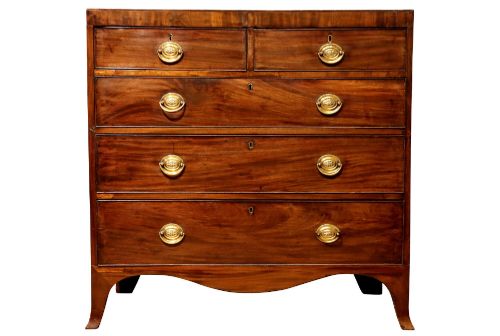
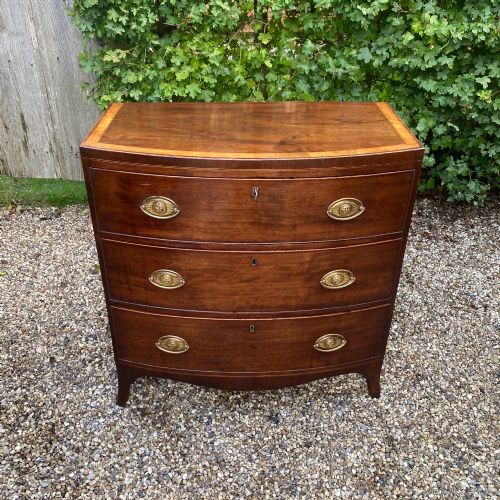
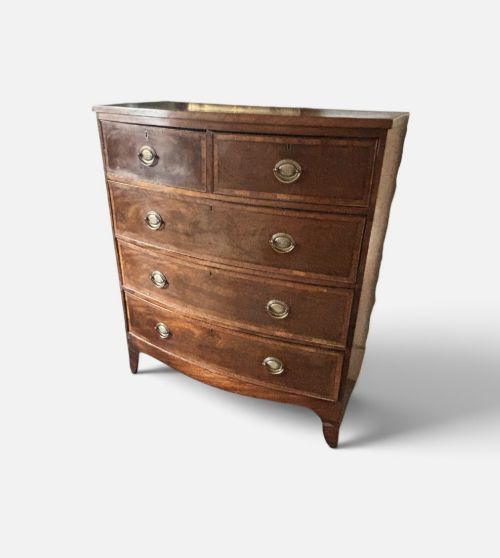
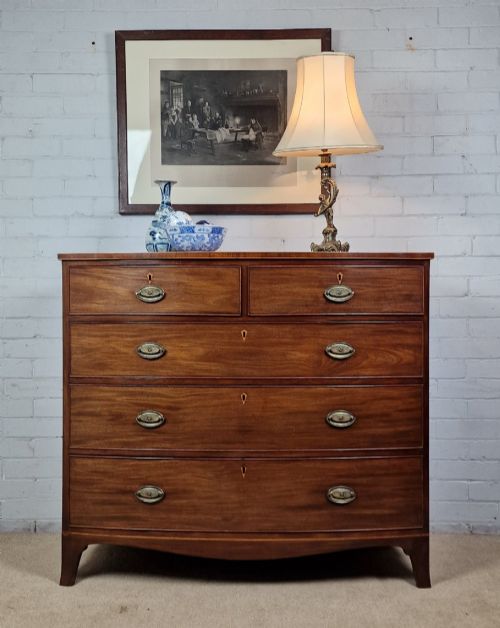


Splay Foot Chest Drawers
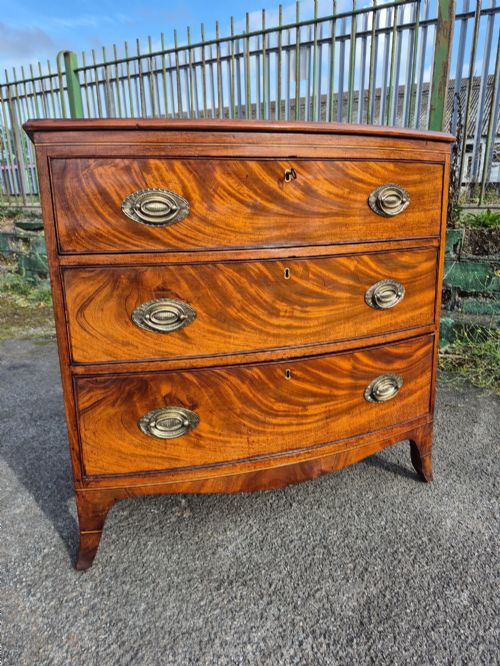
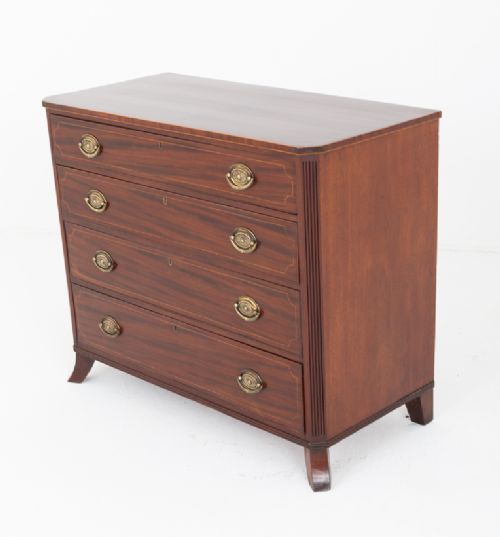
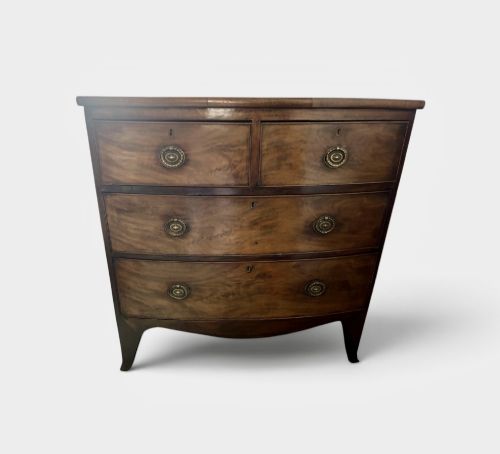
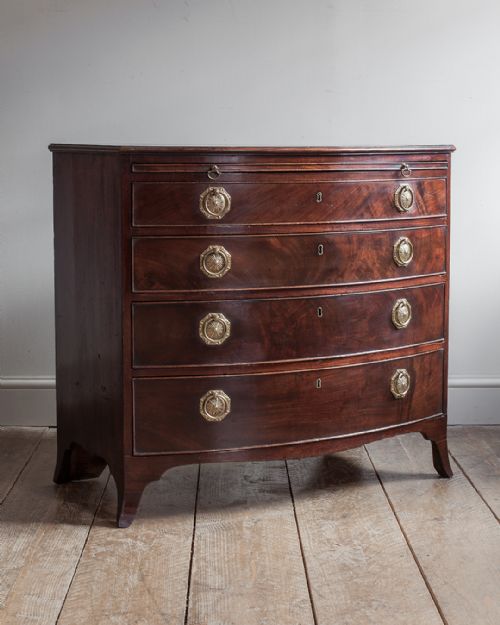
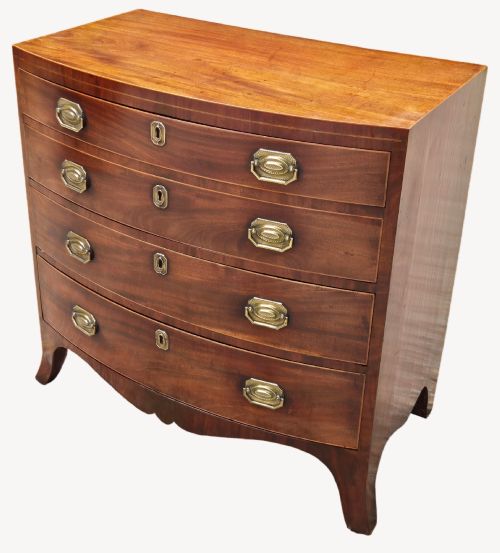
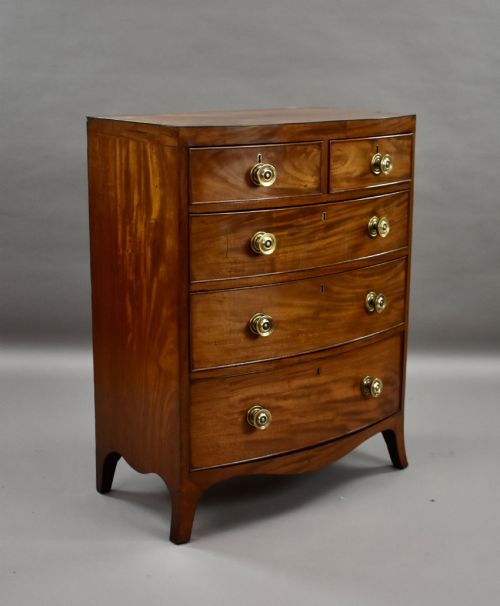
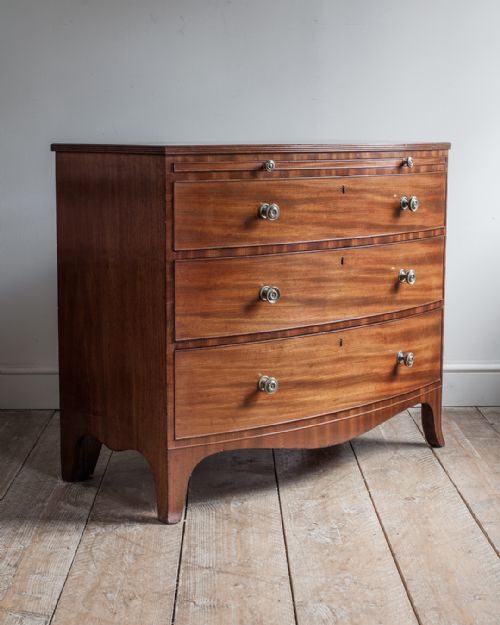
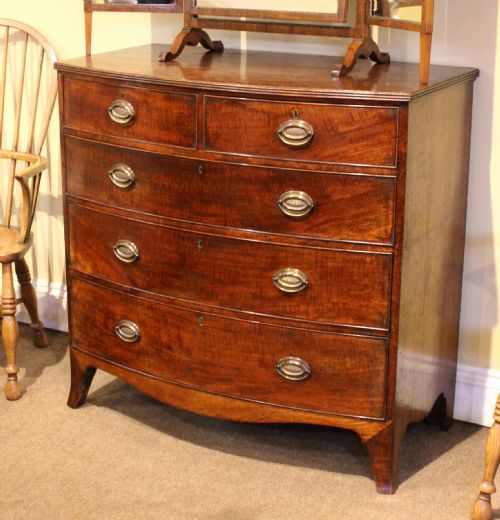
A splay foot chest drawers provides practical storage framed by the elegant, outward-angled supports characteristic of Georgian and Regency craftsmanship.
Splay Foot Chest Drawers
A splay foot chest drawers is a traditional storage piece defined by its distinctively angled feet, appearing frequently across Georgian and Regency periods. These chests emerge primarily in forms such as bow fronts, tallboys, and narrow configurations designed for domestic utility.
Makers fashioned these pieces predominantly in mahogany, complemented by oak carcases and intricate details like satinwood or boxwood inlay. The resulting furniture balances robust construction with refined proportions suitable for period interiors.
How they were made
Cabinet makers utilised solid timbers such as mahogany and oak, often selecting flame mahogany veneers for prominent drawer fronts. These primary woods were combined with secondary timbers for internal drawer linings and backboards.
Decoration relied on precision joinery and subtle contrast, incorporating satinwood, boxwood inlay, and crossbanding. Brass hardware, including drop handles and escutcheons, finished the construction.
Makers sometimes concealed humble pine or oak drawer linings behind breathtaking facades of swirling flame mahogany.
What varies in quality
Quality rests in the selection of timber figures, such as highly grained flame mahogany, and the crispness of inlaid details like boxwood and satinwood. Superior examples demonstrate harmonious proportions and uncompromised structural integrity in the splayed feet.
The refinement of internal elements, including hand-dovetailed drawer construction and original brass fittings, distinguishes standard utility pieces from exceptional cabinet work.
The Splay Foot Chest Drawers Glossary
- Splay foot
- An outward-angled support base that lifts the chest off the floor while adding stylistic movement. This foot type provides a stable stance distinct from straight bracket or block feet.
- Bow front
- A convex curved front facade popular in Georgian and Regency furniture design. This shape softens the profile of the chest while maximising internal drawer volume.
- Crossbanding
- A decorative border of veneer laid around the perimeter of a drawer front with the grain running perpendicular to the centre panel. It frames the primary wood figure.
- Tallboy
- A vertical storage unit comprising one chest stacked upon another, often featuring multiple graduated drawers. These pieces maximise storage capacity within a compact floor footprint.
Splay Foot Chest Drawers: Frequently Asked Questions
Where should I place a splay foot chest drawers?
These chests suit bedrooms, hallways, or living spaces where their compact bow-front or narrow profiles conserve floor area. Their decorative grain and splayed feet allow them to function as focal storage furniture.
Ensure placement avoids direct heat sources and strong sunlight to protect the mahogany veneers and polished timber surfaces over time.
How do I distinguish Georgian from Regency examples?
Georgian pieces often display heavier proportions and classic bracket or splayed feet, associated with cabinet makers working through the eighteenth century. Regency examples lean towards sharper lines, refined crossbanding, and lighter satinwood inlay details.
Examining the secondary woods inside the drawers and the style of brass hardware helps confirm the specific period of manufacture.
What maintenance do these timber chests require?
Maintain the finish by dusting with a dry cloth and applying natural beeswax periodically to nourish the mahogany and flame veneer. Avoid modern chemical sprays that can degrade historic polish.
Keep indoor humidity stable to prevent the solid timbers and delicate inlay work from expanding or contracting excessively.
Did these chests serve a specific domestic purpose?
Households utilised these chests primarily for storing linens, clothing, and personal valuables within private chambers. Variations like bachelors chests offered dedicated writing surfaces alongside drawer storage.
Their varied drawer arrangements accommodated the changing storage needs of period households.