




Spiral Twist Plant Stand
These spiral twist plant stand designs offer solid elevated display surfaces, spanning centuries of timber turning and classical marble work.
Spiral Twist Plant Stand
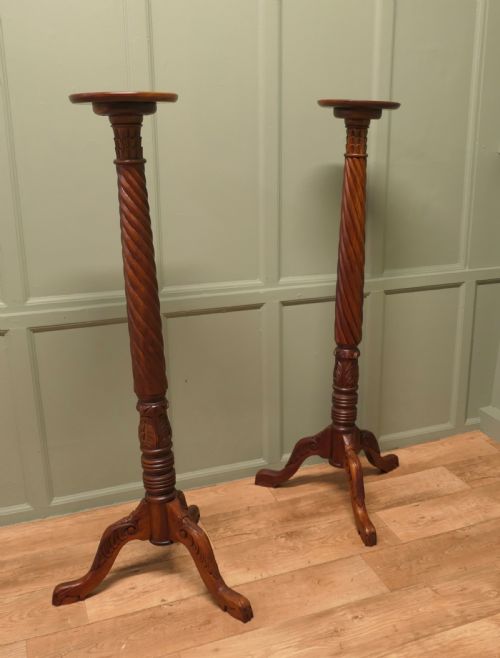
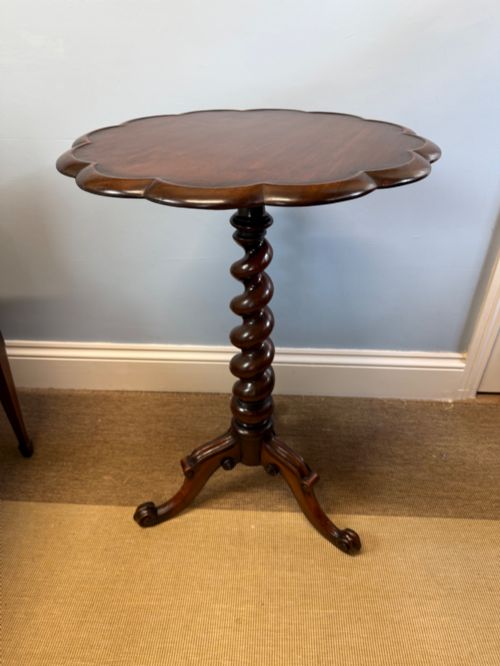
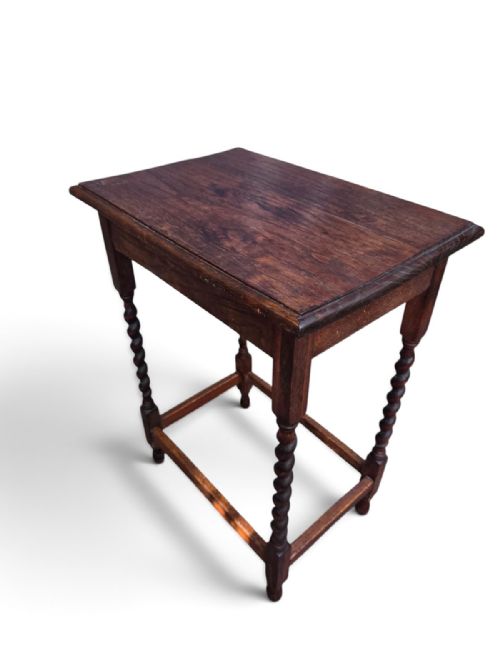
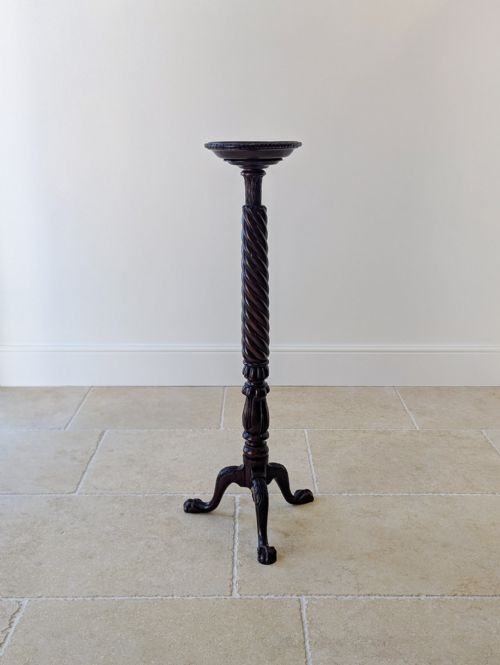
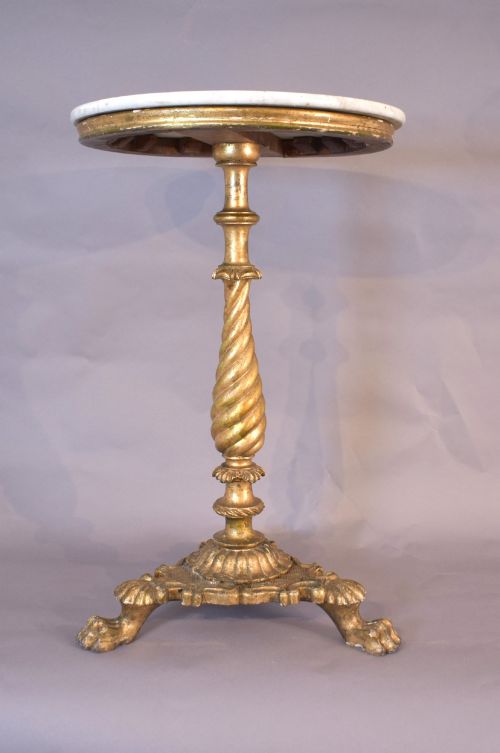
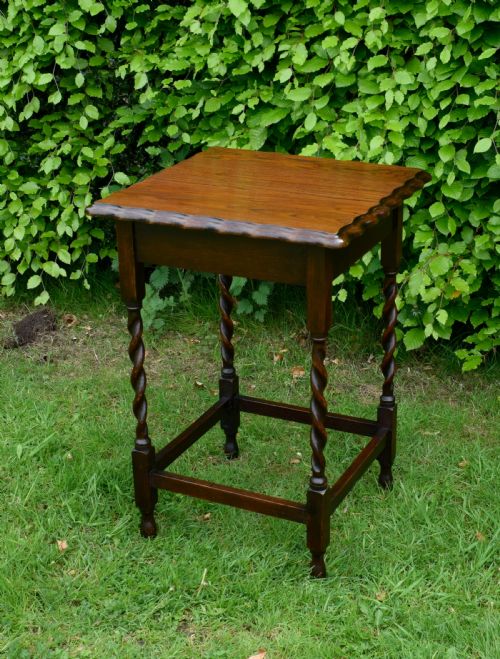
A spiral twist plant stand brings vertical emphasis to interiors, taking the form of torchères, pedestals, and occasional tables designed to support plants, lamps, or decorative objects. You will frequently encounter Victorian and Edwardian examples utilising turned timber alongside grander 19th-century marble columns and earlier oak pieces.
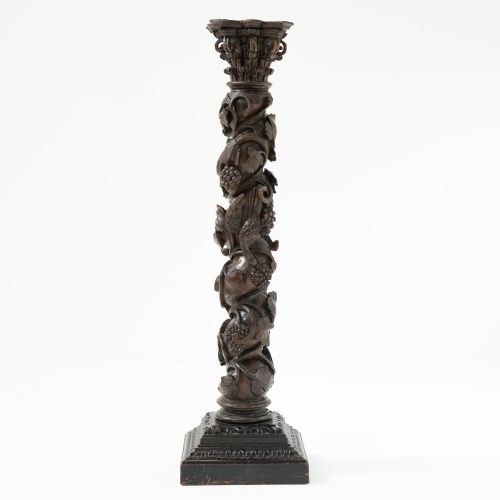
The objects serve primarily as display furniture rather than storage items, featuring compact tops supported by slender columns or tripod bases. Surviving forms range from heavy carved oak Solomonic columns to walnut lamp tables and ebonised wooden plinths.
How they were made
Craftsmen shaped dense hardwoods like mahogany, oak, and walnut using lathe-turning and hand-carving techniques to produce the characteristic helical or barley twist profile. Joinery on timber versions includes sturdy tripod legs and pegged pillar constructions designed to bear upward vertical weight.
Stonemasons worked with variegated marble, green serpentine, and verde antico to fashion classical columns, often combining turned stone shafts with moulded bases and capitals. Glass inserts and gilded wood surfaces also appear on specific occasional tables and tripods from the 19th century.
Spiral Twist Plant Stand Retail Price Guide 2026
Typical asking prices for spiral twist plant stand among the pieces listed under this phrase on Sellingantiques today, from the lower quarter to the upper quarter. They describe what is for sale here now, not the wider market.
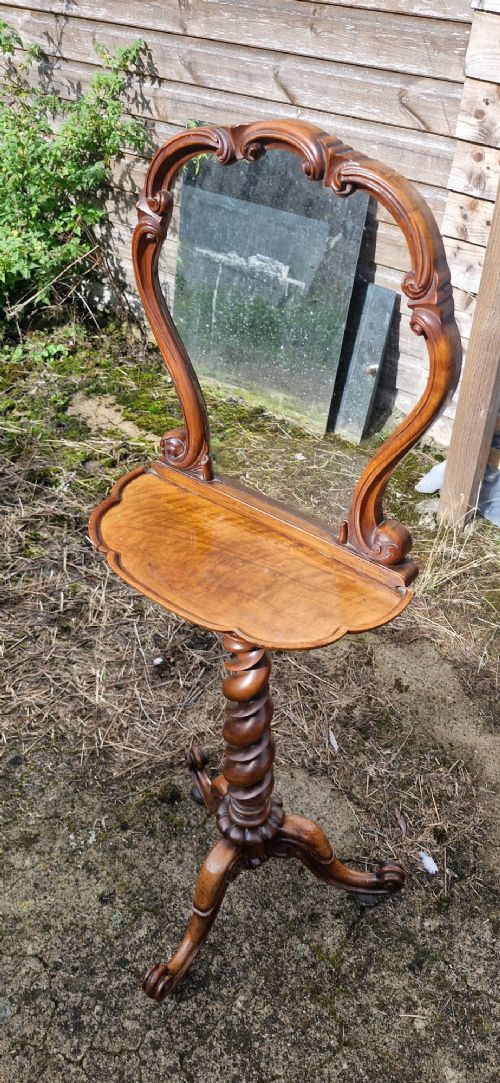
One unexpected Victorian stand comes equipped with a built-in glass back, presumably to catch the flicker of an evening oil lamp.
What varies in quality
The standard of timber selection and the crispness of the hand-carved spiral twist dictate much of the piece's refinement, distinguishing finely turned walnut and carved mahogany from simpler utility items. Proportions between the supporting column and the upper display top determine the visual balance and stability of the stand.
Material choice shifts the character significantly, with solid hardwoods and figured marbles representing higher tiers of production compared to simpler ebonised woods. The precision in turning the helical shafts without wandering grain irregularities marks the hand of a skilled maker.
The Spiral Twist Plant Stand Glossary
- Torchère
- A tall ornamental stand designed to hold a light or a decorative vessel. Originating in the 17th century, these stands often feature slender shafts raised on tripod feet.
- Solomonic column
- A spiral twisted column resembling a winding screw, associated with Baroque architecture and frequently carved in solid oak during earlier centuries.
- Barley twist
- A type of turning where the wood is cut into a helical screw shape, popular in 17th-century furniture and revived extensively during the Victorian and Edwardian periods.
- Verde antico
- A dark green serpentine breccia marble infused with white calcite veins, quarried in ancient times and utilised for decorative architectural columns during the 19th century.
- Plinth
- A heavy rectangular or square block serving as the base for a column, pedestal, or statue, providing physical stability and visual grounding.
Spiral Twist Plant Stand: Frequently Asked Questions
What is a torchère stand?
A torchère is a tall, slender freestanding column or pedestal designed specifically to elevate objects such as lamps, urns, or floral displays within a room.
These pieces prioritise vertical height over surface area, making them suitable for brightening dark corners or displaying items at eye level.
How do I date an oak twist stand?
Dating relies on examining the timber grain, tool marks, and construction joints, alongside the specific style of the spiral turning.
Earlier pieces from the 18th century often display hand-carved Solomonic details in solid oak, whereas later Victorian and Edwardian revivals utilise machine-assisted lathe turning.
Can these stands hold heavy plants?
Most antique stands are structurally robust enough for standard potted plants, provided the base configuration offers adequate stability.
Tripod bases and wide timber columns distribute weight effectively, though heavy marble columns require careful placement on level flooring.
Where should I place a pedestal?
Pedestals and plant stands perform best in corners, hallways, or beside seating where vertical lines break up flat wall expanses.
Consider the surrounding floor traffic to ensure the footprint of the tripod or square base remains safely out of the way.