

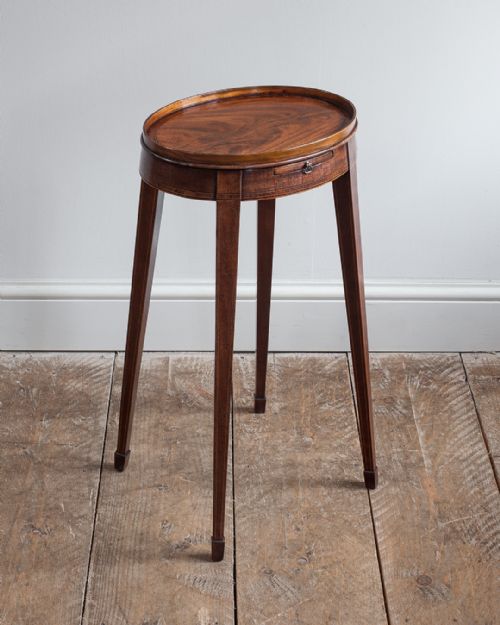


Georgian Tea Kettle Table
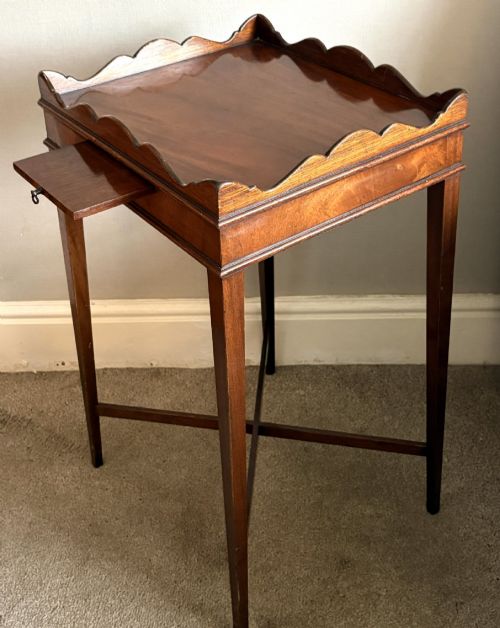
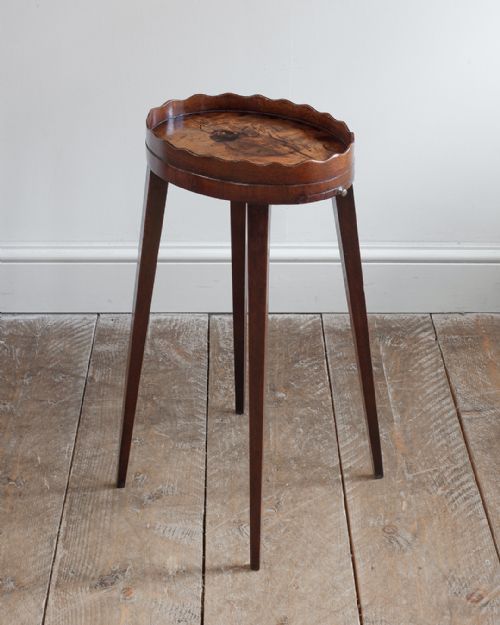
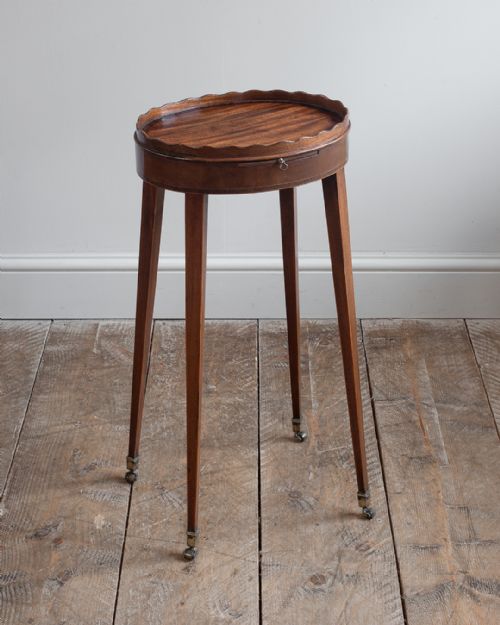
These georgian tea kettle table examples are small occasional tables built to hold heavy silver vessels, and collectors prize them for their delicate proportions.
Georgian Tea Kettle Table
A georgian tea kettle table is a specialised piece designed to hold a hot water vessel near the tea service. The selection here centres on occasional tables, kettle stands, and urn stands built during the eighteenth and nineteenth centuries.
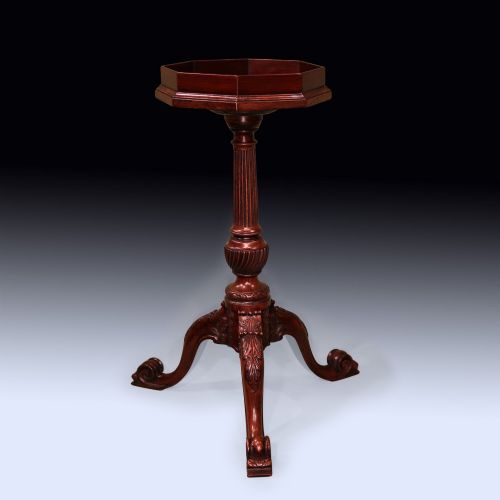
Most pieces date to the eighteenth century, including George II, George III, and Chippendale periods, alongside later nineteenth-century revivals. Forms include oval, square, and octagonal tops, often configured as tripod tables.
Makers produced these stands in mahogany, satinwood, and yew wood, sometimes enhanced with inlay, marquetry, and ebony details. Alongside tables, the listings include silver-plated spirit kettles on stands from later periods.
Materials and construction methods
Cabinetmakers relied heavily on solid mahogany and satinwood, shaping timber into slender tripod supports and elevated tops. Craftspeople utilised marquetry, inlay, and carved details to ornament the surfaces of these compact stands.
Metal components such as brass fittings and silver-plated elements appear on specific kettle and urn stands. Joinery methods matched the portable nature of the forms, balancing stability against lightness.
Georgian Tea Kettle Table Retail Price Guide 2026
Typical asking prices for georgian tea kettle table among the pieces listed under this phrase on Sellingantiques today, from the lower quarter to the upper quarter. They describe what is for sale here now, not the wider market.
These miniature tables were practically tiny insurance policies against guests spilling boiling water on expensive mahogany dining furniture.
Distinguishing quality across pieces
Quality rests on the crispness of carved details in the mahogany or the precision of satinwood inlay and marquetry. Superior examples display balanced proportions between the slender pedestal base and the upper surface.
The integrity of the timber and the subtlety of period styling, such as Chinese Chippendale or Sheraton influences, separate standard specimens from finer works.
The Georgian Tea Kettle Table Glossary
- Urn stand
- A small occasional table designed to elevate a hot water urn or kettle during tea service. These tall, narrow pieces prevent heat damage to main dining and parlour tables.
- Tripod table
- A small table supported by a central pillar resting on three spreading feet. This construction provides stability on uneven floorboards.
- Marquetry
- Decorative veneer work formed by fitting together small pieces of different woods to create pictorial or geometric designs. It appears on satinwood and mahogany surfaces.
- Spirit kettle
- A metal kettle mounted on a metal stand equipped with a small burner beneath. These vessels provided hot water throughout the tea ceremony.
Georgian Tea Kettle Table: Frequently Asked Questions
What was a kettle stand used for?
These tables held heavy metal kettles and hot water urns away from polished dining tables during tea service.
The raised rim or indented top kept the vessel secure while servants poured hot water into teapots.
How do I spot a George III stand?
George III pieces typically feature dense mahogany timber, classical carving, and restrained decorative elements.
Makers of this era favoured clean lines on tripod bases and rectangular or oval tops.
Where should I place a kettle stand?
Their small footprint allows them to sit beside armchairs or in corners as display surfaces.
They function well holding small lamps or decorative items in modern interiors.
What is the difference between an urn stand and a wine table?
Urn stands and wine tables share similar compact tripod proportions and small tops.
Urn stands often feature specific edge details or pull-out slides designed to catch drips from hot vessels.