
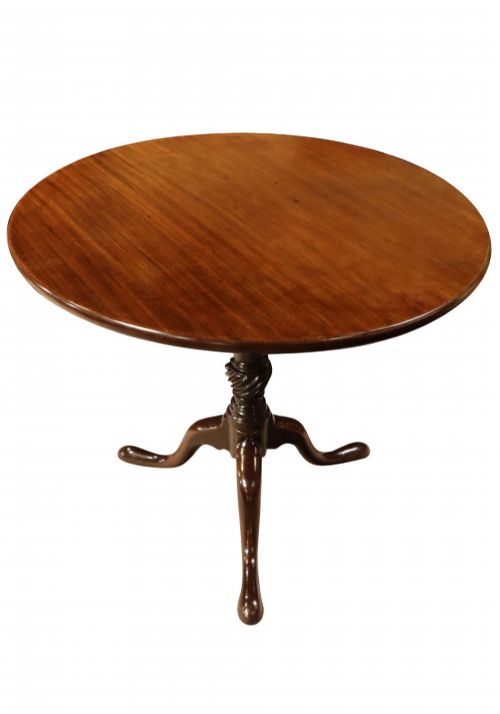


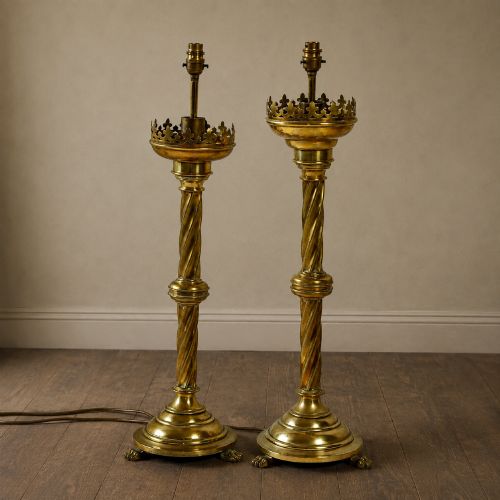


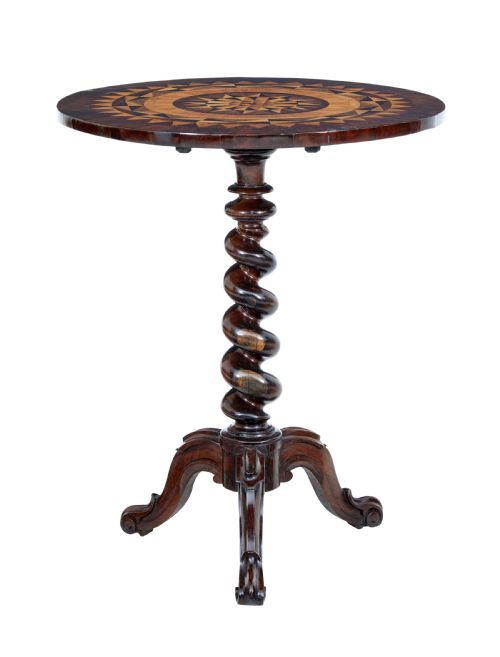
Spiral Twist Column Table
These spiral twist column table pieces unite turned timber shafts with compact tops, offering a sturdy yet decorative support for lamps, plants, and drinks.
Spiral Twist Column Table
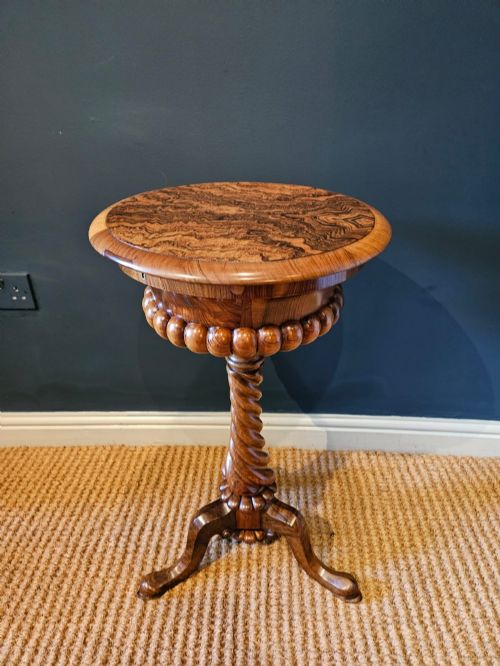
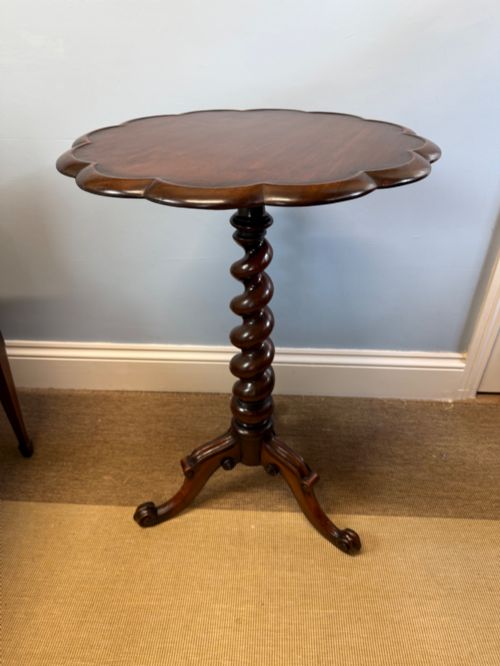
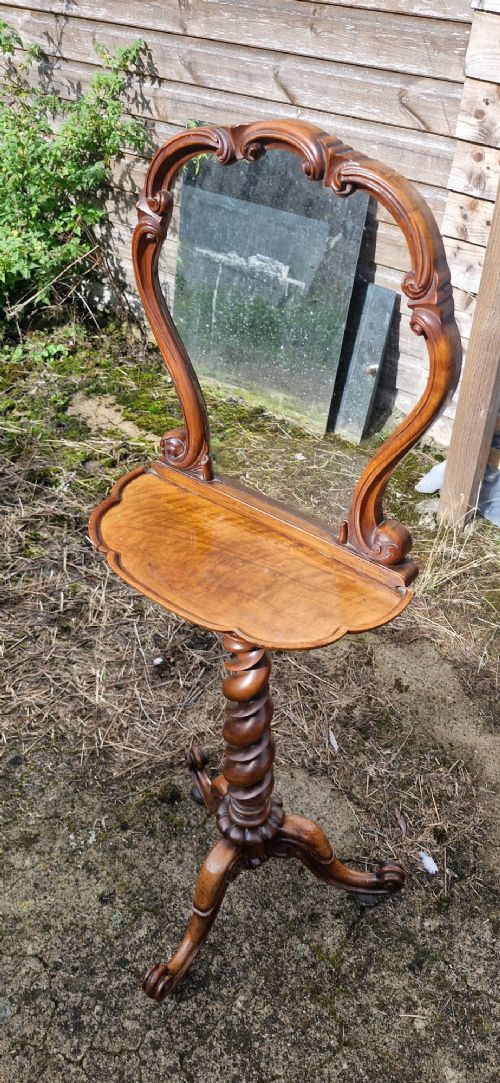
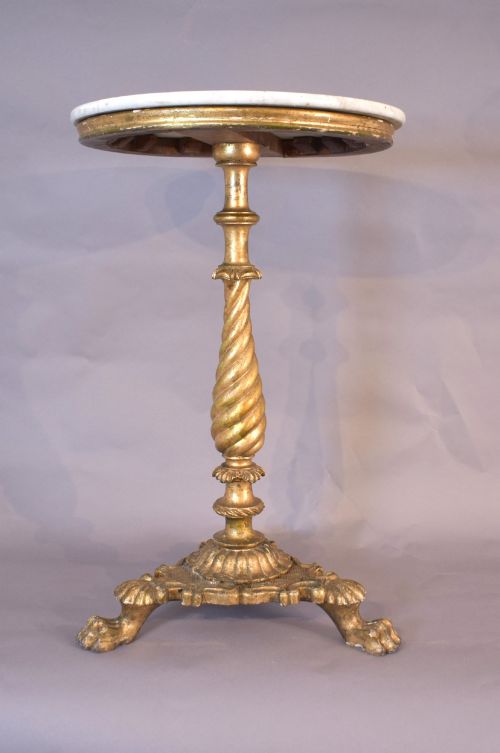
A spiral twist column table relies upon a central turned pillar featuring a helical or barley twist profile. These pieces appear across occasional tables, wine tables, and lamp stands, serving both utility and decorative display.
The selections on this page span from the mid-eighteenth century into the late nineteenth century, taking in Georgian, Victorian, and William IV periods. Timber choices run from mahogany and walnut to burr maple and burr elm, alongside giltwood and brass forms.
Occasional tables and side tables dominate the grouping, supplemented by tall torchiere stands, jardiniere stands, and smaller tea and spirits furniture. Many incorporate tripod bases or snap-top mechanisms to suit compact domestic spaces.
How they were made
Turnery formed the defining characteristic of these pieces, requiring steady lathe work to carve consistent helical twists into solid timber or brass. Cabinetmakers utilised dense hardwoods such as mahogany and walnut to ensure the twisted shafts maintained structural integrity without splitting.
Surfaces frequently combined figured veneers like burr maple or burr elm with solid timber frames, secured using traditional joinery and tilt-top mechanisms. Brass fittings, glass components, and giltwood finishes appeared on specific lighting and display variants.
Some tables double as spirit cabinets, hiding your evening port behind a twist column.
What varies in quality
The precision and depth of the hand-carved spiral twist define the primary tier of craftsmanship, where crisp junctions distinguish skilled turnery from mechanical uniformity. Timber selection plays an equal role, with choice cuts of figured walnut or burr elm elevating the visual presence.
Structural stability in the tripod base and the seamless operation of tilt-top or snap-top actions demonstrate the original maker's joinery standards. Superior pieces preserve intact patination on the wood and retain their original brass or glass components.
T Thomason & Co
The Spiral Twist Column Table Glossary
- Spiral twist
- A turned decorative column resembling a helix or rope, popular in furniture and lighting design across multiple centuries.
- Occasional table
- A small, movable table designed for a specific, transient use such as holding a lamp, drink, or book.
- Teapoy
- A small cabinet or table originally designed to hold containers of tea, often fitted with compartments for glasses or spirits.
- Torchiere
- A tall, slender stand or pedestal originally intended to support a torch, later adapted for lamps or decorative figures.
- Snap-top
- A table mechanism allowing the top to tilt vertically against the central column when not in use for convenient storage.
Spiral Twist Column Table: Frequently Asked Questions
What is a spiral twist column table used for?
These pieces serve primarily as small utility surfaces in reception rooms, functioning as lamp tables, wine stands, or plant supports. Their compact footprints allow them to sit beside seating or in corners without dominating a room.
Historically, specific variants such as teapoys and spirits tables held tea caddies and glassware, adapting the central column design for dedicated domestic rituals.
How do I date a spiral twist column table?
Dating relies upon timber selection, structural construction methods, and stylistic cues associated with periods like the Georgian era or Victorian times. Earlier eighteenth-century examples often feature solid mahogany with hand-shaped tilt mechanisms.
Later nineteenth-century iterations incorporate varied veneers like burr walnut or employ cast brass elements, reflecting the industrial production shifts of the Victorian period.
Are these tables sturdy enough for daily use?
Solid hardwood construction and heavy tripod bases provide reliable stability for everyday items like reading lamps and drinks. The central spiral column distributes weight evenly down to the feet.
Care should be taken with tilt-top mechanisms and veneered surfaces, ensuring they are placed away from extreme heat sources to prevent timber movement.
What is the difference between a torchiere and an occasional table?
A torchiere is characterised by a tall, slender height and a very small top designed exclusively for elevation, such as displaying a lamp or candlestick. An occasional table offers a lower, wider surface intended for practical reach beside a chair.
Both formats utilise the spiral twist column to add vertical visual interest to a room while fulfilling distinct functional roles.