




Spiral Twist Candle Holder
These spiral twist candle holder examples bring sculptural height and turned movement to a room.
Spiral Twist Candle Holder
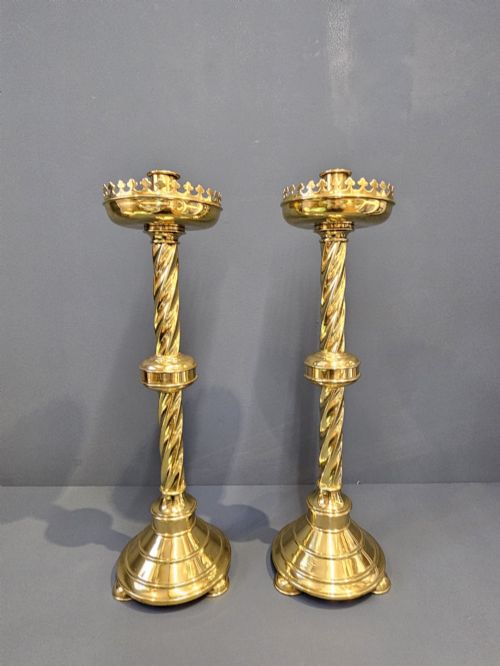
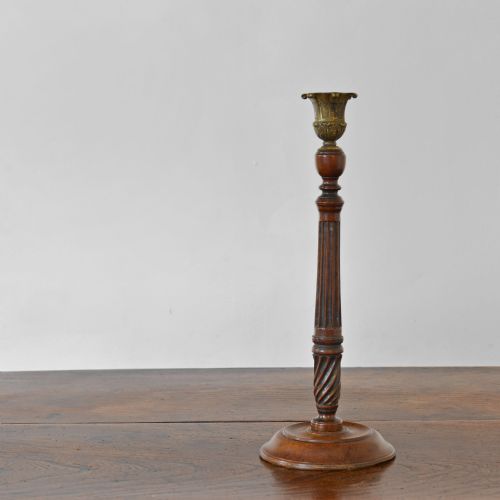
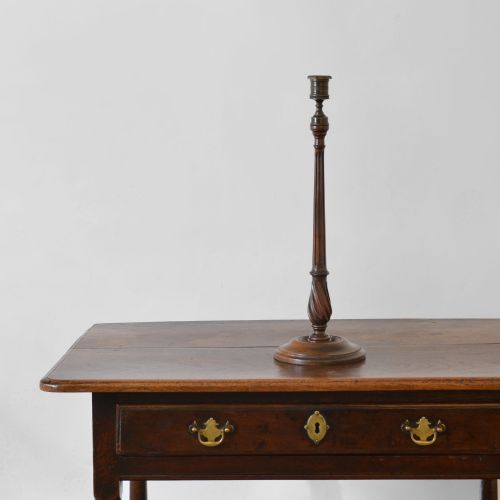
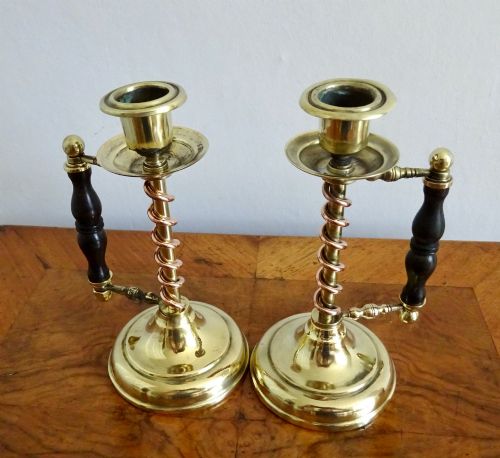
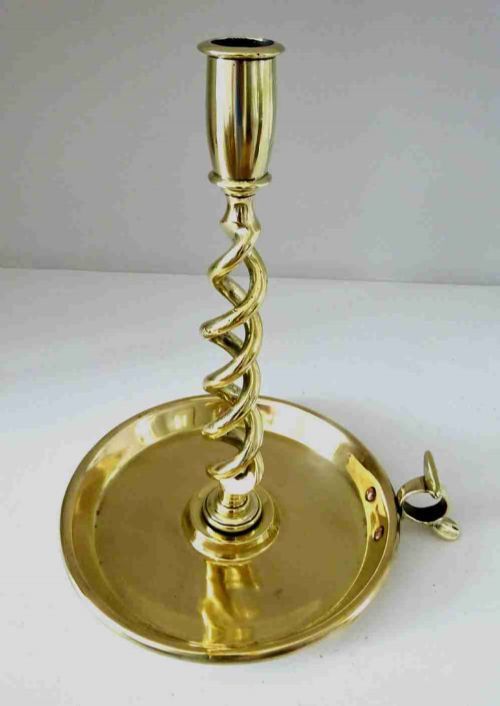
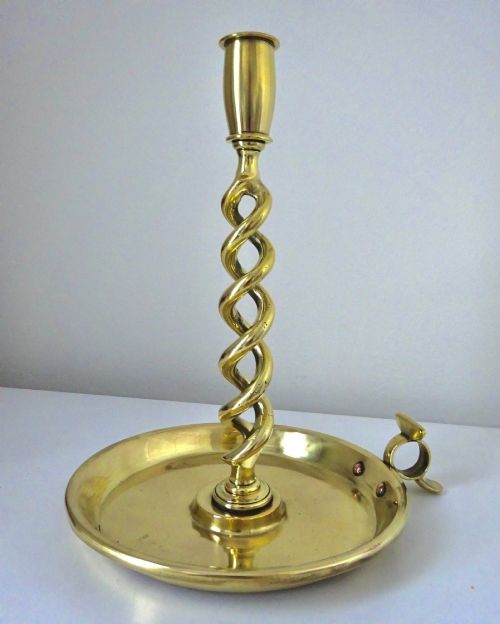
A spiral twist candle holder is a candlestick shaped with a twisted or barley twist stem, designed to support taper candles while adding a distinct turning to a table or mantelpiece. The examples here include single sticks, pairs, and sets of four, with some featuring fitted trays, handles, or stepped bases.
The materials span traditional metals and timbers, including brass, copper, oak, mahogany, walnut, and fruitwood, alongside crystal glass and enamel. Dating ranges from the Georgian and Victorian eras through the Arts and Crafts period into the early twentieth century.
Most pieces function primarily as candlesticks, while larger church or ecclesiastical examples serve as altar pieces. Buyers will find both tall floor-scale sticks and smaller tabletop versions across these diverse periods.
How they were made
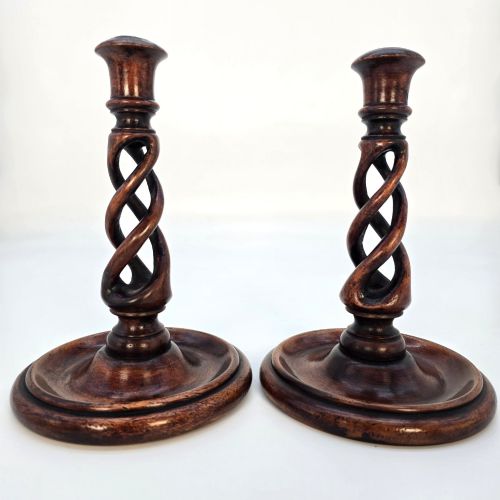
Wooden stems such as oak, mahogany, fruitwood, and walnut were shaped using lathe-turning techniques to achieve the characteristic spiral or open twist profile. Metal versions in brass and copper were cast or fabricated, often combining turned shafts with fitted metal bases or drip pans.
Glass examples utilised moulding and cutting methods, seen in crystal glass candlesticks featuring domed and folded feet. Artisans joined multi-component pieces using threaded fittings, pins, or secure adhesives to unite wooden turned shafts with brass tops and bases.
The listings combine Georgian mahogany and fruitwood examples with Victorian and Edwardian brass, copper, and oak pieces.
What varies in quality
The definition of the twist and the crispness of the turning separate standard examples from finer work. Superior pieces display clean, deeply cut open twists or sharply rendered brass mouldings without softening of detail.
Proportion and stability heavily influence desirability, particularly in taller timber or metal shafts where balance is essential. High-quality items maintain straight vertical alignment and feature well-matched grain in hardwoods or substantial gauge metal.
T Thomason & Co
The Spiral Twist Candle Holder Glossary
- Barley twist
- A carved or turned spiral column resembling a stalk of barley, popular in furniture and decorative metalwork.
- Ecclesiastical
- Relating to the Christian Church, describing large metal candlesticks originally made for church altars.
- Open twist
- A carved spiral stem with negative space running through the centre of the twist, requiring careful hand woodworking.
- Fitted tray
- An integrated metal base plate attached to a candlestick, designed to catch dripping wax during use.
- Domed and folded foot
- A rounded, hollow glass base with a turned-under rim that provides stability to a crystal candlestick.
Spiral Twist Candle Holder: Frequently Asked Questions
How were these holders used?
These candlesticks provided artificial illumination in homes and churches before electric lighting became common. They sat on tables, sideboards, and altars to hold wax taper candles.
Some portable versions included attached trays and handles so servants or residents could carry them safely from room to room.
How do I date a wooden twist?
Dating relies on timber choice, turning style, and construction methods visible beneath the base. Georgian and earlier pieces often use fruitwood or mahogany with hand-cut turns.
Later Victorian and Edwardian examples frequently employ oak or walnut with machine-assisted lathe work and standardised fittings.
Are brass and copper ones heavier?
Metal candlesticks, particularly Victorian church and ecclesiastical examples, often feel surprisingly heavy due to solid casting or weighted interior bases. This extra mass prevented the tall shafts from tipping over when supporting large candles.
Lighter brass pairs usually date from the later nineteenth or early twentieth century and were made for domestic tabletop use.
How should I clean brass twists?
Brass and copper components generally benefit from gentle dusting and occasional cleaning with a non-abrasive metal polish if removal of tarnish is desired. Many collectors prefer to leave an aged patina intact rather than polishing the metal to a bright shine.
Harsh chemical dips should be avoided, especially on pieces with fitted wooden elements or delicate enamel.