
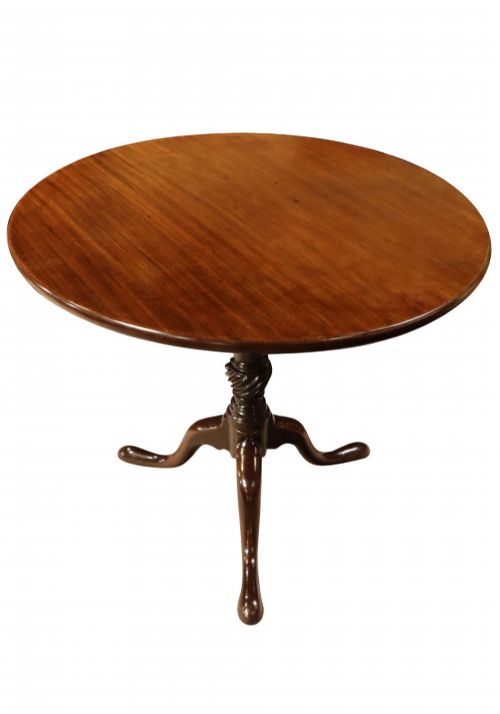


Spiral Column Side Table
These spiral column side table pieces bring turned elegance and architectural form into a room.
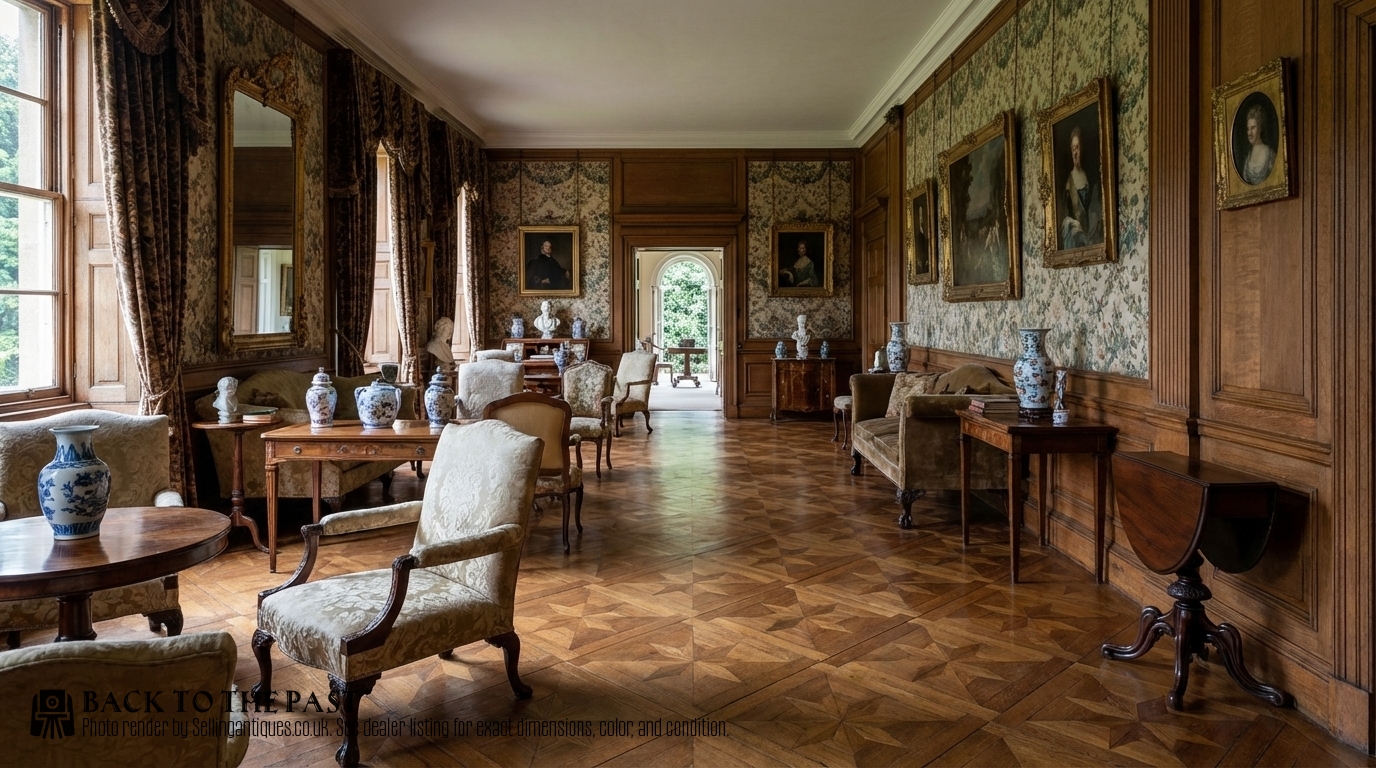
Spiral Column Side Table
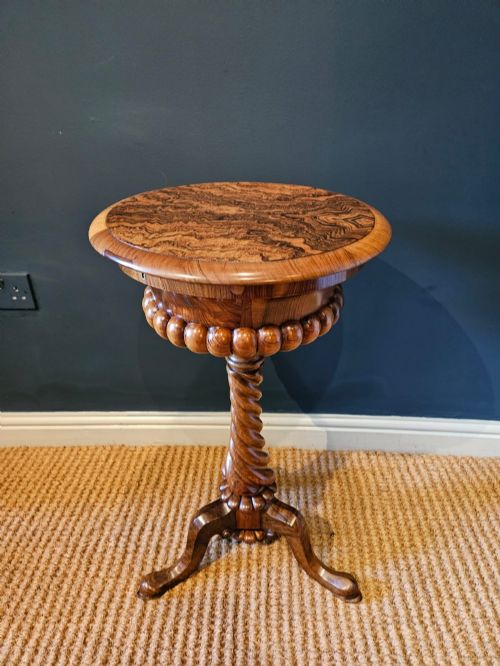
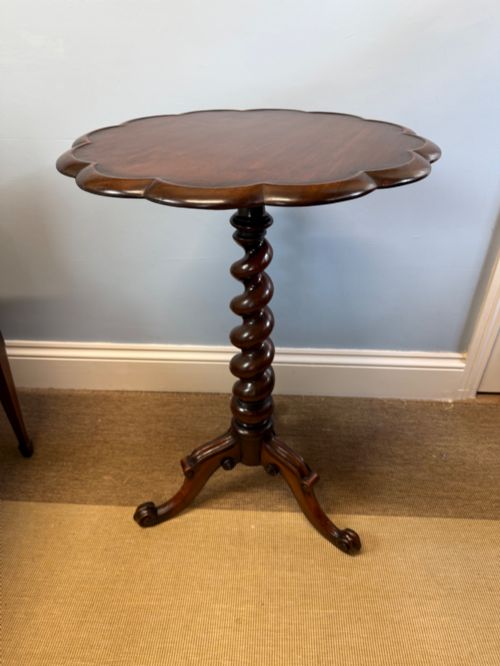
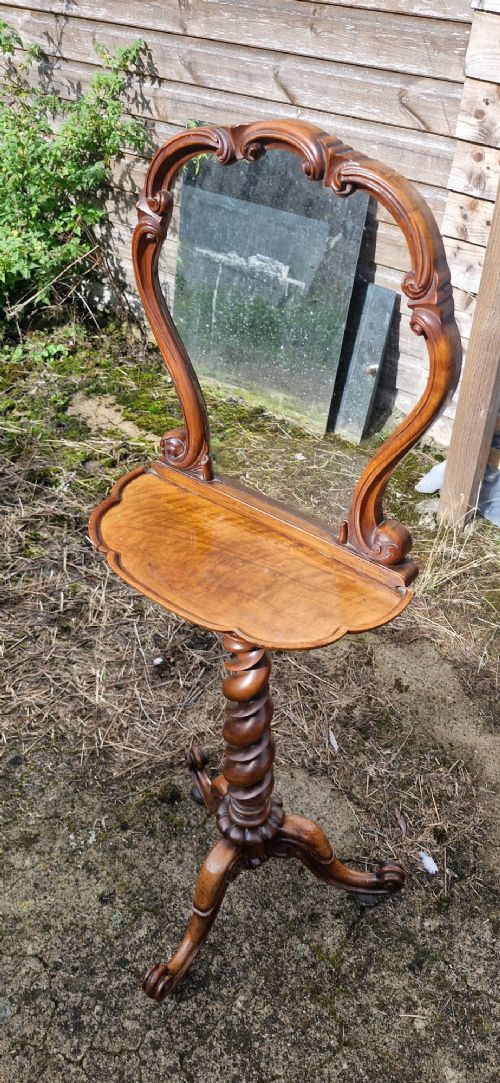
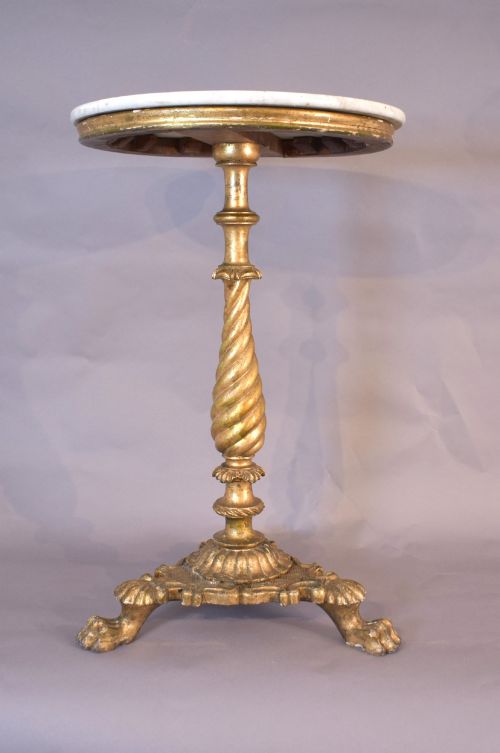
A spiral column side table brings turned timber architecture into domestic spaces as an occasional table, wine table, or tripod lamp table. The spiral twist or barley twist column forms the central support, connecting a circular or octagonal top to sturdy legs.
Most examples found here date from the nineteenth century and the Victorian era, alongside Georgian and Regency periods. Makers utilised rich timbers such as mahogany and walnut, often finished with tilt mechanisms or tripod bases.
Beyond standard occasional tables, the selection includes related forms like three-tier what-nots, painted Venetian pieces, and brass table lamps sharing the characteristic twisted pillar design.
How they were made
Cabinet makers constructed these tables primarily using dense hardwoods like mahogany and walnut, occasionally incorporating burr elm, boxwood stringing, or gilt wood. Turning lathes shaped the characteristic spiral columns and barley twist stems from solid timber.
Table tops frequently featured tilt mechanisms with brass catches, allowing the surface to fold away vertically when not in use. Tripod bases were jointed securely to the central turned column to ensure stability.
Mahogany and walnut dominate the timber choices across these nineteenth-century and Victorian listings.
What varies in quality
Quality rests in the crispness of the hand-turned spiral twist and the choice of timber grain, particularly where figured mahogany or burr walnut is employed. Finer examples display precise joinery in the tripod base and smooth operation in the tilt-top mechanism.
The sophistication of secondary details, such as boxwood stringing, scalloped edges, or original brass hardware, elevates a piece from a utilitarian support to a finer decorative item.
The Spiral Column Side Table Glossary
- Spiral twist
- A carved columnar shape resembling a helix, often called barley twist in nineteenth-century joinery.
- Tripod table
- A small freestanding table supported by three legs radiating from a central pillar.
- Tilt-top
- A hinged table top that pivots to a vertical position for storage against a wall.
- Occasional table
- A small, movable table designed for light domestic use in reception rooms.
- What-not
- A set of open shelves supported by slender columns, used for displaying small objects.
Spiral Column Side Table: Frequently Asked Questions
How do I use a spiral column side table?
These small tables serve well beside armchairs or sofas to hold a lamp, book, or small decorative items. Their compact footprint allows them to fit easily into corners or narrow spaces.
Tilt-top versions can be folded flat and placed against a wall when floor space is needed for other purposes.
What is a barley twist column?
A barley twist is a decorative turning technique where a wooden cylinder is carved into a continuous spiral resembling a twisted rope. It appeared frequently on furniture supports during the seventeenth century and saw a major revival in the Victorian period.
This form catches the light on its curved surfaces, adding texture and movement to the silhouette of a table.
How do I tell Victorian from Georgian tables?
Georgian tables often display restrained classical proportions, lighter mahogany timbers, and simpler tripod feet. Victorian pieces frequently feature heavier turned elements, darker finishes, and more elaborate detailing like burr walnut veneers or inlaid surfaces.
Examining the construction methods underneath the top and inside the pillar joint helps confirm the period of manufacture.
Can I place a lamp on a wine table?
Wine tables and occasional tables provide a stable surface for small table lamps or brass reading lights. The central column design leaves sufficient clearance around the base for placement next to seating.
Ensure the weight of the lamp matches the balance of the tripod legs to maintain stability.